Trump's 'Diesel Export Ban' Gambit: U.S. Refiners Warn, "Prices Will Rise Further"
- Input
- 2026-09-23 12:22:26
- Updated
- 2026-09-23 12:22:26
【Financial News New York—Correspondent Lee Byung-chul】 President Donald Trump has pulled out the "diesel export ban" card. He responded after Republican lawmakers repeatedly called for export restrictions ahead of the midterm elections in early November. U.S. Treasury Secretary Scott Bessent also confirmed that the measure was under review. However, warnings have emerged that blocking exports could make it difficult to supply diesel to areas that need it because U.S. refineries and population centers are geographically separated. It could even backfire, prompting refiners to cut production and driving up prices for gasoline and jet fuel as well.
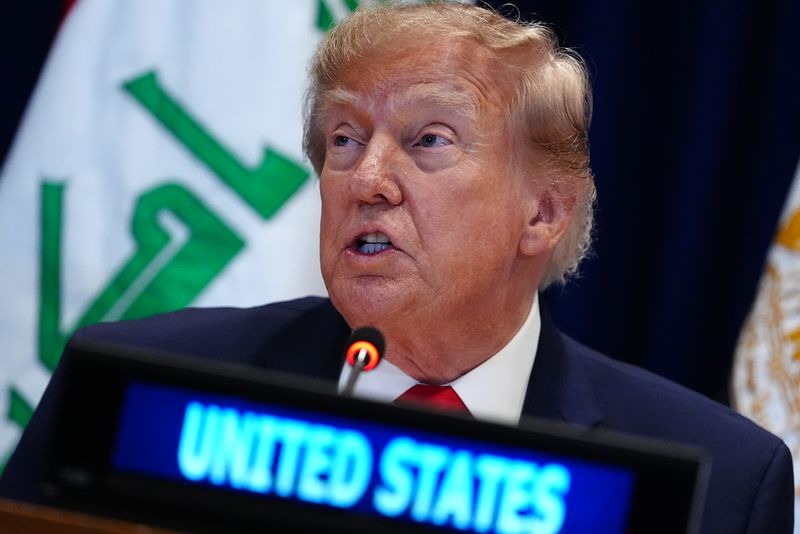
President Trump said at the UN General Assembly in New York on the 22nd (local time) that he supported calls to restrict diesel exports. "I've been calling for that, too," he said. "I said we shouldn't send diesel overseas. We produce a lot of diesel." Bessent also said the administration was examining whether a total or partial export ban was possible.
The United States is the world's largest diesel exporter. According to the U.S. Energy Information Administration (EIA), U.S. middle-distillate production has recently exceeded 5 million barrels per day. S&P Global said diesel exports averaged about 1.5 million barrels per day this year, up 275,000 barrels per day from the same period last year. Exports reached a record 1.6 million barrels per day in August.
Diesel Tops $6 as Midterms Loom
The backdrop to the review of an export ban is the sharp rise in diesel prices. The average U.S. diesel price has surged past $6 per gallon to an all-time high. Diesel is widely used in trucks, farm machinery and construction equipment, so higher prices can feed through transportation costs into the prices of food and manufactured goods.
The issue is particularly burdensome for Republicans ahead of the midterm elections. Republican Rep. Ashley Hinson, who is running in the Iowa U.S. Senate race, and others are calling for an export halt, arguing that American consumers should not have to bear the energy costs driven up by the war with Iran. Republican Rep. Tim Burchett of Tennessee has even introduced a bill to ban diesel exports through January next year.
Would Blocking Exports Lower Prices?
In theory, keeping roughly 1.5 million barrels per day of diesel that would otherwise be exported in the United States could increase domestic supply and lower prices. The problem lies in the country's refining and logistics structure.
Refining capacity is concentrated along the Gulf Coast, including Texas and Louisiana. The region produces more diesel than local demand requires and exports the surplus overseas. By contrast, the eastern United States has insufficient refining capacity and relies on imports. Pipeline capacity connecting the Gulf Coast to the East Coast is limited, and the Jones Act also applies to maritime transportation between U.S. ports, requiring the use of vessels built, owned and operated by Americans. As a result, blocking exports could lower prices along the Gulf Coast while driving prices higher in New York and other parts of the East Coast as international prices rise.
Mike Sommers, CEO of the American Petroleum Institute (API), argued, "Restricting U.S. diesel exports would worsen, rather than solve, problems for consumers, farmers and the U.S. economy as a whole." Of the roughly 8 million barrels of diesel traded by sea worldwide each day, about 1.5 million barrels are supplied by the United States, accounting for approximately 20%. If that volume disappears, international prices would rise, and the impact could flow back to some parts of the United States that import diesel.
An even bigger problem is that refiners could reduce production. If diesel inventories build up along the Gulf Coast because export channels are blocked, refiners could cut crude oil throughput. Refining crude produces gasoline and jet fuel along with diesel, so supplies of other petroleum products would also decline.
S&P Global Energy CERA analyzed that if diesel exports were completely banned in the fourth quarter of this year, U.S. refiners could have to reduce crude oil throughput by about 1.9 million barrels per day, or roughly 12% of the total. It projected that gasoline production could also fall by as much as 750,000 barrels per day, potentially turning the United States from a net gasoline exporter into a net importer.
Possible, but... Refiners Warn of a Backfire
An export restriction is not impossible. The administration has export-control measures at its disposal, and Republican lawmakers have also introduced related bills. However, there are disagreements within the administration. Energy Secretary Chris Wright and Interior Secretary Doug Burgum believe an export ban may not lower prices. On the 19th, Burgum said, "I would consider it if I thought an export ban could lower prices, but it can't."
The refining industry is also pushing back. The American Fuel & Petrochemical Manufacturers (AFPM), which represents the U.S. refining and petrochemical industries, argued, "An export ban does not make more fuel for Americans." It said the measure could instead reduce domestic production and increase upward pressure on prices.
[email protected] Lee Byung-chul, Correspondent Reporter