Artificial Intelligence (AI) More Harmful to Teenagers Than Social Media, Could Damage Mental Health
- Input
- 2026-09-23 12:38:47
- Updated
- 2026-09-23 12:38:47
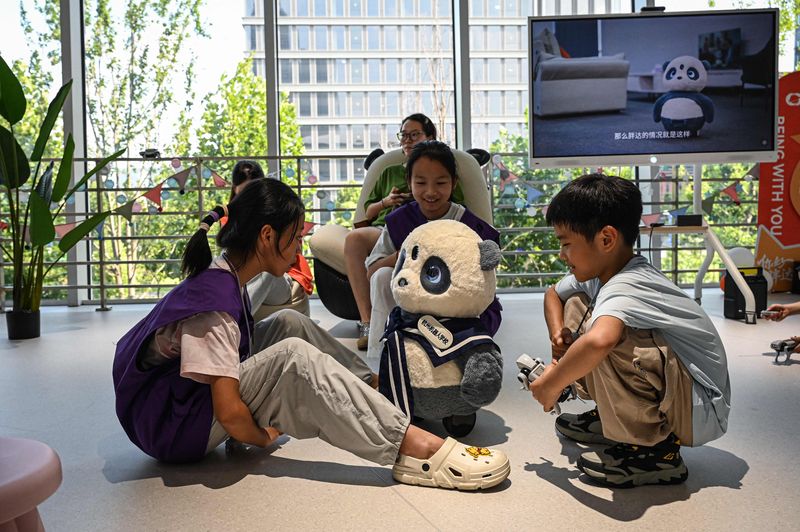
[Financial News] As countries around the world have recently moved to ban teenagers from using social media services (SNS), some have argued that artificial intelligence (AI) is even more harmful to adolescents than social media.
According to The Straits Times, former Google Vice President of Trust and Safety Tom Siegel spoke in an interview on the 22nd (local time) in San Francisco after taking office as the first executive director of the Youth AI Safety Institute, established by the local civic organization Common Sense Media. He said, "We are facing a very dire situation regarding AI's impact on children," adding, "The idea that the tech industry will solve the problem itself without outside help is unrealistic."
He particularly criticized major technology companies for repeating in the AI sector the same mistakes they made when developing social media. He said they were launching services aimed at children without putting sufficient safety measures in place.
He said, "We are facing very serious harm scenarios," citing teen suicide, mental illness, and cognitive offloading, in which critical thinking skills decline because of dependence on AI, as examples of the potential harm.
Siegel stressed the need for robust age-verification measures that can block children's access to chatbots, as well as an option to turn off AI-generated answers that automatically appear in search engines. He explained that he plans to establish publicly available standards for measuring AI risks, similar to automobile crash tests.
On the 22nd, a Google spokesperson responded to Siegel's remarks by saying, "Our AI search is useful for children and teenagers exploring information." OpenAI, a competitor in the AI sector, said in response to an inquiry that it identifies users below the minimum eligible age through various behavioral analyses.
Siegel worked at Google from 2004 to 2019, where he was responsible for strengthening platform safety. He later co-founded and led TrustLab, a startup that detects harmful elements in AI.
[email protected] Park Jong-won Reporter