'Possible Love' Director Lee Chang-dong: "I Couldn't Give Up on the Voices of Laid-Off Workers"
- Input
- 2026-09-24 05:00:00
- Updated
- 2026-09-24 05:00:00
[Financial News] "As a film director, in a way, I may also be living a life married to capital."
Lee Chang-dong, who received the Grand Jury Prize at the 83rd Venice International Film Festival, spoke through his first film in eight years, Possible Love, about the ethics of creators who portray other people's suffering on screen and the reality of artists who cannot escape capital.
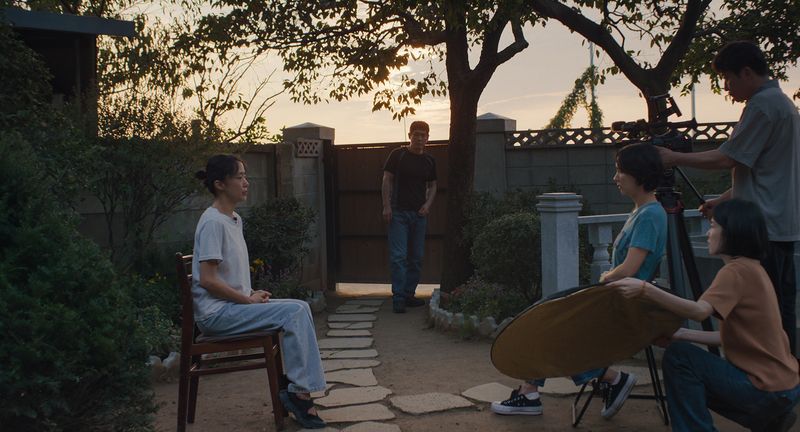
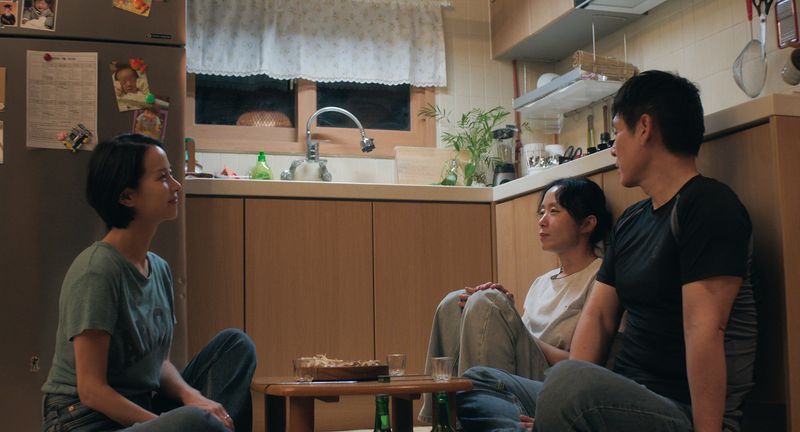
Possible Love follows two couples whose lives become intertwined: Ho-seok (Sul Kyung-gu), a laid-off worker, and his wife Mi-ok (Jeon Do-yeon), as well as Ye-ji (Cho Yeo-jeong), a documentary director seeking to capture their lives on camera, and her wealthy husband Sang-woo (Zo In-sung).
At a press screening and media event for Possible Love held on the 21st at CGV Yongsan I-Park Mall in Seoul's Yongsan District, Lee said, "Just as Ye-ji tries to become independent with production funding but cannot free herself from her husband's absolute control over capital, I am in the same position." He added, "For filmmakers who cannot tell their own stories without relying on capital, their relationship with capital may be an unavoidable fate."
Asked about the film's message, he said, "It is difficult to explain in a word or two. I wanted to talk with the audience about how the world we live in is not that simple and conceals many complex aspects."
Lee explained, "It can be viewed as a story about laid-off workers, a conflict between classes, or an issue concerning the ethics and attitudes of those who make films." He continued, "Through the story of the two couples, I wanted us to feel and think together about various layers of the film, including relationships between people, and share those questions."
"I Couldn't Give Up Their Voices"
The film devotes considerable screen time to the testimonies of workers and their families whose lives collapsed after layoffs and strikes.
In particular, the psychotherapy scene could have been made much shorter if the film's narrative flow were the only consideration. Instead, Lee presents their voices as he would in an actual documentary.
He said, "This film is structured around two couples looking at each other: a couple of laid-off workers and a couple of documentary filmmakers trying to film their lives." He added, "I thought that not only the documentary filmmaker's perspective but also the material Ye-ji researches and interviews had to become part of the film itself."
He continued, "If I had only wanted to show that Ho-seok was receiving psychotherapy for the first time, the scene would not have needed to be that long." Nevertheless, he emphasized, "Delivering their story like an actual documentary was an important part of this film that I could not give up."
Lee elaborated, "This is a story about two couples, but it is also about people who lost their identities after losing their jobs and seeing their lives destroyed." He added, "I wanted the audience to hear directly the empty sense of self they feel inside."
"The First Encounter with Audiences Mattered More Than the Award"
Possible Love grew out of concerns Lee developed more than a decade ago after learning about a major corporation's mass layoffs and the forced suppression of a strike.
Lee admitted, "That incident was a major shock not only to me but also to Korean society. I wanted to tell this story, but I was not certain about the answers to questions such as, 'Do I really have the right to speak honestly about this?' and 'How close am I to them?'"
Ye-ji is also the character most closely modeled on Lee himself, as he translates other people's lives into film.
He said, "The question of whether I can tell their story without consuming their suffering or using it merely as material for making a film is one I have grappled with throughout my life. Even now, I have not found an easy answer.""Regarding his award at the Venice International Film Festival, Lee placed greater significance on the film's first encounter with audiences than on the award itself.
Lee reflected, "I am happy and honored to receive the award, but an award is just one result." He continued, "Even though this is not an easy or provocative film, the audience sensed the questions it raises and what it was trying to say, and responded. I could see that in their expressions and in the way they treated me."
Emphasizing the importance of audiences, Lee said, "The future of Possible Love will be created one step at a time, beginning with the conversation we had today." He added, "Ultimately, it is the audience that completes a film. I hope this film will live on among audiences with greater strength and meaning."
[email protected] Shin Jin-a Reporter