Former Governor Kim Young-rok Denied Approval for KEPCO Presidency; Employment Review Results for Retired Public Officials Released
- Input
- 2026-09-23 12:08:09
- Updated
- 2026-09-23 12:08:09
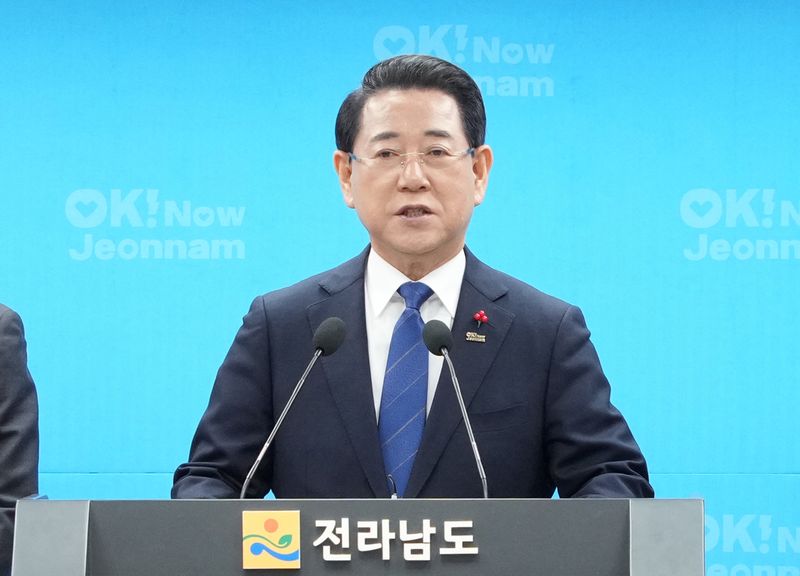
[Financial News] Kim Young-rok, former governor of South Jeolla Province and currently serving in the Jeonnam-Gwangju Integrated Special City, failed the employment review for the presidency of Korea Electric Power Corporation (KEPCO). With Kim, who had been widely considered the leading candidate to succeed President Kim Dong-cheol, out of the running, KEPCO is expected to reopen the recruitment process for its president.
The Government Ethics Committee said on the 23rd that it had reviewed 87 employment review requests from retired public officials on the 21st, issuing employment restriction decisions in seven cases and employment disapproval decisions in 11. It also asked the relevant courts to impose fines in three cases involving individuals who took jobs without first undergoing the required employment review.
Kim entered public service after passing the 21st national senior civil service examination, later serving as minister of the Ministry of Agriculture, Food and Rural Affairs (MAFRA) and governor of South Jeolla Province. After he did not run in the June 3 local elections for mayor of Jeonnam-Gwangju Special City, he was considered a candidate for the KEPCO presidency. KEPCO's executive recommendation committee narrowed the final candidate pool to three people: Kim, former lawmaker Oh Young-sik and Lee Jong-hwan, former executive vice president in charge of KEPCO's business operations. Kim's failure to pass the employment review means that the process of selecting KEPCO's president will also have to begin again.
Kim applied to the Ethics Committee for employment approval in order to take the KEPCO presidency, but his application was denied.
The Ethics Committee determined that none of the grounds for employment approval under Article 34, Paragraph 3, Items 1, 8 and 9 of the Enforcement Decree of the Public Service Ethics Act applied. Item 1 covers cases in which employment is necessary for national security, strengthening the country's external competitiveness or the public interest. Item 8 applies when, considering the nature, importance and frequency of duties handled during the five years before retirement, as well as the duties to be performed after employment, the possibility of exerting influence is deemed low. Item 9 applies when expertise in the relevant field is demonstrated through professional knowledge, qualifications, work experience or research achievements, and the possibility of exerting influence after employment is deemed low.
The committee also denied several attempts by former senior officials to move to affiliated organizations. In separate cases, a former high-ranking general civil servant at the Ministry of Trade and Industry sought to become president of the KATRI Testing and Research Institute, while another former high-ranking general civil servant from the ministry sought a position as full-time vice chairman of the Korea City Gas Association.
Restrictions and disapprovals were also issued in cases involving reemployment at energy public enterprises. A former political appointee of the Chungcheongnam-do Provincial Council who sought to become a standing auditor at Korea Midland Power (KOMIPO) was subject to an employment restriction. The appointment of an executive from Korea Western Power as chief executive officer of Dongducheon Dream Power, as well as the appointment of a retired local government official from Iksan-si as a standing auditor at Korea Gas Safety Corporation, were each denied.
Employment restrictions and employment disapprovals involve different application procedures and criteria. When a retired public official asks the committee to determine whether employment is restricted, the Ethics Committee issues an employment restriction decision if it finds a close connection between the official's duties before retirement and the prospective employer. However, even when such a connection exists, the official may apply for employment approval by citing statutory exceptions. Employment disapproval is issued when the Ethics Committee does not recognize any of those grounds for approval.
[email protected] Lee Bo-mi Reporter