Escalator "Two-Line Standing" Will No Longer Be Enforced... Ministry of the Interior and Safety: "Shift to a Focus on Safe Use"
- Input
- 2026-09-23 11:20:03
- Updated
- 2026-09-23 11:20:03
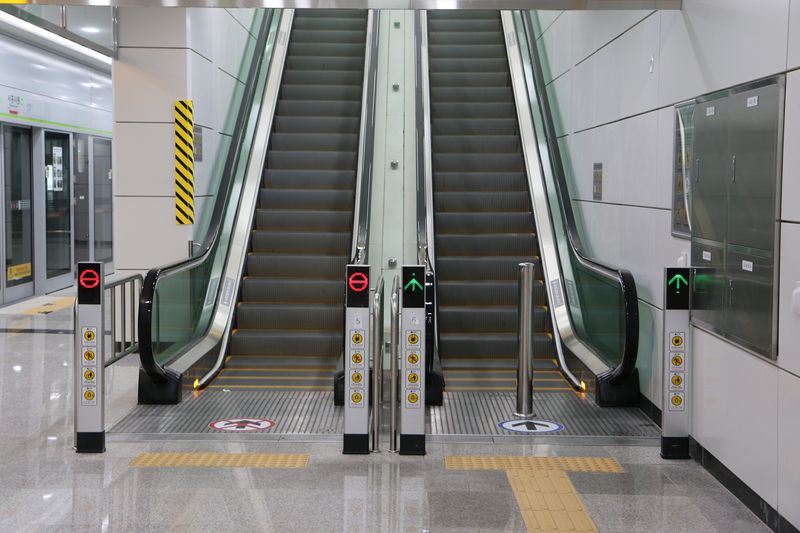
[Financial News] The government has decided to withdraw its policy of establishing a 'two-line standing culture,' which was included in the First Basic Plan for Elevator Safety Management to prevent escalator accidents.
Rather than recommending a specific standing arrangement, the government will shift its policy toward making the three key safety rules—holding the handrail, not walking or running, and staying behind the safety line—part of everyday practice while improving the user environment through signs and floor markings.
The Ministry of the Interior and Safety held a discussion forum on improving escalator safety practices at The Commons at Yonsei University on Sept. 29, with about 200 members of the public and experts taking part. MOIS announced on the 23rd that it would pursue these follow-up measures.
MOIS will accordingly revise the provision in the First Basic Plan for Elevator Safety Management on 'establishing a two-line standing culture for safe escalator use' to 'establishing a voluntary safety culture by making the three key safety rules routine and improving the user environment.'
MOIS will no longer pursue uniform two-line standing campaigns or regulations. Instead, it plans to deploy public workers or volunteers as safety personnel in areas where escalators have long travel distances or heavy traffic, creating a high risk of accidents. The focus will shift from standing arrangements themselves to managing user behavior and facility conditions together.
Participants at the forum said that applying either one-line or two-line standing uniformly would not necessarily ensure safety. Jang Gye-ryeon, head of the Korea Institute for Industrial Research, explained that one-line and two-line standing occur at similar rates in actual use and that there are very few cases overseas in which a specific way of using escalators is regulated.
MOIS explained that many accidents occur not because of one-line or two-line standing itself, but when passengers lose their balance while stepping aside at the request of other users.
The government will designate holding the handrail, not walking or running, and staying behind the safety line as the three key safety rules for escalator use, and will strengthen education and public awareness efforts.
It also plans to produce public service announcements and short videos while expanding customized safety education for children and older adults. On the facilities side, it will expand the installation of handrail sanitizers, floor markings, and safety guidance signs. The government is also considering signs directing passengers carrying large loads to elevators or other alternative transportation and encouraging them to refrain from using mobile phones.
Improving escalator equipment management was also presented as a key task. Heo Yun-seop, a professor at Korea Lift College, pointed out that walking on an escalator can place impacts on its steps and that maintenance may be delayed when spare parts are not readily available.
Park Hyeong-Bae, head of MOIS's Safety Prevention Policy Office, said, "We will reflect public opinion in our policies to make escalators safer and more convenient means of transportation." He added, "Please join us in establishing a voluntary safety culture, including making the three key safety rules part of everyday life."
[email protected] Lee Bo-mi Reporter