7,049 People from More Than 50 Countries Train in Jeju ... Jeju Bets on 16 Years of International Cooperation in AI Hub Bid
- Input
- 2026-09-23 11:22:36
- Updated
- 2026-09-23 11:22:36
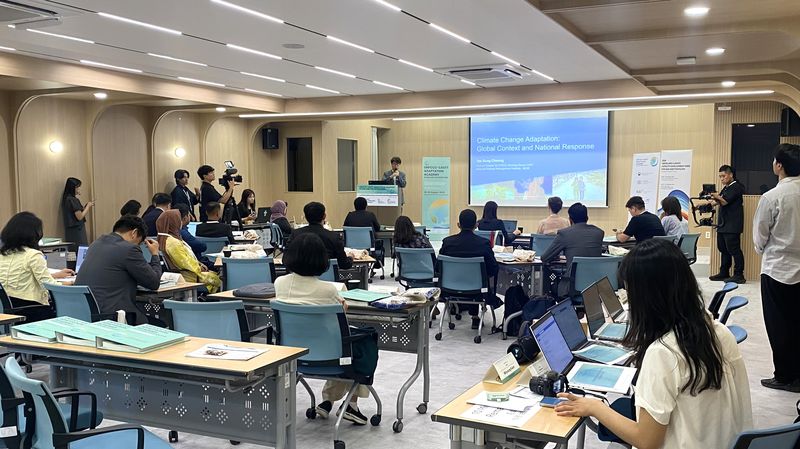
【Financial News | Jeju—Jung Yong-bok】 Jeju is refining its record of international cooperation into a central argument in its bid to host the government's Global AI Hub, ahead of next month's call for candidate sites. The strategy is to put Jeju's 16 years of UN training experience and the National Information Society Agency's (NIA) foundation for international cooperation front and center, in line with the envisioned AI hub's role as an international campus-style platform where personnel from international organizations reside and carry out joint projects.
Jeju Research Institute said on the 23rd that its researchers had analyzed the government's project requirements for the Global AI Hub and concluded that Jeju already has a substantial part of the infrastructure needed for an international cooperation-oriented hub. The study was led by Jo Nam-woon, an associate research fellow at the Jeju Research Institute.
Put simply, a Global AI Hub is similar to an 'international AI cooperation campus.' It would be a platform where governments, international organizations, multilateral development banks, companies, universities and research institutions come together to apply AI to challenges that are difficult for a single country to solve alone, such as climate change, healthcare, food and jobs, and to pursue joint projects.
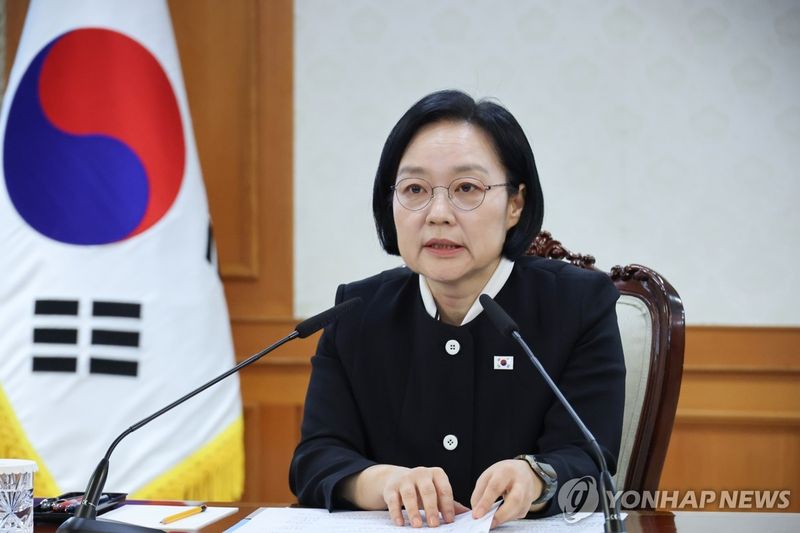
The government held its first Global AI Hub Promotion Committee meeting on the 21st, chaired by Prime Minister Han Seongsook, and discussed the direction of the site-selection process. With the hub's opening targeted for 2027, the government plans to gather opinions through a public hearing in October and other channels before launching a call for candidate sites and an evaluation process.
The government said it is seeking a location suitable for international organization personnel to be based there and carry out joint projects. It has already signed letters of intent for cooperation with nine international organizations. Five multilateral development banks, including the World Bank and the Asian Development Bank (ADB), also took part in a vision declaration ceremony held in May.
The first asset highlighted by the Jeju Research Institute is the United Nations Institute for Training and Research (UNITAR) Jeju International Training Center (CIFAL Jeju).
Since opening in Jeju in 2010, CIFAL Jeju has provided international training for public officials and policymakers from developing countries, primarily in the Asia-Pacific region. This marks its 16th year of operation.
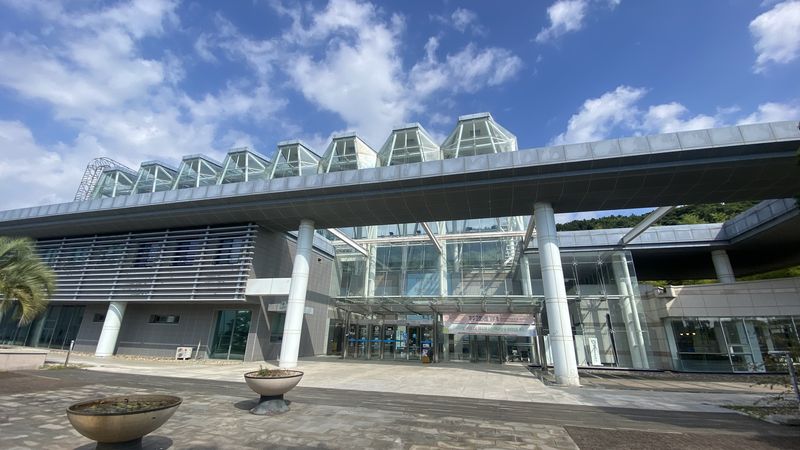
The center's 2025 annual report shows that 7,049 people from more than 150 countries took part in 14 international training and cooperation programs last year. This indicates that Jeju is already operating an international training network in practice, rather than being at the stage of establishing a cooperation structure with international organizations from scratch.
The programs also cover AI and digital transformation. The Jeju Research Institute analyzed that training to strengthen digital transformation and AI-related capabilities among developing countries is already underway, with 509 participants from 63 countries taking part in the 'Inclusive Digital Governance in the Asia-Pacific Region' program.
The second asset is the NIA Jeju Global Center. NIA operates the Global Center in Seogwipo City. The Jeju Research Institute viewed NIA's foundation for international cooperation, which supports the government's Global AI Hub project, and the UNITAR-affiliated international training function in the same area as factors that could differentiate Jeju from other candidate sites.
The explanation is that if CIFAL Jeju serves as a 'UN channel' connecting international organizations with developing countries, the NIA Global Center can serve as a 'national channel' linking the government's international cooperation in digital technology and AI.
The researchers said they had not found another region in South Korea where both functions are established in the same area.
For Jeju, this differs from an argument centered on building a new facility or organization. The study's central claim is that Jeju can expand its already functioning international training and cooperation capabilities to fit the operating structure of a Global AI Hub.
Jo Nam-woon explained, "Of the conditions required for the hub, Jeju already has elements that cannot be created in a short time, even with sufficient budget and time." The analysis is that Jeju's bid is closer to expanding the scale and role of its existing international cooperation foundation than creating new functions from scratch.
However, it is too early to conclude that Jeju has an advantage. The materials released by the government do not yet include specific site-evaluation criteria or point allocations for each criterion. The extent to which experience working with international organizations and existing international training capabilities will count in the actual evaluation will only become clear after the October public hearing and the release of the application guidelines.
Other regions are also moving quickly. Busan, Incheon, Gwangju and North Gyeongsang Province have expressed interest in hosting the Global AI Hub, while local governments in the Seoul metropolitan area, including Goyang, have also joined the competition. Goyang is highlighting the Korea International Exhibition Center (KINTEX), access to Incheon International Airport and Gimpo International Airport, and Ilsan Techno Valley. Incheon is citing the international organizations concentrated in Songdo and Incheon International Airport as its strengths.
This is why it will be difficult for Jeju to compete solely on the argument that it is 'a city with an established record of international cooperation.' The competing regions are likely to be compared on housing, education and healthcare conditions for international organization employees and their families, access to international flights, actual space for organizations to move into, AI research and industrial capabilities, and financial support plans.
The Jeju Research Institute also proposed that Jeju accelerate its implementation preparations rather than merely announce its bid. It recommended first creating an international AI training course linking CIFAL Jeju and the NIA Global Center, as well as preparing materials for on-site inspections by international organizations. It also proposed reviewing the laws and systems needed to attract and operate international organizations and linking international training capabilities with Jeju's industrial and talent-development policies.
In particular, it suggested that Jeju use next month's public hearing as its first official opportunity to explain its case for hosting the hub to the government and international organizations.
Jeju's case also needs to become clearer. In addition to technological infrastructure such as renewable energy and AI data centers, Jeju must demonstrate that it is a place where international organizations can send personnel to stay for extended periods and operate education, research and joint projects.
If the core of the Global AI Hub sought by the government lies in international cooperation rather than large-scale computing infrastructure, Jeju's 16 years of international training experience could become a distinctive asset in the site-selection competition. The October public hearing and the call for candidate sites are expected to serve as the first test of how closely Jeju's approach aligns with the government's actual evaluation criteria.
[email protected] Jung Yong-bok Reporter