Supreme Court Lowers Bar for Redress for Victims of Past State Abuses... Two Cases Vacated and Remanded on the Same Day
- Input
- 2026-09-28 08:14:46
- Updated
- 2026-09-28 08:14:46
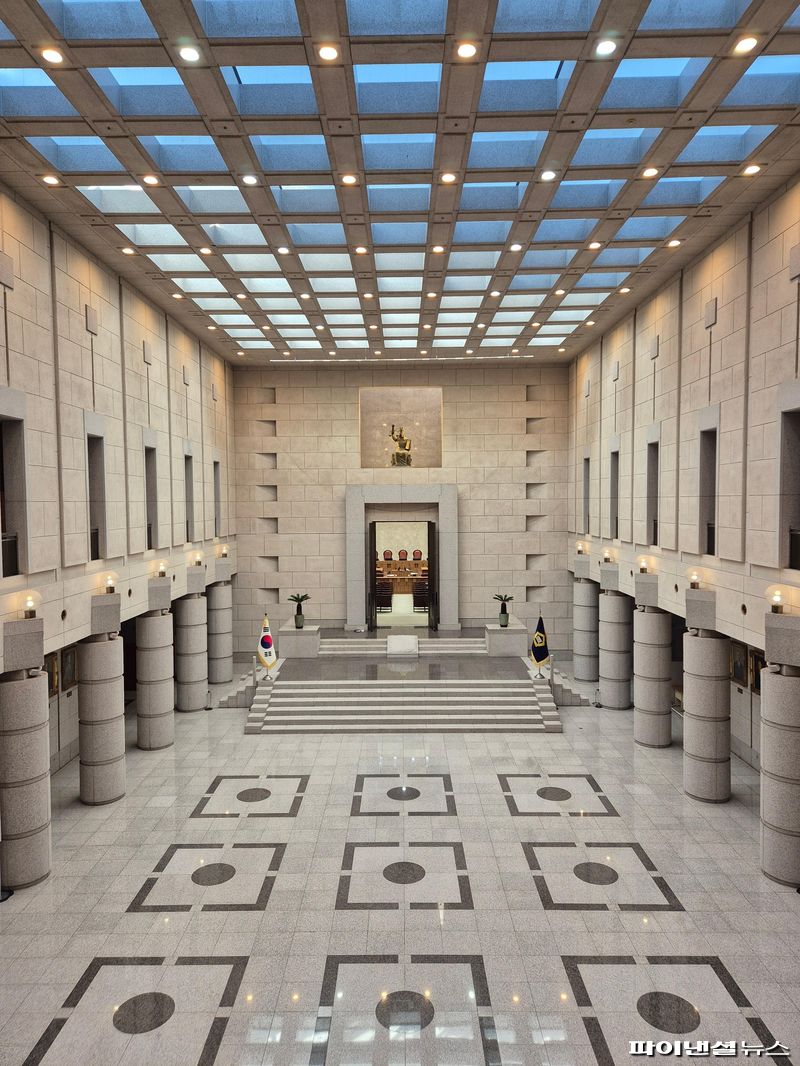
According to legal sources on the 28th, the Supreme Court's Third Division on the 23rd vacated lower-court rulings against the plaintiffs in two damages lawsuits. One was filed by seven people, including victims and bereaved family members of the 1983 Daegu U.S. Cultural Center bombing case, with Justice Eom Sang-pil in charge. The other was filed by six people, including bereaved family members of victims in the 1949 Yeongdeok civilian massacre case, with Justice Oh Seok-jun in charge. The cases were remanded to the Seoul High Court and Daegu District Court, respectively.
"Compensation Available Even After a Judgment of Dismissal"
Victims in the Daegu U.S. Cultural Center case were identified as suspects in the September 1983 bombing, taken into custody without warrants, and illegally detained for periods ranging from several days to more than a month. They were beaten, forced to make statements and tortured during interrogations. They were indicted on charges of violating the National Security Act, the Anti-Communism Act and the former Assembly and Demonstration Act, and their convictions became final.
However, the retrial produced different conclusions. A judgment of dismissal was issued on the charge of violating the former Assembly and Demonstration Act because the relevant provision had later been deleted and the punishment abolished. One victim was acquitted only on the National Security Act and Anti-Communism Act charges because there was insufficient evidence. The first- and second-instance courts recognized the state's liability only for the portions in which the acquittals had become final, excluding the dismissed charge, and ordered the payment of more than 21.23 million won.
The Supreme Court reached a different conclusion. The justices stated that the finality of a judgment of dismissal does not by itself immediately constitute an illegal act by the state. However, they said, "if highly probable evidence is presented that, absent the grounds for dismissal, an acquittal would have been issued under the latter part of Article 325, a causal relationship between the investigative agencies' unlawful acts and the conviction may be recognized," after considering the substance of the charges, the grounds for reopening the retrial and whether a criminal compensation decision had been issued. The court cited the insufficient probative value of the remaining evidence once the statements obtained through torture were excluded. It also noted that, in the criminal compensation proceedings, the court had recognized substantial grounds to find that the victims would have been acquitted if the grounds for dismissal had not existed.
Regarding the statute of limitations, the justices found that, until the final effect of the conviction was removed through a retrial, it was difficult to reasonably expect the victims to distinguish between harm suffered during the investigation and harm caused by their imprisonment and to exercise their rights separately. Applying the doctrine on the reasonable expectation of exercising rights established in an en banc ruling issued last January, the court held that the short-term statute of limitations began to run when the retrial judgment of dismissal became final.
"Claims Can Be Filed Again Even After Losing Due to the Statute of Limitations"
The victims in the Yeongdeok case were shot dead without trial during a police operation to eliminate leftist forces in July 1949. Their families sought compensation for emotional distress from the state in 2012, but the court dismissed the claims, ruling that the five-year statute of limitations had expired from the time of the victims' deaths. The ruling became final in 2014.
In August 2023, the Truth and Reconciliation Commission, Republic of Korea, issued a truth-finding decision stating that the killing of 20 civilians by military and police forces in Yeongdeok, North Gyeongsang Province, without due process on suspicion that they had aided leftist activities was unlawful. The commission recommended an official apology and remedial measures for the victims. Based on the decision, the bereaved families filed another lawsuit in 2024, but the first- and second-instance courts dismissed the claims, ruling that the res judicata effect of the final judgment in the earlier case applied.
The Supreme Court ruled on the matter ex officio, regardless of the grounds for appeal. The basis was the Past History Act, which was comprehensively amended on February 5 and took effect on February 26 of the same month. The amended law provides that the long-term statute of limitations does not apply to damages claims in cases that have received a truth-finding decision. Its supplementary provisions also allow people who had received a final judgment dismissing their claims before the law took effect because the statute of limitations had expired to exercise their rights within three years from the law's effective date.
The justices stated that the supplementary provisions were intended "to comprehensively redress victims of past-state-abuse cases, based on reflection on the fact that the state's compensation for victims and others harmed by past anti-democratic or anti-human-rights acts had been insufficient." The court further ruled that the provisions also apply to cases that were already pending when the amended law took effect. This was the Supreme Court's first ruling defining the scope of the supplementary provisions of the amended Past History Act.
[email protected] Kim Dong-gyu Reporter