Supreme Court: "Amended Past History Settlement Act Applies to Pending Cases" ... Relief for Bereaved Families Who Lost on Statute-of-Limitations Grounds
- Input
- 2026-09-23 11:15:30
- Updated
- 2026-09-23 11:15:30
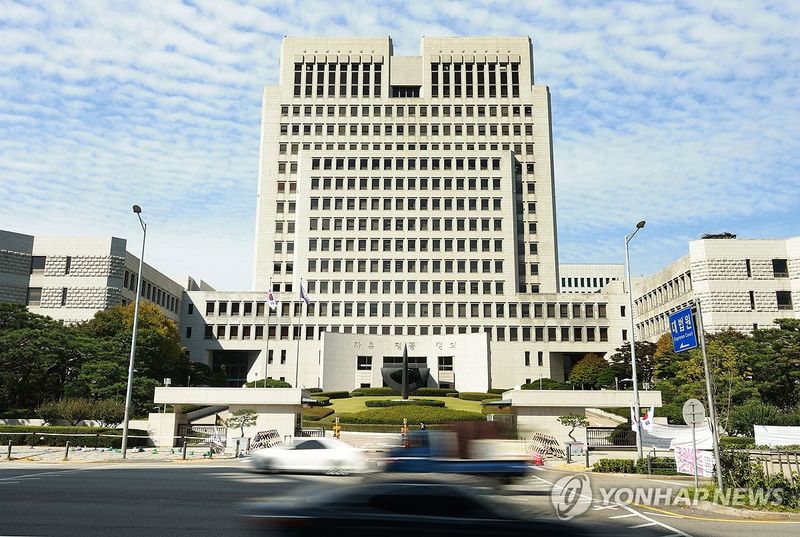
The Third Division of the Supreme Court of Korea, with Justice Oh Seok-jun serving as the justice in charge, on Thursday morning vacated the lower court's ruling against six plaintiffs, including bereaved family members of victims shot to death by police before the Korean War, in their damages suit against the state. The court remanded the case to the Daegu District Court.
The victims, who were the plaintiffs' fathers and grandfathers, were shot to death without judicial proceedings in July 1949 during a police operation to suppress leftist forces. The bereaved family members sought compensation for emotional distress from the state in 2012, but the court dismissed their claims, ruling that the statute of limitations had expired five years after the victims' deaths. The ruling became final in 2014.
In August 2023, the Truth and Reconciliation Commission issued a truth-finding decision determining that it was illegal for military and police forces in Yeongdeok County, North Gyeongsang Province, to kill 20 civilians without due process on suspicion that they had assisted leftist activities. The commission recommended that the state and local governments issue official apologies and take measures to restore the victims' rights. Based on the decision, the bereaved family members filed another lawsuit in 2024.
The central issue was whether the res judicata effect of the previous final judgment, which had rejected the claims because the statute of limitations had expired, also applied to this case.
The trial and appellate courts reached the same conclusion. The trial court dismissed the claims, saying the truth-finding decision merely supplemented the evidence from the earlier case and did not constitute a new ground for excluding the res judicata effect of the final judgment. The appellate court reached the same conclusion and also rejected the alternative claim that the state had neglected its duty to restore the plaintiffs' honor and encourage reconciliation, finding it difficult to view the state as having failed to perform a specific affirmative duty.
The Supreme Court ruled on the matter ex officio, regardless of the grounds for appeal. The basis was the Past History Settlement Act, which was comprehensively amended on February 5 and took effect on February 26. The amended law excludes the application of the long-term statute of limitations to rights to claim damages in cases for which a truth-finding decision has been issued. Its supplementary provisions also allow people who received final judgments dismissing their claims because the statute of limitations had expired before the law took effect to exercise their rights within three years from the law's effective date.
The panel said the supplementary provisions were intended to provide comprehensive relief to victims of past-history cases "on the foundation of reflection on the fact that the state's compensation for victims and others of past anti-democratic or human rights abuses had been inadequate." It ruled that if a truth-finding decision had been issued before the amended law took effect, a new claim could be filed regardless of the amount claimed in the previous judgment. The same applies to cases that were already pending when the amended law took effect.
[email protected] Kim Dong-gyu Reporter