After 43 Years, Victims of Daegu U.S. Cultural Center Incident Gain Path to Additional State Compensation
- Input
- 2026-09-23 11:10:20
- Updated
- 2026-09-23 11:10:20
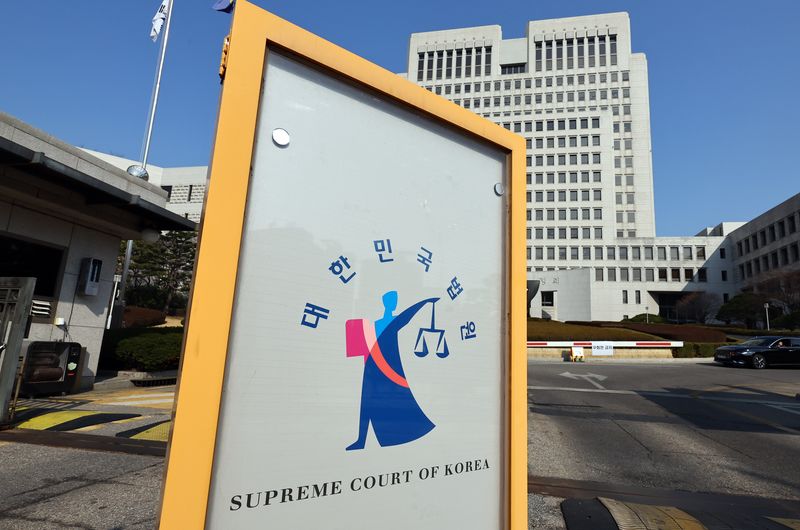
The Third Division of the Supreme Court of Korea, with Justice Eom Sang-pil presiding, overturned on the morning of the 23rd the portion of a lower-court ruling unfavorable to seven victims and family members of victims of the Daegu U.S. Cultural Center incident who had filed a damages lawsuit against the state. The case was remanded to the Seoul High Court.
They were identified as suspects in the Daegu U.S. Cultural Center bombing incident on September 22, 1983, taken into custody without warrants, and illegally detained for periods ranging from several days to more than a month. During the investigation, they were beaten, forced to make statements and tortured. They were indicted on charges of violating the National Security Act, the Anti-Communism Act and the former Assembly and Demonstration Act, and their convictions became final.
In June 2010, the Truth and Reconciliation Commission, Republic of Korea, issued a partial truth-finding decision recognizing the victims' illegal detention and harsh treatment.
The retrial produced different outcomes. A dismissal judgment was issued on the charge of violating the former Assembly and Demonstration Act because the relevant provision was later deleted and the punishment abolished. One victim was acquitted of the charges of violating the National Security Act and the Anti-Communism Act because there was insufficient evidence.
The trial presented two central issues: whether the state could be held liable for damages for the portion involving the Assembly and Demonstration Act violation, for which the retrial had resulted in a dismissal, and whether the remaining plaintiffs' claims for damages had been extinguished by the expiration of the short-term statute of limitations.
The first and second trials reached the same conclusion. They recognized liability only for the portion in which an acquittal had become final and ordered the payment of more than 21.23 million won. They rejected liability for the portion resulting in a dismissal, saying it had not been proven highly probable that an acquittal would have been issued if the grounds for dismissal had not existed. As for the remaining plaintiffs, the courts concluded that they had known of the damage and the perpetrator by June 2010 at the latest, when the Truth and Reconciliation Commission, Republic of Korea, issued its decision, and that the statute of limitations had therefore expired.
The Supreme Court of Korea reached a different conclusion on both issues. The court stated, "The mere fact that a dismissal judgment has become final does not immediately constitute a state tort. However, when highly probable evidence is established, based on the substance of the charged facts, the grounds for granting the retrial and whether a criminal compensation decision was issued, that an acquittal would have been rendered under the latter part of Article 325 had the grounds for dismissal not existed, the causal relationship between the investigative authorities' unlawful acts and the conviction may be recognized." In this case, the court cited the insufficient probative value of the remaining evidence once the statements obtained through torture were excluded, as well as the finding in the criminal compensation proceedings that there were compelling grounds to believe the victims would have been acquitted had the grounds for dismissal not existed.
Regarding the statute of limitations, the court also found it difficult to expect victims to distinguish between harm suffered during the investigation and harm caused by their imprisonment, and to exercise their rights separately, until the retrial eliminated the final effect of the conviction. Applying the legal principle concerning the reasonable expectation of exercising rights established in an en banc ruling issued in January, it held that the statute of limitations began to run when the dismissal judgment in the retrial became final.
[email protected] Kim Dong-gyu Reporter