Auto, Steel and Shipbuilding Industries Hit by a 'Strike Wave'... Union Risks Come Into Sharper Focus Under IFRS 18 [fnMarketWatch]
- Input
- 2026-09-28 09:10:41
- Updated
- 2026-09-28 09:10:41
According to accounting industry sources on the 28th, the income statement framework used to present operating profit will change substantially when IFRS 18 takes effect in January next year. IFRS 18 divides profit or loss into five categories—operating, investing, financing, income taxes and discontinued operations—and requires operating profit to be presented as a defined subtotal under IFRS Accounting Standards. Revenue and expenses that are not classified in another category are, in principle, included in the operating category.
Items are not excluded from the operating category simply because they are highly volatile or unusual. Accordingly, accounting professionals explain that costs arising during strikes and labor-management disputes may be reflected in operating performance depending on their nature and cause.
An accounting firm official explained, "IFRS 18 does not distinguish between operating and non-operating items based on whether a cost is one-off or recurring. If the profit or loss is related to the core business, costs incurred during a labor-management dispute may also be reflected in operating performance unless they fall into another category."
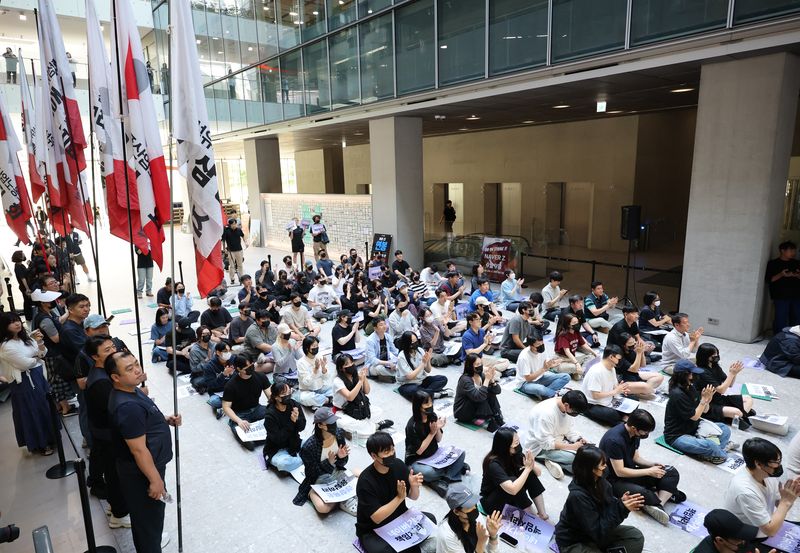
In fact, this year, labor-management disputes occurred one after another across major manufacturing sectors, including automobiles, steel and shipbuilding.
In the auto industry, concerns arose over production disruptions as partial and full strikes continued over wages and collective bargaining agreements.
Indeed, the POSCO union launched its first partial strike since the company was founded, then carried out a second partial strike lasting 120 hours from the 16th through the 21st. The strike also expanded to hot-rolled steel and heavy-plate-related plants at Pohang Steelworks and Gwangyang Steel Works. POSCO, however, says operations were not disrupted because it deployed replacement workers.
At major shipbuilders such as HD Hyundai Heavy Industries and Hanwha Ocean, partial strikes over wages and collective bargaining agreements have also continued, prompting attention to their potential impact on production schedules and cost burdens.
Strikes affect earnings in two ways. When production lines stop, declines in production and sales lead to lower revenue and operating profit. Even if production disruptions are avoided, additional costs from deploying replacement workers, changing production schedules or delaying deliveries can weigh on profitability.
IFRS 18 also sets out more specific rules for presenting expenses within the operating category. Companies must present operating expenses in the structure most useful to users, based on the nature of expenses, their function or a combination of both. When presenting expenses by function, they must also disclose information on the nature of expenses, such as employee benefits, depreciation and amortization, and impairment of non-financial assets.
Accounting professionals therefore believe that manufacturers with frequent strikes or heavy labor-cost burdens need to examine more closely the impact of labor-relations risks on operating performance. The impact of the same strike on each company's operating performance may differ depending on the actual scale of production losses, whether replacement workers are deployed, and whether delivery delays or additional costs arise.
An accounting industry official noted, "After IFRS 18 is introduced, companies will present operating performance using more consistent criteria. Investors, too, need to examine how costs arising from the core business, including strikes and labor-management disputes, affect profitability."
[email protected] Kim Hyun-jung Reporter