Prosecutors Who Do Not Investigate, More Proactive Judges... Courtrooms in Transition [Major Overhaul of the Criminal Justice System, Part 2]
- Input
- 2026-09-23 14:04:48
- Updated
- 2026-09-23 14:04:48
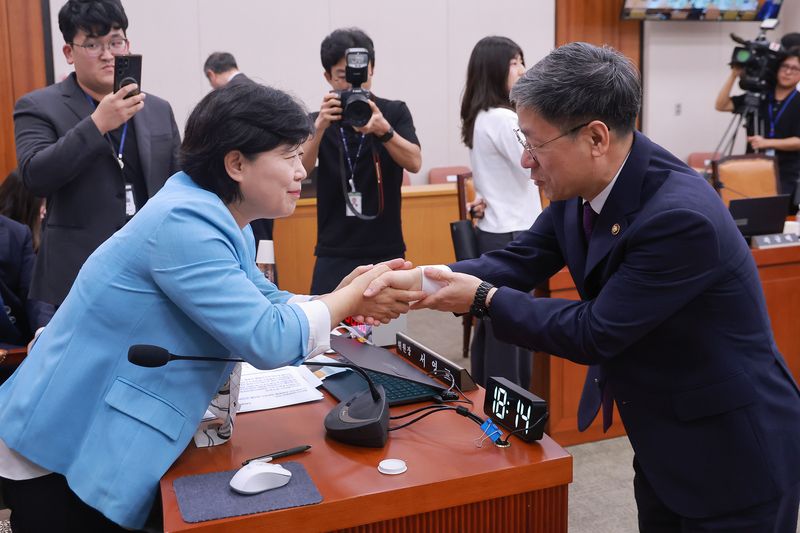
[Financial News] Courts are expected to face growing challenges as they determine rulings amid the vacuum created by the official abolition of the Supreme Prosecutors' Office of the Republic of Korea (SPO). The Serious Crime Investigation Agency under the Ministry of the Interior and Safety (MOIS) and the police will exclusively handle all substantive investigations, including those involving serious crimes. Prosecutors at the Public Prosecution Office under the Ministry of Justice will focus solely on their core duties of bringing charges and maintaining public prosecutions. As prosecutors who neither directly directed nor conducted investigations appear in court, the key question will be how far judges can fill gaps in the case records. Courts may also take on the role of verifying records prepared by external investigative agencies and determining whether indictments were lawfully filed under the newly divided prosecution system.
Prosecutors Give Up Investigative Authority... ‘Coaching and Reviewing Investigations’ to Be Expanded
According to legal circles on the 23rd, “direct investigation” will disappear from the prosecutor’s role starting October 2 under the amended Criminal Procedure Act of the Republic of Korea and the newly revised rules governing investigations between prosecutors and judicial police officers. Prosecutors will be unable to conduct supplementary investigations directly, either in direct investigations or in cases referred by the police. If additional investigation is needed, they must request it from police investigators. Even if they discover evidence of a separate offense, they must ask police investigators to investigate it.At the same time, mechanisms designed to make requests for supplementary investigations more effective will be strengthened. As a rule, police investigators must carry out a prosecutor’s request for a supplementary investigation within one month, while the prosecutor will retain the case number and monitor compliance. Before formally reporting the results of the supplementary investigation, police investigators must consult with the prosecutor, who must provide an opinion within seven days. A comprehensive investigation report must also explain any differences between the previous investigation results and the evidence, as well as the content and results of the supplementary investigation.
A fact-finding procedure will also be introduced to replace direct investigations. Prosecutors may hear from suspects, people connected to a case and police investigators, or receive materials from them, to decide whether to indict a referred case, request a reinvestigation of a non-referred case or maintain a public prosecution. They may also seek expert opinions. However, statements and materials obtained through this process cannot be used as evidence at trial, distinguishing it from a direct supplementary investigation.
Prosecutors will retain their judicial oversight role at the warrant stage. When police request a detention warrant, the prosecutor may interview the suspect or defense counsel, or ask police investigators to provide their views, before deciding whether to seek the warrant. Interviews may be conducted in person, by video or by telephone. A procedure has also been established allowing police to ask prosecutors for their opinions on legal assessments and the appropriateness of evidence collection during an investigation. Cases requiring specialized legal judgments, including financial and securities crimes, fair-trade violations and technology leaks, have been added to the category of “important cases,” allowing prosecutors and police to cooperate before a case is referred.
Legal experts expect prosecutors’ roles in warrant applications and charging decisions to become more important now that direct investigations are being eliminated, but they also raise concerns about a growing case backlog. A former prosecutor turned attorney said, "If a policy of strictly assessing warrant applications and whether to indict takes hold, prosecutors at the Public Prosecution Office could have a more distinct presence," but added, "It is questionable whether cases can be handled swiftly when there are already many unresolved cases." An attorney in Seocho-dong said, "If interviews with prosecutors become institutionalized, I think they could be used as an opportunity to convey more active opinions about cases."
Trying to Fill ‘Gaps’ Could Lead to ‘Prejudgment’... Judges Weigh Their Role
Some argue that judges will need to take a more active role in verifying facts than they did in the past. If records prepared by external investigative agencies are less complete than those produced during the era of direct investigations by prosecutors, or if unexpected facts emerge during trial, the responsibility for uncovering the substantive truth will fall to the court.Some predict that courts will make greater use of court-initiated examination of evidence under the Criminal Procedure Act of the Republic of Korea. To clarify the issues in a case, the trial panel may question defendants or witnesses more extensively, request fact-finding inquiries from relevant institutions on its own initiative and order the submission of documents.
However, legal circles also warn that excessive intervention by the trial panel could lead judges to form a belief in guilt in a particular direction. In the adversarial system, a fundamental principle of criminal trials, if the court takes too active a role in uncovering the truth, the defense may object that the judges are conducting the trial with a preconceived view of guilt. Critics could also argue that judges have taken over the prosecutor’s burden of proof and created an “uneven playing field.”
Choi Kang-yong, a court-appointed public defender at the Suwon District Court Seongnam Branch, emphasized, "In criminal proceedings, the prosecutor bears the burden of proof. If, even after the best possible examination, the court cannot reach a firm conclusion about whether the alleged criminal facts exist, the principle is that the defendant must be acquitted according to the allocation of the burden of proof. The trial panel must continue to remain neutral."
This is why some analysts say the acquittal rate could rise if prosecutors are unable to immediately fill evidentiary gaps through supplementary investigations. Judges, too, will have to walk a fine line between conducting an insufficient examination and facing accusations of prejudgment.
[email protected] Lee Chang-hoon and Choi Eun-sol Reporter