Jeju Redesigns Safety Net After 'False Closure' of Missing-Person Cases... Tourism Reservations and Parking Records to Be Used in Searches
- Input
- 2026-09-23 10:27:21
- Updated
- 2026-09-23 10:27:21
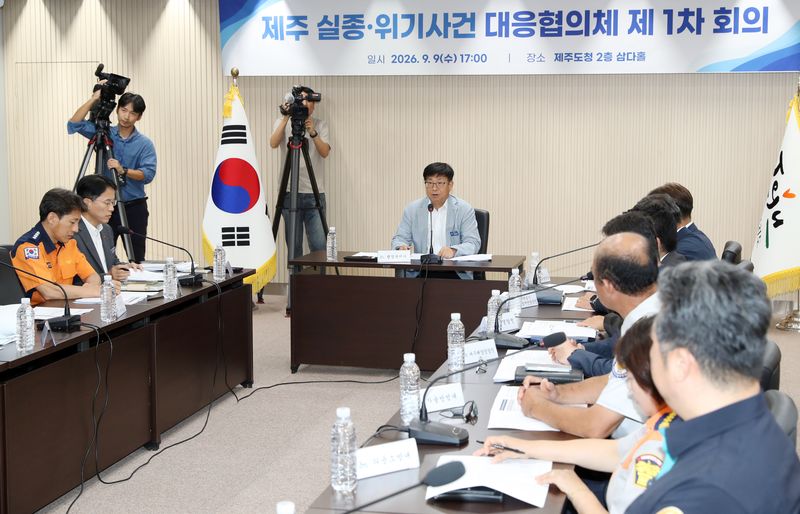
[Financial News | Jeju—Reporter Jeong Yong-bok] Jeju, where concerns over the safety net grew after the mishandling of a missing-person report came to light, has overhauled its system for searching for missing people. The key change is to bring information and equipment scattered across multiple agencies into a single support system, rather than requesting them separately to find each missing person.
According to Jeju Special Self-Governing Province on the 23rd, the province has finalized an integrated manual outlining the roles of each agency and joint response procedures under the Jeju Missing Persons and Crisis Incident Response Council. The council was formed on the 1st, held its first meeting on the 9th, and established the manual on the 17th after incorporating feedback from the participating agencies.
The measures were drawn up amid a recent case in Jeju involving the false closure of a missing-person report.
After reviewing 298 missing-person cases handled and closed by the officer in question, the Jeju Provincial Police Agency identified 25 additional cases in which improper handling was suspected or confirmed, including cases outside the scope of the original investigation. In 10 of those cases, the officer was suspected of closing the case without confirming the missing person's safety. In the other 15, the person's whereabouts had been confirmed, but a reason for clearing the case that did not match the actual circumstances was entered into the missing-person profiling system. Prosecutors also searched the National Police Agency, the Jeju Provincial Police Agency and Jeju Seobu Police Station on the 8th as part of an investigation into the overall handling of the missing-person cases.
The new manual does not automatically apply to every missing-person report. It is activated for cases that are highly time-sensitive, require cooperation from multiple agencies and call for extensive searches, when the Jeju Provincial Police Agency or the Jeju Regional Headquarters, Korea Coast Guard requests search support from Jeju Special Self-Governing Province. The system covers not only missing children, people with disabilities and dementia patients, but also runaways and other adults.
The police and coast guard retain authority over search decisions and command. They assess the missing person's level of risk, draw up the search plan, direct operations in the field and decide when the search should end. Jeju Special Self-Governing Province serves as a support channel connecting personnel and equipment held by its administrative cities, fire services, autonomous police, relevant agencies and private organizations to the search site. In other words, when the police and coast guard decide "where and how to search," the province works to quickly gather the people, information and equipment needed for the operation.
Administrative information will also be used in searches. When police or coast guard officials make a lawful request, Jeju Special Self-Governing Province will cooperate in checking changes to the missing person's resident registration, entry and exit records at public parking lots, tourist-attraction reservation information, vehicle registration, health and medical information, and various permits and licenses. This is not a system for agencies to share personal information routinely; it connects only the information needed during an emergency search following a lawful request.
The inclusion of tourist-attraction reservation information is particularly notable because Jeju receives large numbers of tourists. It will allow traces of tourists and short-term visitors, whose movements may be difficult to confirm using only resident registration or vehicle information, to be used as search clues.
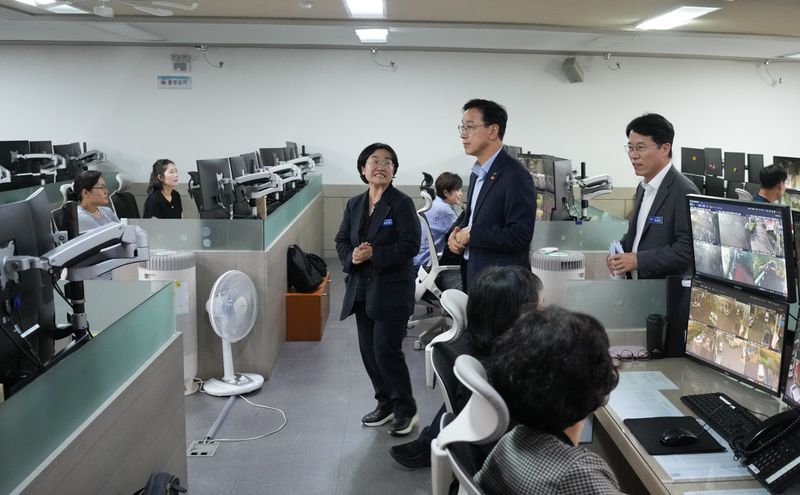
The use of CCTV will also be expanded. The new manual links concentrated CCTV monitoring and the artificial intelligence (AI) missing-person tracking platform TOSS to search operations. When information about a missing person's appearance, clothing and accessories is entered, TOSS analyzes CCTV footage using AI to identify similar-looking individuals and trace their movements. Jeju Special Self-Governing Province has operated the system since 2024.
Drones, search-and-rescue dogs, and traffic and weather information will operate under the same system. When a missing person is believed to be in a mountainous or coastal area, or when a broad area must be searched, personnel and equipment from fire services, the autonomous police and private organizations, as well as the police and coast guard, will be deployed according to the nature of the case.
The response process has been standardized into eight stages: reporting and recognition; initial situation assessment; a decision on whether to activate the council; resource requests and dispatch; integrated field operations; information and public communication; discovery and closure; and return and after-action review.
The response does not simply end when the missing person is found. After the search concludes, the agencies will review which resources were deployed and what problems arose in the field, then incorporate the findings into response procedures for future cases.
Park Cheon-su, deputy governor of Jeju Special Self-Governing Province, will chair the council, while the head of the provincial Safety and Health Office will serve as vice chair. The province's Safety Policy Division will act as the central channel for collecting support requests from each agency.
When an actual search begins, the province will select and operate the units needed for the case from six functional teams, including an investigation and search team, special teams for different categories of missing persons, and a civilian cooperation team. During normal periods, it will manage emergency contact networks and lists of available equipment and personnel for each agency.
Jeju Special Self-Governing Province plans to verify its emergency contact networks and resource lists every quarter and update the integrated manual annually. It will also hold regular and working-level meetings to continue addressing problems involving requests, dispatch and on-site support that emerge during actual incidents.
Deputy Governor Park Cheon-su said, "The speed of the response immediately after a missing-person report is filed determines lives and safety." He added, "Under the field command of the police and coast guard, we will quickly mobilize administrative and civilian resources to protect the golden hour for searches."
The success of the new system will depend less on the manual itself than on how quickly it functions once an actual incident occurs. How rapidly the integrated system connects the police's search decisions with the local government's administrative and technological resources is expected to be a test of Jeju's safety net.
[email protected] Jeong Yong-bok Reporter