Jeonnam-Gwangju Integrated Special City Makes First Promotions Since Launch, Focusing on Organizational Stability and Performance
- Input
- 2026-09-23 10:33:17
- Updated
- 2026-09-23 10:33:17
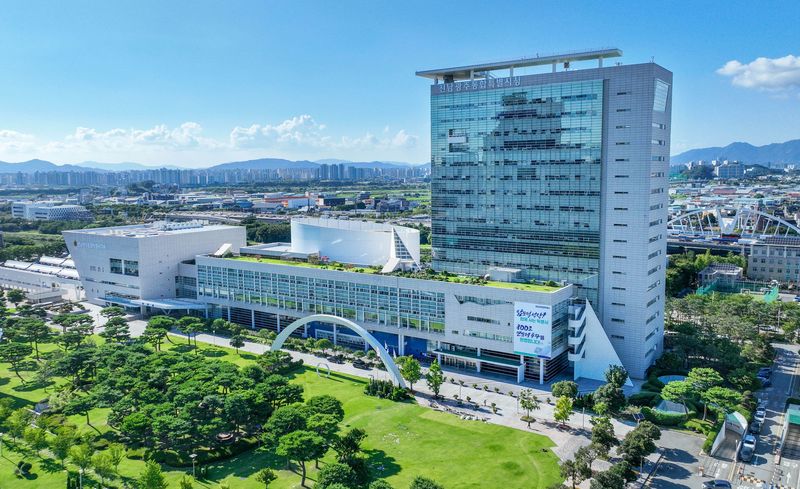
【Financial News Jeonnam-Gwangju = Reporter Hwang Tae-jong】Jeonnam-Gwangju Integrated Special City (Gwangju Special City) held a personnel committee meeting and approved promotions for 34 officials, including three to Grade 2, seven to Grade 3 and 24 to Grade 4, carrying out its first round of promotions since its launch.
Min Hyung-bae, mayor of Gwangju Special City, said, "This personnel decision is the first practical step toward administrative integration," adding, "We sought to establish a system capable of properly addressing major special-city administrative priorities while fully respecting the experience and opinions accumulated by the organization."
He added, "Administrative integration is the process of bringing different organizations, people and working methods together under a single system. We will continue to carry out subsequent personnel appointments and organizational reforms in a stable manner, based on these principles."
For senior officials in Grades 2 and 3, Gwangju Special City approved promotions for only three of the five positions subject to promotion in this round. The remaining two positions are scheduled to be filled in January next year after the city reviews the operational situation.
According to Gwangju Special City on the 23rd, the three Grade 2 promotions are Kang Hyo-seok, head of the Administrative Integration Promotion Task Force; Kim Ki-hong, head of the Jeonnam-Gwangju Semiconductor Industry Support Task Force; and Lee Sang-bae, head of the Climate and Environment Bureau. They will be promoted from local deputy director-general to local director-general.
Kang Hyo-seok, head of the Administrative Integration Promotion Task Force, has built extensive experience in culture, industry and agricultural policy, having served as head of the Bureau of Cultural Prosperity, auditor and head of the Agriculture, Livestock and Food Bureau. He was reportedly highly regarded for contributing to the competitiveness of local culture and industry through events such as the Jeonnam International Ink Biennale and Namdo Film Festival, the opening of the National Uibyeong History Museum, efforts to attract secondary-battery investments and youth employment programs.
Kim Ki-hong, head of the Jeonnam-Gwangju Semiconductor Industry Support Task Force, has coordinated issues across various fields, including future-industry development, international events, organizational affairs and local administration, while serving as head of the Tourism and Sports Bureau, policy planning officer and head of the Local Administration Bureau. He was reportedly recognized for helping attract and build the National AI Computing Center and the OpenAI-SK data center, securing national funding after Yeosu and Gwangyang were designated as areas for preemptive response to industrial crises, and contributing to the successful hosting of the National Sports Festival and National Para Games.
Lee Sang-bae, head of the Climate and Environment Bureau, led key industrial and urban development projects while serving as head of the Urban Regeneration Bureau and Strategic Industries Bureau. These projects included establishing Gwangju Global Motors (GGM) under the Gwangju-style jobs initiative, attracting Daeyu Winia, and developing Energy Valley and Cheomdan 3 District. He was reportedly highly evaluated for contributing to the development of the foundation for future industries and resolving urban issues through an exemption from the preliminary feasibility study for the National AI Data Center, the enactment of a special law, development of the former Jeonbang and Ilshin Spinning sites, and urban regeneration around Gwangju Station.
For promotions to Grades 3 and 4, the committee comprehensively reviewed candidates based on their accumulated work performance and major achievements in each field, as well as their job performance, leadership, expertise and organizational management skills. It recognized seven Grade 3 officials, or local deputy director-generals, and 24 Grade 4 officials, or local secretaries, as "people who get the work done."
Gwangju Special City plans to complete appointments and transfers for positions at Grade 4 and above, followed sequentially by promotions and transfers for Grade 5 and below, in line with the organizational overhaul scheduled to take effect on October 7.
It also plans to comprehensively consider regional administrative needs, living areas and job expertise when assigning functions and personnel among the three government offices, so that the new organizational system can get underway smoothly and stably.
The following is the list of key personnel appointments.
◇ Promotions from Grade 3 to Grade 2 (3 officials) △Administrative Integration Promotion Task Force — Kang Hyo-seok △Administrative Support Division (on secondment) — Kim Ki-hong △Climate and Environment Bureau — Lee Sang-bae ◇Promotions from Grade 4 to Grade 3 (7 officials) △Democratic and Veterans Affairs Division — Kang Eun-sun △Administrative Support Division — Kim Seung-hee △Administrative Support Division (on secondment) — Bae Yong-seok △Strategic Promotion Task Force — Yoon Mi-ra △Cultural Policy Office — Lee Gil-yong △Gwangyang Bay Area Free Economic Zone Authority — Lee Byung-cheol △Eco-friendly Fisheries Division — Jeon Chang-woo ◇Promotions from Grade 5 to Grade 4 (24 officials) △Policy Planning Office — Go Gyeong-hee △Jeonnam-Gwangju Integrated Special City — Kim Sang-sook △Gwangju Institute of Health and Environment — Kim Seon-hee △Jeonnam Autonomous Police Administration Division — Kim Young-jun △Sports Promotion Division — Kim Won-jung △Greenery Policy Division — Moon Ki-hwan △Health and Hygiene Division — Park Ju-yeon △Public Transportation Division — Park Cheol-ju △Metropolitan Safety Policy Division — Bae Jun △Marine and Fisheries Science Institute — Seo Dae-cheol △Gwangju Library — Seo Woo-jeong △University Talent Policy Division — Seon Mi-jeong △Urban and Social Disaster Division — Shin Yeon-sik △Industrial Complex Development Division — Yang Si-bong △Press Office — Lee Yoo-jong △Administrative Support Division (on secondment) — Lee Yoo-ji △Administrative Support Division (on secondment) — Jang Pan-seok △Accounting Management Division — Jeong Mu-hyeok △Gender and Family Affairs Division — Jeong Yo-sim △Eastern Regional Headquarters — Jeong Chae-yong △Urban Planning Division — Jo Seong-jun △Integrated Planning Division — Jo Jae-sul △Press Office — Choi Min-seong △Road Policy Division — Han Ga-deuk
[email protected] Hwang Tae-jong Reporter