Securities Stocks Down 13% from Peak as Undervaluation Appeal Emerges Amid Earnings Slowdown
- Input
- 2026-09-23 09:51:09
- Updated
- 2026-09-23 09:51:09
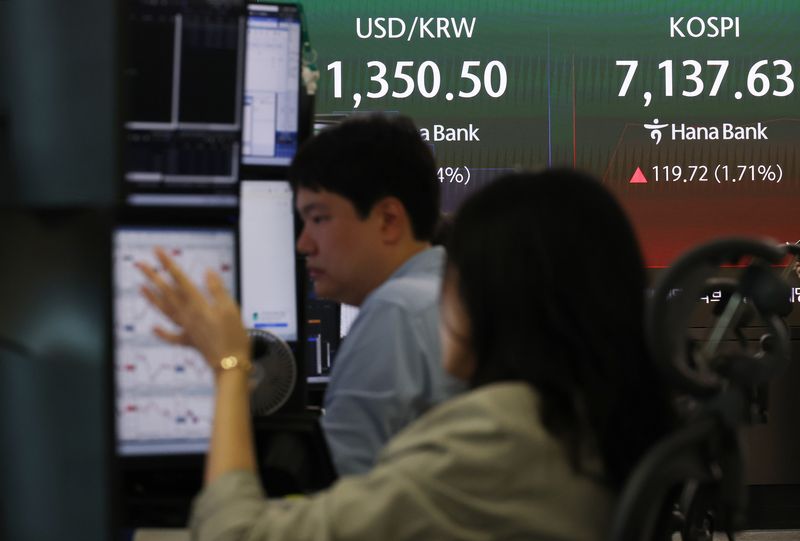
[Financial News] With the securities index edging up slightly, analysts say the sector's valuation appeal and dividend yields deserve attention, as concerns over earnings slowdowns caused by falling trading value and rising interest rates have already been largely reflected in stock prices.
According to the Korea Exchange (KRX), as of 9:40 a.m. on the 23rd, the KOSPI securities industry index was trading at 5,017.55, up 20.45 points, or 0.41%, from the previous session. That was about 13.3% below the peak of 5,786.32 recorded on Aug. 13.
The main burden on securities stocks is sluggish trading. During the third and fourth quarters through the 22nd, average daily trading value excluding exchange-traded funds (ETFs) stood at 52 trillion won, down 43% from 91.1 trillion won in the second quarter. It was also 22% lower than the 66.8 trillion won recorded in the first quarter. In September, trading value totaled just 40.1 trillion won through the 22nd, the lowest level this year.
The average margin balance also fell by about 10% from the second quarter. As stock trading declines, fee income is falling, while interest income from margin transactions could also weaken, increasing earnings pressure on brokerage operations.
The asset management business is also unlikely to avoid the impact of rising interest rates and falling stock prices. As of the 22nd, the yield on three-year Korean Treasury bonds had risen 0.34 percentage points from the end of June. That was more than twice the 0.15-percentage-point increase recorded in the second quarter. When bond yields rise, the valuation of bonds held by securities firms falls, weighing on asset management gains and losses. The KOSPI's roughly 20% correction during the third and fourth quarters was also negative for stock-related asset management performance.
However, some analysts say concerns over deteriorating earnings have already been largely reflected in stock prices. Indicators such as trading value and interest rates, which affect securities firms' earnings, can be tracked in real time, so they tend to be reflected in share prices ahead of earnings announcements.
Analysts also say the room for a further contraction in trading activity has narrowed. The market capitalization turnover ratio, which rose to around 500% in May and June, has recently approached its historical low. The gap between market interest rates and the base rate has also widened to more than 1 percentage point, suggesting that the possibility of further rate hikes has already been substantially priced in.
Lower stock prices and dividend yields are also drawing attention. The average price-to-book ratio (PBR) of major large securities firms is estimated to be below 0.9 times, while this year's expected dividend yield is projected at 7%. Although a short-term earnings recovery may be difficult to achieve, analysts say investors can take a selective approach based on valuations and dividends.
The investment banking (IB) business is viewed as a source of support for earnings. As the policy stance toward the real estate project financing (PF) market shifts toward support, new transactions are expected to expand, particularly for high-quality projects. Corporate funding demand and initial public offering (IPO) demand postponed from the first half are also expected to boost corporate finance revenue.
Jeon Bae-seung, a research analyst at LS Securities, said, "At this point, concerns over a slowdown in business conditions have been sufficiently reflected in stock prices, and we believe the likelihood of further deterioration in industry indicators is low. Although the near-term rebound momentum for stock prices is weak during the earnings-decline phase, we recommend a selective approach from a bottom-fishing perspective."
[email protected] Choi Du-seon Reporter