"Holds up well in the worst environment"—Why Korean Air's target price was raised by 5% [Shareholder Club]
- Input
- 2026-09-23 10:56:29
- Updated
- 2026-09-23 10:56:29
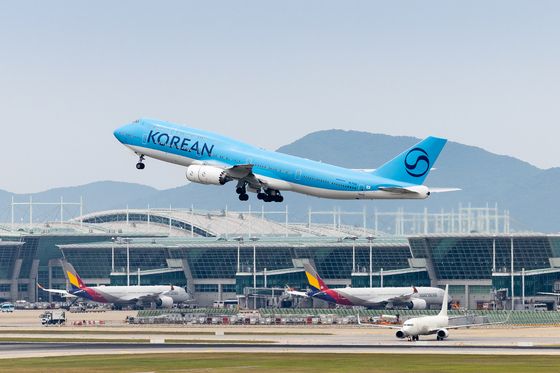
[Financial News] Korean Air, struggling amid the era of the "three highs"—high oil prices, high interest rates, and a high exchange rate—is receiving positive evaluations from securities analysts. Its upside potential is being rated highly because it has held up well even in the worst environment.
KB Securities raised its target price for Korean Air by 5% to 42,000 won on the 23rd and maintained its "Buy" rating. On the same day, Hana Securities also maintained its "Buy" rating and target price of 41,000 won. Korean Air's closing price the previous day was 31,400 won.
Researchers Kang Sung-jin and Kim Ji-yoon explained in a report that day, "It is worth noting that Korean Air is demonstrating strong earnings-defense capabilities in the worst operating environment this year, marked by a combination of a high exchange rate, high oil prices, and high interest rates."
KB Securities expects Korean Air's consolidated operating profit this year to decline 5% year on year to 1.1 trillion won. However, it forecasts that the figure will surge to 2.7 trillion won next year, exceeding the consensus estimate. Hana Securities projected Korean Air's third-quarter standalone revenue this year at 515.2 billion won and standalone operating profit at 497.6 billion won.
Dohyun Ahn, a researcher at Hana Securities, said, "The company remains undervalued because air cargo is supporting profitability, while growth can also be expected from the premiumization of passenger services and its MRO (aircraft maintenance) and aerospace businesses." He added, "The current share price is only in the eight-times range on a P/E basis, based on estimated 2027 earnings."
Regarding high oil prices, Ahn explained, "Fuel-price pass-through is happening faster in air cargo than in passenger services, and because the fourth quarter is the peak season for air cargo, this is a market in which air cargo carriers can hold the upper hand for the time being."
KB Securities cited rising preference among foreign visitors for traveling to South Korea and growing cargo demand as factors improving Korean Air's earnings-generating capacity. The two researchers said, "Rising spending on travel in South Korea is leading to higher prices for airline tickets issued overseas." They added, "With artificial intelligence (AI) investment driving up cargo demand and new aircraft production being delayed, cargo fares are expected to remain high."
Securities analysts also expect the operating results of Asiana Airlines, a subsidiary of Korean Air, to improve starting in the third quarter of this year. KB Securities said, "Once the recognition of costs related to the merger of the two companies—Korean Air and Asiana Airlines—is completed, Asiana Airlines' operating results could improve, supported by a recovery in passenger travel conditions and greater efficiency in the cargo business following the merger."
It added, "Korean Air's earnings-generating capacity has improved significantly, and its operating profit could be revised upward further if external conditions, including exchange rates, oil prices, and interest rates, return to average levels."
[email protected] Kim Hee-sun Reporter