Gwangju-Area City Bus Routes to Be Reorganized from Late October; Route Count to Rise from 103 to 115 and Service Intervals to Shrink by 4.5 Minutes
- Input
- 2026-09-23 08:57:57
- Updated
- 2026-09-23 08:57:57
[Financial News, Jeonnam-Gwangju = Reporter Hwang Tae-jong] Gwangju-area city bus routes will be reorganized beginning in late October.
The changes are intended to address shifts in living areas caused by urban expansion and prepare for the opening of Gwangju Urban Railway Line 2. The number of routes will increase by 12, from 103 to 115, while the average service interval will be shortened by 4.5 minutes, from 25.2 minutes to 20.7 minutes.
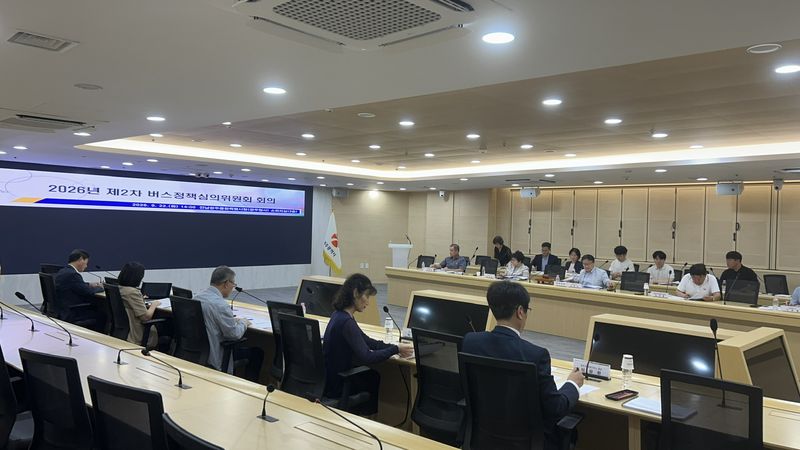
On the 23rd, Jeonnam-Gwangju Integrated Special City (Gwangju Metropolitan City) said it had convened the Bus Policy Deliberation Committee in a small meeting room at Gwangju City Hall the previous day to review and approve the proposed reorganization of Gwangju-area city bus routes.
The main elements of the reorganization include expanding direct routes connecting major facilities such as universities and terminals, as well as introducing express services on popular long-distance routes to improve travel speed; expanding the route network in 19 new residential areas and locations underserved by public transportation, while shortening service intervals through route integration and separation in outlying areas; expanding regional and express services toward Naju Innovation City and Hwasun, and improving operating efficiency by reorganizing overlapping sections with rural buses; and improving transfer convenience by relocating stops near stations and linking their names to station names ahead of the opening of Gwangju Urban Railway Line 2.
Gwangju Metropolitan City also plans to establish or upgrade 11 bus turnaround facilities and add 99 bus stops to create a stable foundation for bus operations. To minimize confusion among residents, it will remove regional names from route numbers while retaining the existing numbers as much as possible.
The reorganization will add 12 routes overall and shorten the average service interval by 4.5 minutes through the efficient redistribution of routes. The number of services is also expected to increase. In addition, addressing long-distance and unpopular routes and improving charging and rest conditions are expected to further improve the working environment for transit workers.
Bae Sang-young, head of the Public Transportation Division at Gwangju Metropolitan City, emphasized, "We will make thorough preparations during the remaining period so that residents can use the changed routes without confusion, and provide convenient and safe public transportation services that they can experience firsthand."
Gwangju Metropolitan City began drawing up a basic plan in July last year and prepared a draft of the route reorganization in April based on transportation card big-data analysis, a survey of 3,420 residents and an analysis of more than 1,500 complaints.
The city subsequently formed and operated a Route Innovation Subcommittee involving the city, the council, experts, transit operators and labor unions. It reflected a broad range of views through consultations with relevant agencies and by gathering opinions from neighboring cities and counties. In August, it collected more than 6,000 opinions from residents through public hearings in Gwangju's five autonomous districts and online and offline feedback channels.
After comprehensively reviewing feedback from the operation of a citizen review panel and visits to underserved areas, the city further refined or adjusted 60 routes.
Before implementation, Gwangju Metropolitan City plans to complete related administrative procedures, including approval of changes to the project plan, and thoroughly inspect facilities such as the Bus Information System (BIS) and BIT, bus stops and route maps, as well as each transit operator's preparations.
It will also intensify public outreach throughout October through television and newspaper advertisements, social networking services (SNS), notices posted on buses and at bus stops, the production and distribution of route maps, and the operation of promotional supporters.
Bae Sang-young, head of the Public Transportation Division, stated, "Even after the route reorganization, we plan to make additional route adjustments by analyzing transportation card data and monitoring residents' inconveniences, focusing on sections where transfers are difficult or congestion is severe."
[email protected] Hwang Tae-jong Reporter