U.S. Fed's Barkin: "Inflation Risks Outweigh Employment Risks" ... Leaves Door Open to Further Rate Hikes
- Input
- 2026-09-23 05:42:00
- Updated
- 2026-09-23 05:42:00
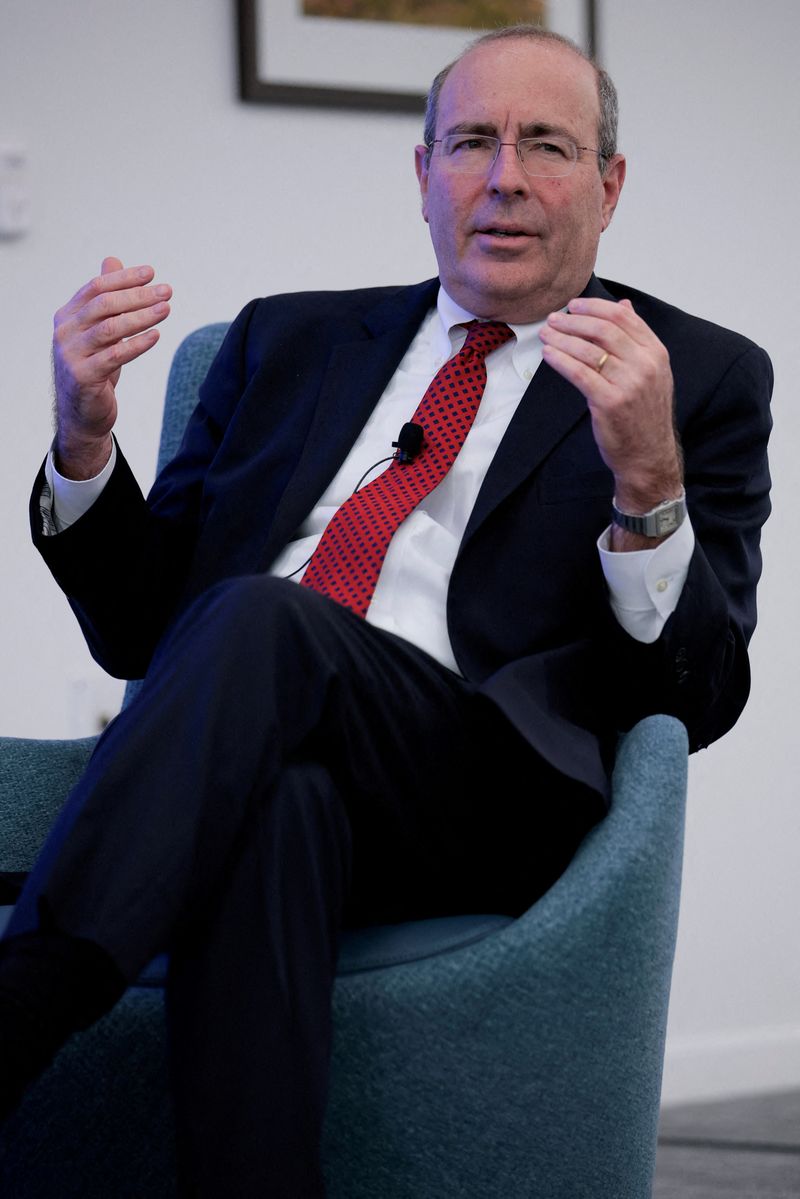
Tom Barkin, president of the Federal Reserve Bank of Richmond, said in a speech to CFA Society Baltimore on the 22nd (local time), "The risks of inflation are greater than the risks to full employment," adding, "That is why we raised rates." He also said last week's 0.25-percentage-point rate hike "will help" bring inflation back to the Fed's 2% target.
Barkin also left open the possibility of further hikes. "Will further rate hikes be necessary, and if so, how many? We will see," he said. Barkin does not have a vote on the Federal Open Market Committee (FOMC) this year.
The Fed raised its benchmark interest rate by 0.25 percentage point on the 16th, bringing it to 3.75%–4.00%. It was the first rate hike since July 2023. The dot plot released at the time showed that 18 of the 19 Fed officials expected at least one more hike by the end of this year.
The backdrop to Barkin's openness to further hikes is the unexpected strength of the U.S. economy. He assessed that the U.S. economy is "actually getting stronger." Consumer spending remains resilient, while signs of expansion are emerging in industries beyond AI data centers.
The Fed's assessment of inflation is also changing. Oil price increases and tariffs had previously been identified as the main causes of rising prices, reflecting supply-side shocks. More recently, however, concerns have grown that strong demand within the U.S. economy itself is pushing prices higher.
Barkin noted that "even 'temporary' shocks are not ending quickly or proving to be one-off events," creating more persistent inflationary pressure than initially expected. He added, "There may be a temptation to blame high inflation on a handful of items heavily exposed to the conflict in the Middle East or to tariffs," but explained that prices for many components of the Personal Consumption Expenditures (PCE) price index are rising at an annualized rate of more than 3%.
Economic momentum is strong outside AI as well. "I am hearing that there is momentum outside data centers," Barkin said. "Defense is hot, and people in manufacturing are becoming increasingly optimistic. Bankers say their business pipelines are healthy."
[email protected] Correspondent Lee Byung-chul Reporter