Korean Red Cross Delivers Chuseok Care Packages to All 1,465 Surviving Atomic Bomb Victims
- Input
- 2026-09-22 22:57:25
- Updated
- 2026-09-22 22:57:25
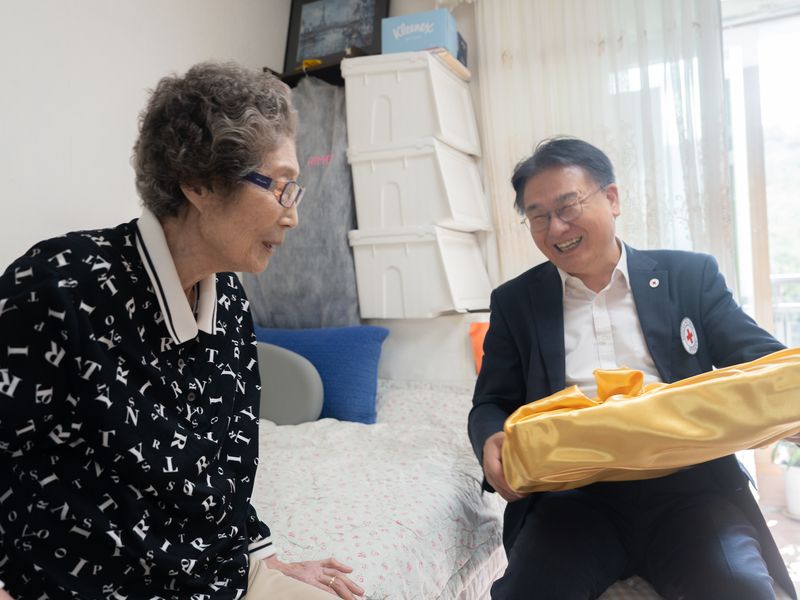
According to the Korean Red Cross on the 22nd, the packages were accompanied by a consolation message from the chair. As of August 31, the average age of the surviving victims was 85.6.
All of the survivors are over 80, while 166 are aged 90 or older—roughly one in 10. Over the past decade, an average of about 100 victims have died each year.
For Chuseok, Heo Jeong-gu, head of the Korean Red Cross's Overseas Koreans Support Headquarters, visited the home of Oh Jae-bong, 93, in Seodaemun District, Seoul.
Oh was exposed to the atomic bombing in Hiroshima in 1945, when he was 12. He was heading toward the mountains with his youngest sister to help his parents, who were repairing a shelter. The Korean Red Cross said he still remembers the city engulfed in flames and injured people coming up toward the mountains.
Since 1992, Oh has received medical expenses and medical support costs from the South Korean government through the Korean Red Cross. Since 2004, he has also received an aid allowance and medical expense support from the Japanese government.
The Korean Red Cross will invest 1.65 billion won this year in the Maeum Bodeumi Project, which supports the health and daily lives of elderly atomic bomb victims. It will also provide an electric medical bed to the Hapcheon Atomic Bomb Victims Welfare Center.
Heo said, "The Korean Red Cross will continue providing medical and welfare support so that assistance from the governments of South Korea and Japan can reach the victims reliably."
Meanwhile, the Korean Red Cross began providing medical care for atomic bomb victims in 1986 and has carried out welfare programs entrusted by the governments of South Korea and Japan since 1991.
[email protected] Jang In-seo Reporter