Where Would Japan's Capital Be in a 'Tokyo Emergency'? Osaka and 11 Others Enter the Race
- Input
- 2026-09-22 16:26:49
- Updated
- 2026-09-22 16:26:49
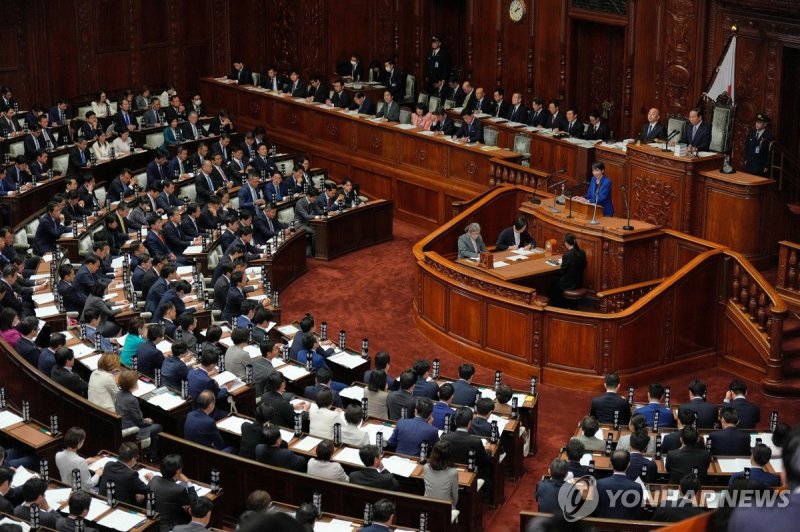
[Financial News, Tokyo—Correspondent Seo Hye-jin] Twelve local governments, including Osaka, Hokkaido and Fukuoka, have entered the race to become Japan's backup capital, which would assume Tokyo's capital functions in the event of a major disaster. The number of candidates is expected to grow as the Japanese government plans to provide fiscal support and tax benefits to areas designated as the backup capital.
According to a survey of 98 local governments across Japan conducted by Yomiuri Shimbun on the 22nd, six prefectures—Hokkaido, Gunma Prefecture, Aichi Prefecture, Osaka Prefecture, Hiroshima Prefecture and Fukuoka Prefecture—said they would pursue designation as the backup capital.
Among the government-designated cities, six—Sapporo, Nagoya, Osaka, Sakai, Fukuoka and Kitakyushu—expressed their intention to participate. Fifteen local governments, including Miyagi Prefecture, Toyama Prefecture and Ehime Prefecture, said they would make a decision after reviewing the government's designation requirements.
Japan's backup capital initiative is aimed at easing the overconcentration of functions in Tokyo and establishing a base that can take over if Tokyo's functions are paralyzed by a major disaster. Areas less likely to be hit by the same disaster as the Tokyo metropolitan area will be designated as backup capitals.
The designation requirements are expected to include the presence of central government regional offices, economic and population concentration, and the establishment of a local administrative system. More than one city can be designated as a backup capital. The Japanese government plans to finalize the detailed requirements through a Cabinet Order late next month and then prepare measures for regulatory easing and tax support.
The local administrative system under consideration would either involve establishing special wards modeled on Tokyo's 23 wards or having a wide-area local government and a government-designated city sign a coordination agreement.
Of the 12 local governments pursuing designation, only Osaka Prefecture and Osaka City chose the special-ward model. Aichi Prefecture and Nagoya City, as well as Fukuoka Prefecture, Fukuoka City and Kitakyushu, opted for the coordination-agreement model.
Gunma Prefecture and Hiroshima Prefecture also expressed their intention to seek designation, but Maebashi City and Hiroshima City, which are expected to be their cooperation partners, have not yet taken a position because the requirements have not been finalized.
Seventy-three local governments, or 75% of those surveyed, viewed positively the backup capital system's objectives of backing up the capital's functions during a major disaster and creating a decentralized, multipolar economic sphere.
[email protected] Seo Hye-jin Reporter