Aekyung Chemical to Begin Full-Scale TPC Production in October; Expand Hard Carbon Facilities to 1,300t by Year-End
- Input
- 2026-09-23 13:27:40
- Updated
- 2026-09-23 13:27:40
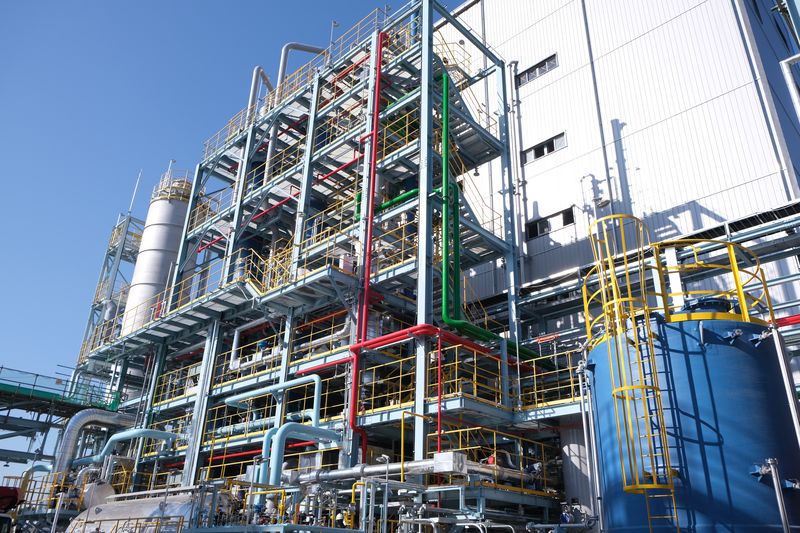
[Financial News] Aekyung Chemical will begin full-scale production next month at its terephthaloyl chloride (TPC) facility in Ulsan, which has an annual capacity of 15,000 tons. At its Jeonju plant, the company plans to complete facility expansion by the end of this year, raising annual production capacity for hard carbon anode materials used in sodium-ion batteries (SIBs) to 1,300 tons.
According to industry sources on the 23rd, Aekyung Chemical plans to begin full-scale production in October at its TPC facility in Ulsan, which was completed in March. The facility has an annual production capacity of 15,000 tons.
TPC is a key raw material for aramid fibers used in bulletproof vests, fiber-optic cables and aerospace materials. Imported TPC solidifies during transport and must be heated and dissolved before use, whereas domestically produced TPC can be supplied in liquid form, reducing the need for those processes. Aekyung Chemical developed its TPC manufacturing process after conducting pilot and demonstration plant tests.
The company is also expanding its investment in next-generation battery materials. Aekyung Chemical is upgrading its Jeonju plant to increase annual production capacity for SIB hard carbon anode materials to 1,300 tons, with completion targeted by the end of this year.
Hard carbon is a key anode material for sodium-ion batteries. Aekyung Chemical has completed the material design and manufacturing process development for its AHC-3 series and is conducting pilot production and customer evaluations.
The government's policy to promote sodium batteries is also supporting the expansion of the hard carbon business. In its Battery Industrial Technology Roadmap announced the previous day, the Ministry of Trade and Industry set a goal of developing sodium batteries with an energy density of 160Wh/kg by 2027 and completing development of 220Wh/kg batteries by 2030 to pursue full-scale commercialization. The government plans to launch new battery-sector R&D projects with a total budget of approximately 400 billion won from 2027 to 2031. The private sector plans to invest approximately 8 trillion won in R&D and facilities by 2030.
However, the new materials must be adopted by actual customers and move into mass production before they can contribute to earnings. For TPC, future utilization rates and supply volumes will be key factors. For hard carbon, customer evaluations after completion of the 1,300-ton facility and the transition to commercial production will determine the pace of business expansion.
An industry official said, "As the sodium-ion battery materials market is still in the early stages of commercialization, future business viability will depend less on production capacity expansion itself than on certification by cell manufacturers and whether the materials are incorporated into long-term supply chains."
[email protected] Kim Mi-hee Reporter