Global Oil and Gas Discoveries Hit 40-Year Low, Raising Energy Supply Concerns in the AI Era
- Input
- 2026-09-22 15:55:18
- Updated
- 2026-09-22 15:55:18
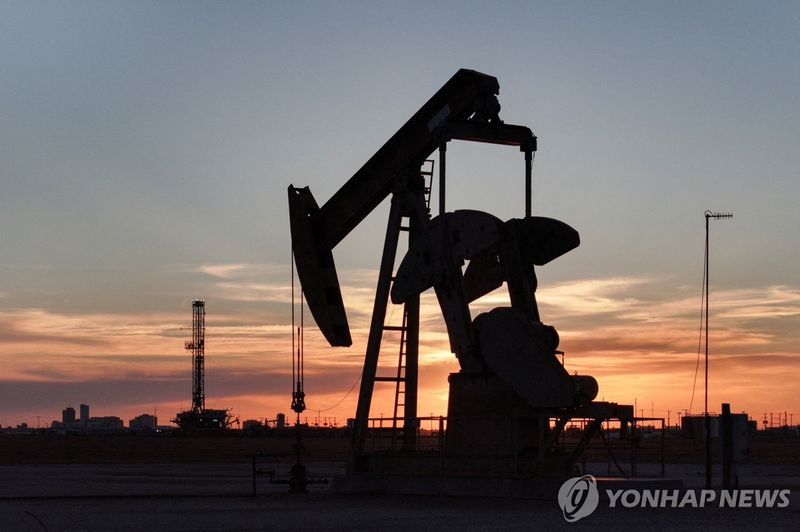
【Financial News, Tokyo—Correspondent Seo Hye-jin】Only 19 oil and gas fields were newly discovered worldwide last year, the lowest number in more than 40 years. The decline resulted from global oil companies cutting exploration investment amid rising costs and pressure to decarbonize. Concerns about future supply shortages are growing as energy demand rises due to the spread of artificial intelligence (AI) and population growth in emerging economies.
An analysis of data from the U.S. nonprofit Global Energy Monitor (GEM) by the Nihon Keizai Shimbun on the 22nd found that 19 oil and gas fields of a certain scale or larger were newly discovered in 2025, the fewest since 1980. Estimated reserves were also below one-tenth of the 2013 peak.
In years when newly discovered reserves surged over the past two decades, the Middle East accounted for more than half of the total in most cases. According to the International Energy Agency (IEA), the Middle East also accounted for about 30% of global crude oil production last year. Growing instability in the region has increased the need to diversify sources of supply.
Reduced investment by global oil companies contributed to the decline in new discoveries. Since 2020, European and U.S. oil majors have redirected funds to renewable energy in response to pressure from environmental groups and investors. Shell's exploration spending last year fell to $1.1 billion, about one-fifth of its level a decade earlier.
According to the IEA and other sources, global upstream oil and gas investment totaled about $540 billion last year, down nearly 40% over the past decade. As rising material prices have driven up exploration costs, companies are prioritizing expansions of existing oil and gas fields, which are relatively less expensive, over high-risk new developments.
The increasing difficulty of exploration is another factor. As the number of onshore areas that can be developed at low cost has declined, many new projects have shifted to deepwater and offshore locations. The IEA estimates that it takes an average of 20 years from securing an exploration block to beginning production.
If the decline in oil and gas discoveries continues, it could become difficult to meet rising demand in the future. Fossil fuel demand is also increasing as electricity consumption grows with population growth in emerging economies and the spread of AI in developed countries. The IEA noted, "New oil and gas development projects are essential to maintain current production levels."
With energy security gaining prominence, oil majors have recently resumed developing fossil fuel resources. British oil major BP withdrew its long-term production-cutting target last year and decided to invest $10 billion annually in upstream development. U.S. oil major ExxonMobil also plans to increase fossil fuel production by up to 30% from 2024 levels by 2030.
However, expanded exploration does not necessarily translate directly into higher production because the likelihood of success is low. Experts say energy supplies should be diversified by developing resources outside the Middle East while expanding nuclear and renewable energy.
[email protected] Seo Hye-jin Reporter