Behind Hangawi's Full Moon: The Final Journey of an Unclaimed Deceased Person [Report]
- Input
- 2026-09-22 16:00:48
- Updated
- 2026-09-22 16:00:48
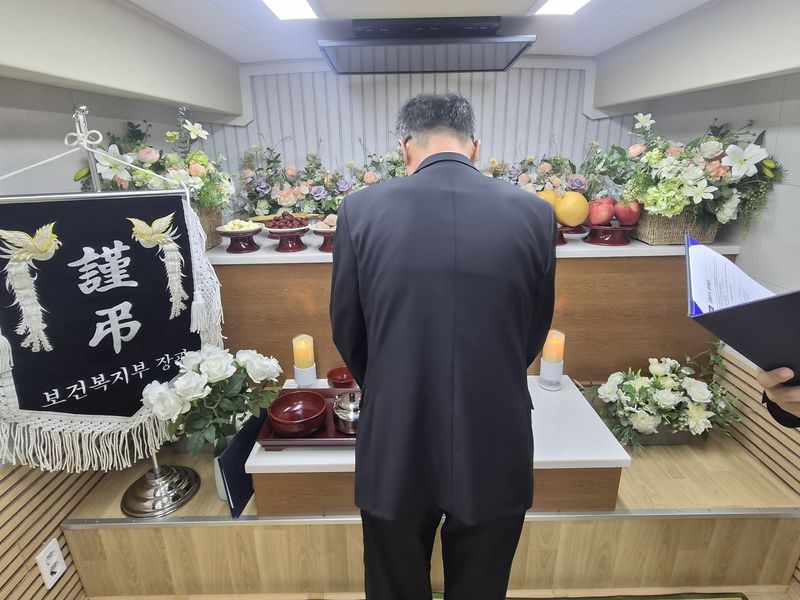
[Financial News]"Leave behind all attachments to this world and rest in peace. As I place a single chrysanthemum, I pray and pray again."A funeral prayer echoed through a bus parked in one corner of Daejeon Jeongsuwon. With no mourners or portrait of the deceased, the only thing placed behind the ritual offering table was the deceased's three-character name, written as 'Kim XX.'
On Sept. 17, ahead of Chuseok, I accompanied the final journey of Mr. Kim, 62, an unclaimed deceased person who had died on Sept. 1, while holiday travelers headed in the opposite direction to visit their families. Mr. Kim had family, but no one stepped forward to claim his body. The only people who saw him off that day were two employees of the Korea Funeral Culture and Policy Institute and a reporter.
A Final Funeral Held Aboard a Bus Instead of in a Funeral Room
Mr. Kim's final journey was accompanied by the Korea Funeral Culture and Policy Institute's mobile funeral vehicle, 'Byeolbit Bus.' The first stop before the funeral was a market in Daedeok District, Daejeon. The shopping basket contained one each of fish, dried pollock, jujubes, chestnuts, bracken, apples, pears and dried persimmons.There was no way to know what foods Mr. Kim had liked during his lifetime, as little information about him remained. The employees prepared his final meal using foods typically placed on a ritual offering table.
When the institute receives information about the deceased's life from a local government, it incorporates that information into the ritual offering table as far as possible. However, because there is often little information about the deceased, it generally prepares a standard offering table.
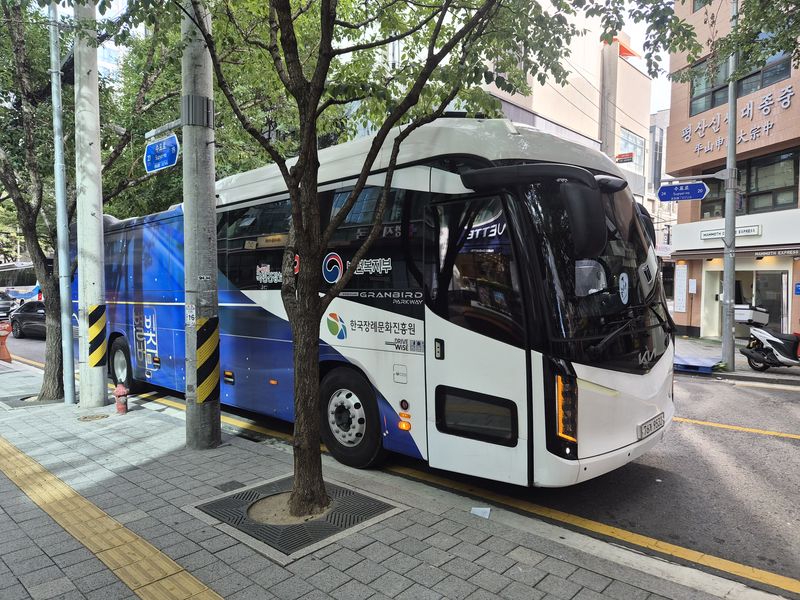
The Byeolbit Bus then picked up Mr. Kim's body at a funeral home in Jung District, Daejeon, and headed to Daejeon Jeongsuwon, a crematorium. There was no separate funeral room for Mr. Kim. Unlike some areas, including Seoul and Busan, the area had no separate public funeral space, making the Byeolbit Bus the only place to commemorate him that day.
When they arrived at Jeongsuwon, the two employees began working quickly. Rice and soup with steam rising from them, along with fruit and liquor, were placed one after another inside the bus, which had been empty just 15 minutes earlier. As the ritual offering table was set, a funeral room for Mr. Kim was prepared.
Funerals for unclaimed deceased persons are conducted as public funerals by local governments under local ordinances and budgets, but conditions such as funeral space and funding vary by region. In some areas, cremation proceeds immediately without a separate funeral ceremony because of insufficient funding and other constraints.
An official from the institute explained, "In some local areas, budgets are not sufficient, so there are cases in which a funeral ceremony cannot be held and the deceased is taken straight to a crematorium," adding, "I understand that this program was launched to address that gap and support funeral ceremonies."
After the funeral ended, the names of other deceased people were called one after another in front of the urn collection room at Jeongsuwon. Each time a name was called, family members and chief mourners who had been sitting in the chairs stood up. Those who received the urns looked after one another as they left the collection room. A short while later, Mr. Kim's name was called. The envelope handed to the reporter bore a label meaning 'no next of kin' beside Mr. Kim's name.
■ A Final Resting Place with Neither Photos nor Flowers
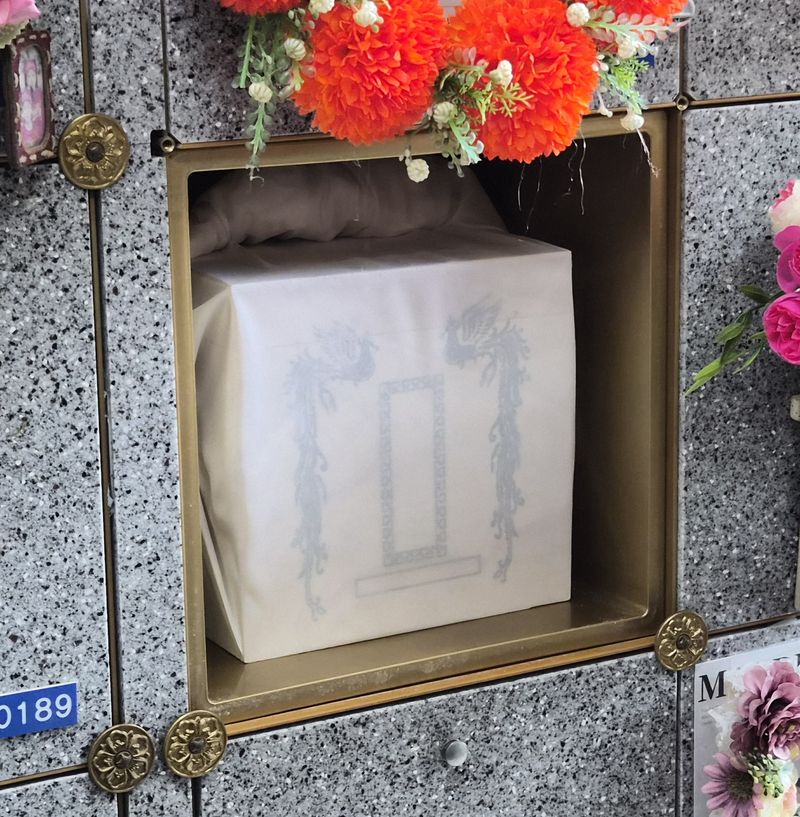
Mr. Kim's final destination was the Second Columbarium at Daejeon Memorial Park. Inside, countless urn niches lined the long corridor. Beside the dates of birth and death, photographs showed the deceased smiling brightly during their lifetimes. Flowers and small decorations were visible in many places, traces left by people who had come to remember those who had gone before them. The scene at the place where Mr. Kim would be laid to rest was markedly different. It was difficult to find either a photograph of his face or flowers showing that anyone had visited. This was the final place Mr. Kim reached after a last meal prepared at a market and a small funeral held aboard a bus. An official from the institute said, "I believe that the fact that the Funeral Services Act itself provides a legal basis for public funerals reflects our society's communal awareness that we will not send someone off alone when they die," adding, "It makes us think more deeply, given that each person arranging a funeral may have their own circumstances, whether financial, legal or otherwise."
[email protected] Lee Dong-hyeok Reporter