Jeju Science Park Named Candidate for KRW 323.2 Billion Innovation Plan; Five Industrial Complexes to Undergo Major Transformation
- Input
- 2026-09-22 15:30:41
- Updated
- 2026-09-22 15:30:41
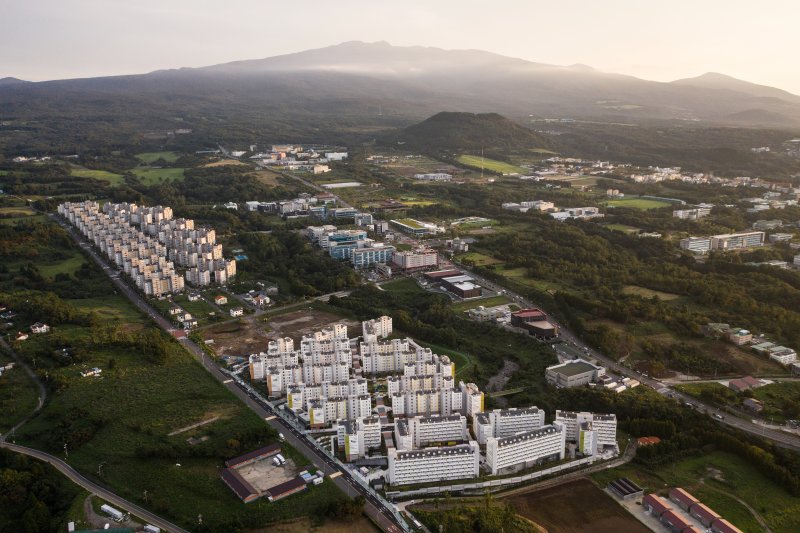
【Financial News, Jeju — Jeong Yong-bok】A KRW 323.2 billion plan to link Jeju Science Park, Jeju Island’s only national industrial complex, with the Yongamhaesu Industrial Complex and the Daejeong, Gujwa and Geumnung agro-industrial complexes under a single industrial innovation system has been selected as a candidate for a government support program.
According to JDC and Jeju Island on the 22nd, Phase 1 of Jeju Science Park was selected as a candidate for the '2027 Competitiveness Enhancement Project for Aging Hub Industrial Complexes,' jointly promoted by the Ministry of Land, Infrastructure and Transport (MOLIT) and the Ministry of Industry and Trade.
Nationwide, three areas were named as candidates: Jeju Science Park, Wanju General Industrial Complex in North Jeolla Province, and Wonju Munmak General Industrial Complex in Gangwon Province. The government is pursuing the competitiveness enhancement project by bundling programs from multiple ministries to support the manufacturing, digital and environmental transformation of aging industrial complexes, along with improvements to working and residential conditions.
Jeju’s distinguishing feature is that it has moved beyond simply upgrading a single industrial complex. Using Jeju Science Park as the hub, the plan connects the Yongamhaesu Industrial Complex with the Daejeong, Gujwa and Geumnung agro-industrial complexes, bringing energy, bio, manufacturing innovation and talent development together into a single industrial ecosystem.
Jeju Island’s competitiveness enhancement plan includes linked and new projects totaling KRW 323.2 billion. Planned national funding accounts for KRW 187.46 billion. Related organizations, including JDC, Jeju Technopark and the Korea Institute of Energy Research (KIER), have identified 33 detailed projects.
The project’s overarching direction is 'Creating an RE100 innovation complex based on Jeju’s unique resources and advancing a clean bio-health industrial ecosystem.'
Its three pillars are building a smart green industrial complex based on distributed energy and clean resources, advancing the clean bio industry based on Jeju’s clean resources, and creating an industrial environment where young people can work and settle.
The approach involves shifting the energy used in industrial complexes toward renewable sources, integrating digital and AI technologies into companies’ manufacturing processes, and connecting Jeju-specific resources to the bio industry.
The Jeju model is also rooted in the repeated curtailment of renewable energy output on the island and the ongoing development of a distributed-energy special-zone project. This creates an opportunity to use industrial complexes as new electricity demand centers and testing grounds.
In the clean bio sector, the key is to advance the industry by connecting Jeju’s lava seawater and agricultural, livestock and fishery resources to materials, products and manufacturing processes. This direction is also aligned with Jeju’s ongoing regional autonomous R&D initiatives focused on distributed energy and agricultural, livestock and fisheries bio industries.
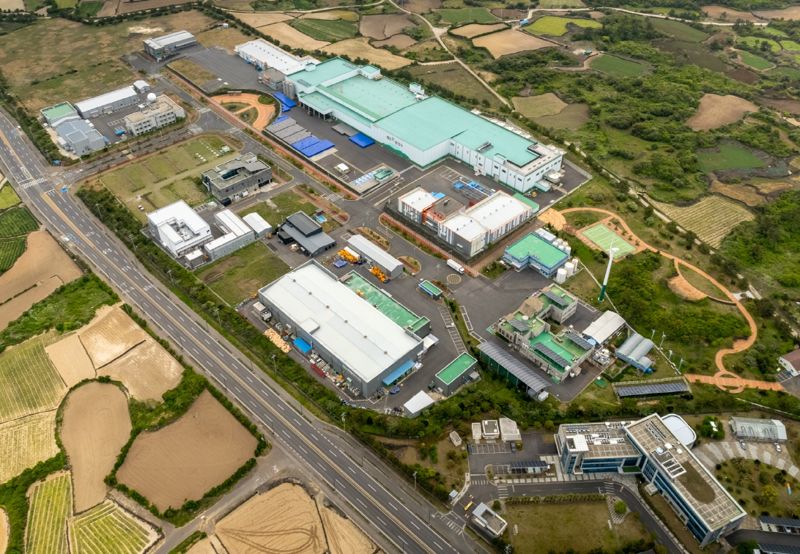
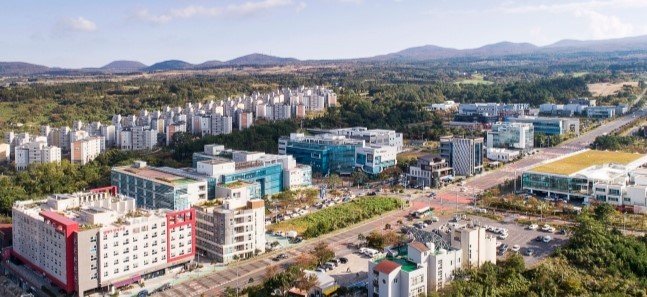
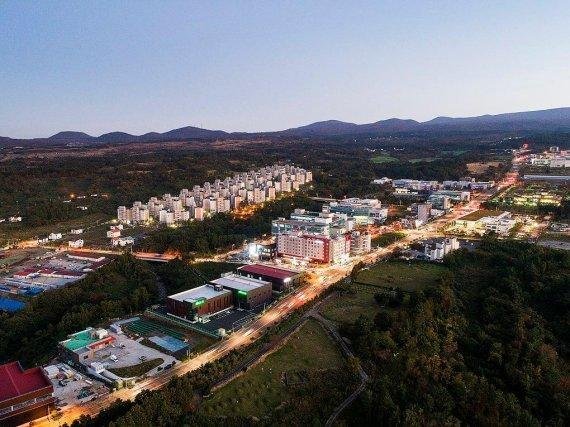
Jeju Science Park, which serves as the hub, is Jeju Island’s only national industrial complex and is home to knowledge-based companies in sectors such as IT and biotechnology.
According to JDC, Phase 1 covers approximately 1.099 million square meters. As of the end of 2022, 203 companies were located there and employed 3,181 people, while the companies’ combined sales totaled KRW 7.0936 trillion. The core of the current competitiveness enhancement plan is to maintain the existing industrial base while adding energy and digital transformation.
Creating a youth-friendly industrial complex is also a key task. Aging industrial complexes have long been criticized for declining competitiveness not only because of outdated production facilities but also because young people avoid seeking jobs there and because of inadequate amenities and residential conditions. The government has presented a plan to improve working and residential environments alongside the advancement of industrial facilities through this project.
JDC identified projects with relevant organizations while developing the competitiveness enhancement plan, focusing on the youth-friendly industrial complex category. The goal is to expand the model developed in Phase 1 of Jeju Science Park to the 2nd Jeju Science Park and other industrial complexes across the island.
However, the selection does not mean that all KRW 323.2 billion in project funding has been finalized. The project is currently at the candidate-selection stage. The Ministry of Industry and Trade, MOLIT and other relevant ministries will supplement the detailed projects and financing plans through expert consultations before finally designating and announcing the competitiveness enhancement project district in the first quarter of 2027. Each individual project must also go through the relevant ministries’ calls for proposals and budget-allocation procedures.
Therefore, the KRW 323.2 billion and KRW 187.46 billion in national funding proposed by Jeju represent the scale of the projects currently included in the competitiveness enhancement plan. The project details and the actual amount secured may change during the final designation and individual calls for proposals.
Song Seok-eon, chairman of JDC, said, "As Jeju Island’s only national industrial complex, Jeju Science Park is an important foundation connecting the island’s industrial, employment and innovation capabilities. By linking national policy with Jeju’s industrial policy, we will strengthen the foundation for sustainable growth of local industry."
He added, "We will strengthen cooperation with relevant organizations so that the experience and achievements of Phase 1 of Jeju Science Park can be expanded to the 2nd Jeju Science Park and other linked industrial complexes across the island."
Because Jeju does not have many large-scale manufacturing clusters, the success of this project will not be determined merely by repairing aging industrial facilities. Whether Jeju can connect Jeju Science Park with the agro-industrial complexes and the Yongamhaesu Industrial Complex to create an ecosystem in which companies in renewable energy, biotechnology and AI can achieve real growth is expected to be the project’s key challenge after 2027.
[email protected] Jeong Yong-bok Reporter