"U.S. and China likely to choose stable competition over conflict ... Joint response on AI needed," Chinese expert predicts
- Input
- 2026-09-22 15:01:28
- Updated
- 2026-09-22 15:01:28
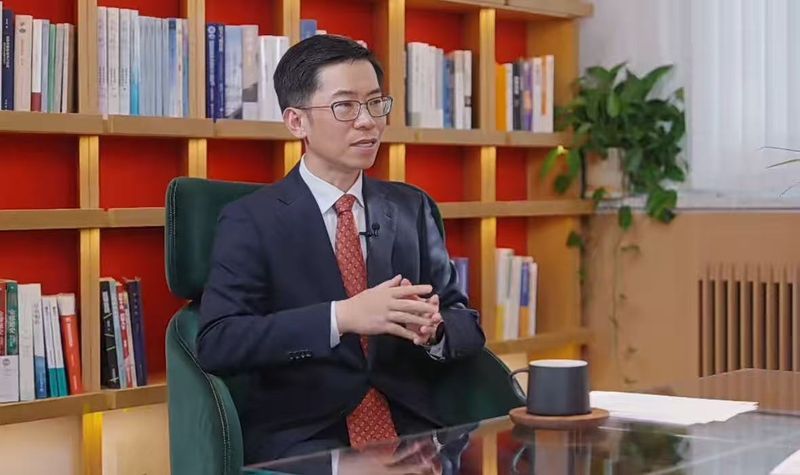
[Financial News] Ahead of the U.S.-China summit, an expert at a Chinese government-affiliated think tank predicted that relations between the two countries would develop toward managing competition and continuing cooperation when necessary, rather than heading toward extreme conflict.
Zhou Mi, deputy director of the Institute of American and Oceanian Studies at MOFCOM's Chinese Academy of International Trade and Economic Cooperation, said on the 22nd that the upcoming summit "could be not only an important turning point in U.S.-China relations but also the starting point for a new economic and trade relationship between the two countries."
Deputy Director Zhou said that although there had been some friction between the two countries since the Beijing summit in May, overall stability had been maintained.
He said, "Overall tariff levels have not risen sharply again, and the two countries have established trade consultation bodies to discuss which products could see tariff cuts first," adding, "Both countries need to manage their economic and trade relationship in a stable manner."
In an interview that day with Beijing Dialogue, a Chinese private think tank, he said that U.S.-China trade relations directly affect not only the stability of the two countries' supply chains but also consumers' daily lives.
Deputy Director Zhou identified artificial intelligence (AI) as a key area in which the U.S. and China should respond jointly.
He said, "The AI issue will be difficult to resolve unless China and the United States join hands," adding, "It could disrupt the basic balance of the global economy, and the risks embedded in it could rapidly spread to other areas." He continued, "It is important to build common ground through dialogue," and added, "The two countries should not become overly fixated on determining which side suffers greater losses or loses the initiative during the cooperation process."
Regarding future U.S.-China relations, he predicted that while strategic competition would be difficult to eliminate, it could be managed in a more stable manner.
He said, "China and the United States have many shared development needs," adding, "Although the U.S. stance toward China has been extremely hard-line in recent years, the United States will also come to recognize that it is difficult to achieve its desired results through this approach."
He continued, "The United States will gradually realize that excluding China could make it difficult for many supply chains to operate fully and could also create problems for industrial chains," adding, "Its perception may shift toward accepting a certain degree of industrial specialization and a division of roles."
However, he predicted that these changes would not take place in the short term.
He said, "The process of change will be highly complex because it involves not only economic interests but also finance, the military, allies and partners, and the United States' overseas influence."
Deputy Director Zhou also predicted, "China is willing to engage in dialogue if the United States wants dialogue, but its position is clear that it will respond if the U.S. seeks to apply pressure," adding, "The relationship may shift from one side ordering the other what to do toward both sides discussing their problems together."
Chinese President Xi Jinping will make a state visit to the United States from the 23rd to the 25th at the invitation of President Donald Trump.
The leaders of the two countries are scheduled to hold their second summit of the year in Washington, D.C., on the 24th.
[email protected] Lee Seok-woo, international affairs correspondent Reporter