Supreme Court: "Outing someone as gay can constitute defamation" ... Acquitted after public interest was recognized
- Input
- 2026-09-22 14:40:42
- Updated
- 2026-09-22 14:40:42
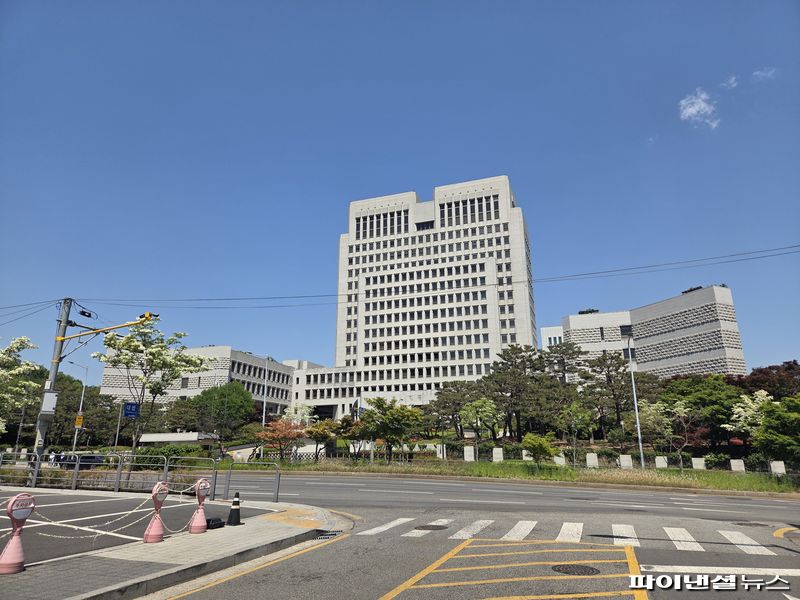
According to legal circles on the 22nd, the First Petty Bench of the Supreme Court of Korea, with Justice Cheon Dae-yeob presiding, upheld the lower court's acquittal of A, who had been indicted on defamation charges, on the 3rd.
In August 2021, A posted an article on a personal blog criticizing remarks expressing hatred of men made by B, a politician affiliated with a political party and the head of a women's organization. At the end of the article, A quoted claims made on YouTube by the head of a men's organization and wrote that B was a "butch" lesbian who took on a male role and regarded all men as enemies.
The trial had two central issues. First, whether stating that another person is gay constitutes defamation by lowering that person's social standing. Second, if so, whether the conduct is exempt from illegality as serving the public interest under Article 310 of the Criminal Act.
The first and second trials reached opposite conclusions on both issues. The first trial sentenced A to a fine of 3 million won. It reasoned that even if B had disclosed her homosexuality herself, the matter remained part of her private life and her sexual orientation could not be considered a matter of public concern that the general public needed to know. The second trial, however, rejected the idea that the statement itself was an assertion of fact, saying that the word "lesbian" was a value-neutral expression indicating sexual identity. It also recognized the public interest, reasoning that B had engaged in activities criticizing distortions in other members of society's views on sexuality and therefore had to accept criticism of her own sexual views.
The Supreme Court of Korea considered the two issues separately. On whether the statement constituted an assertion of fact, it sided with the first trial. The court stated, "Homosexuality, like heterosexuality, is one of the natural forms of sexual orientation," and proceeded on the basis that merely using the term does not automatically constitute defamation. However, because negative perceptions and prejudice against homosexuality remain widespread, the court found that the manner and context of an expression may infringe on a person's social standing. It concluded that the article in this case raised such concerns because it was based on prejudice and linked B's sexual orientation to hatred of men as its cause.
The fact that B had previously disclosed her sexual orientation within an organization did not change the conclusion. The court stated, "Disclosing it oneself in a space one trusts to be safe is an entirely different matter from having one's intimate sexual orientation exposed to the general public by another person." It therefore found that the second trial had erred in placing too much emphasis on the value-neutrality of the term.
On the exclusion of illegality, the Supreme Court of Korea accepted the second trial's reasoning. Citing B's political activities related to gender equality, the court ruled, "The victim's views on gender equality are closely related to the victim's public activities, so freedom of expression for the purpose of verifying or criticizing those views must be broadly recognized." It also considered that the article was written shortly after members of a men's organization stormed a demonstration by B's organization, causing a physical confrontation, at a time when public interest in gender conflict was high.
[email protected] Kim Dong-gyu Reporter