Substance Found to Block the Growth of Intractable Brain Cancer... Shrinks Tumors in Mouse Model [Health LAB]
- Input
- 2026-09-23 06:00:00
- Updated
- 2026-09-23 06:00:00
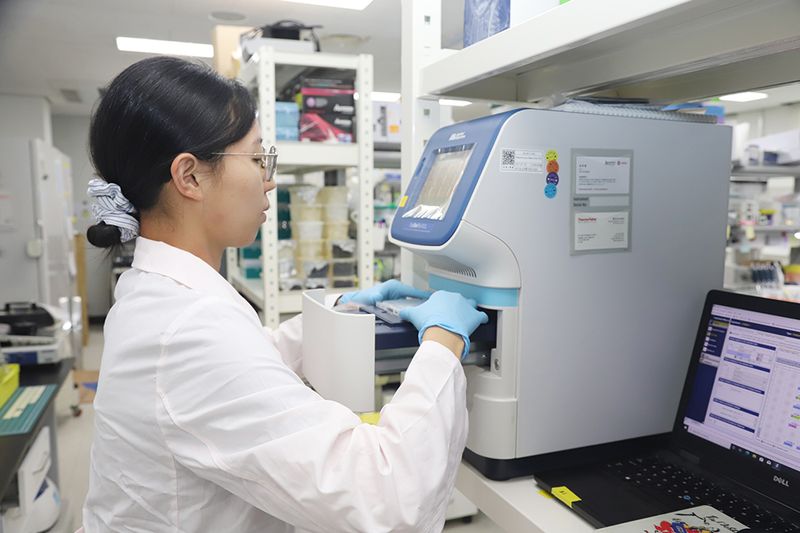
According to KRIBB on the 23rd, a research team led by Dr. Han Tae-soo of the Bio-New Drug Translational Research Center identified Neuromedin U receptor 2 (NMUR2) as a key molecular switch that drives the proliferation of glioblastoma cells. The team also elucidated a strategy for blocking this switch to suppress tumor growth. Han is a professor in the Life Sciences program at the Korea University of Science and Technology (UST).
According to the research team, glioblastoma is the most common and deadly malignant brain tumor. It is a difficult-to-treat disease that progresses rapidly and has a very high recurrence rate. Temozolomide (TMZ) is currently used as the standard chemotherapy, but more than half of patients develop resistance to the drug, leading to eventual recurrence.
While analyzing data from patients' brain cancer tissues, the team found that NMUR2 was abnormally abundant in tumor tissue compared with normal brain tissue. The protein was particularly elevated in more malignant tumors. When the researchers artificially increased NMUR2 levels in cancer cells, the cells grew faster and actively migrated into surrounding areas. Conversely, reducing NMUR2 significantly decreased cancer cell proliferation.
The researchers found that NMUR2 triggers the release of calcium ions through signaling processes inside cancer cells. This signal activates the STAT5 protein, which keeps genes that promote cell division, including PIM1 and FOXM1, switched on. In other words, NMUR2 functions as a kind of ignition switch that drives cancer cells to divide continuously.
The team screened a library of about 6,331 drug compounds one by one to find a drug that could turn off this switch. They identified a compound, NNC 05-2090, that binds strongly to NMUR2 and completely blocks its signaling. When the compound was administered to glioblastoma cells and mice with induced brain tumors, the cancer cells' signaling system was switched off, cell division stopped, and tumor size decreased significantly. The researchers also demonstrated that combining the compound with the existing anticancer drug TMZ produced a far stronger synergistic effect than either treatment alone.
The study is considered significant because it clearly elucidated how NMUR2, whose role had previously been poorly understood, contributes to brain cancer development. It also suggests the potential for combination therapy that could maximize treatment efficacy when used with existing anticancer drugs. In addition, the findings point to a new treatment strategy that could simultaneously reduce multiple cancer-growth signals rather than blocking the various stages of cell division separately.
Dr. Han Tae-soo, who led the study, said, "If further research improves the ability to cross the blood-brain barrier and advances the drug-delivery system, this could become an innovative new drug that can be applied to brain cancer patients in clinical practice."
The findings were published online on July 30 in the International Journal of Biological Sciences, an internationally renowned academic journal with an impact factor of 11.7.
[email protected] Yeon Ji-an Reporter