Kim Seung-yeon Conducts On-Site Management at Hanwha Systems: "AI Is Key to Hanwha's Defense Competitiveness"
- Input
- 2026-09-22 15:00:00
- Updated
- 2026-09-22 15:00:00
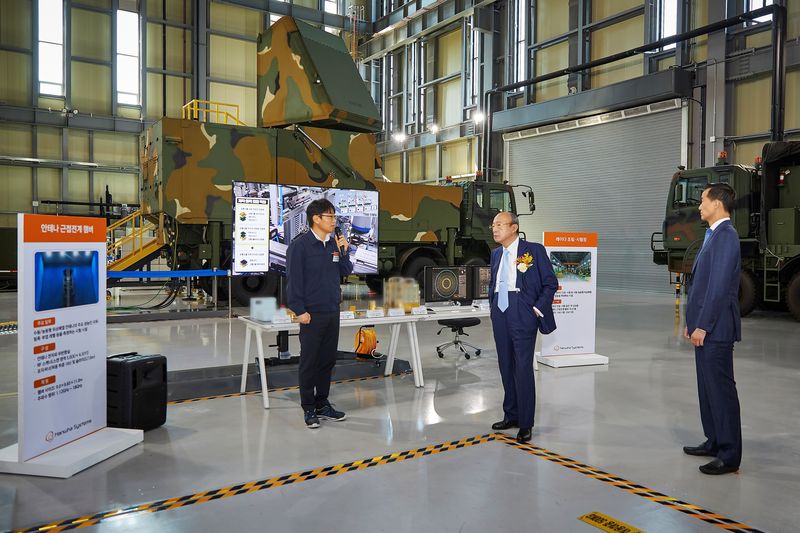
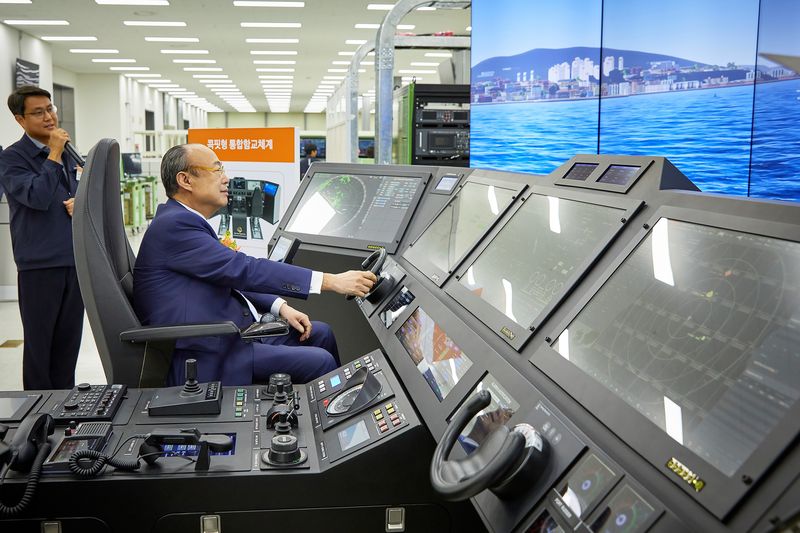
[Financial News] Hanwha Group Chairman Kim Seung-yeon visited Hanwha Systems' Gumi site as part of his second on-site management visit this year. After reviewing the competitiveness of the group's space business at the Jeju Space Center in January, he turned his attention this time to artificial intelligence (AI) and systems integration capabilities, which have emerged as key pillars of Hanwha's defense business. As Hanwha's defense portfolio rapidly expands across land, sea, air and space, the visit is seen as an effort to make the competitiveness of defense AI—which connects and commands individual weapon systems—a core pillar of future growth and accelerate efforts to strengthen related capabilities.
Hanwha Group said Chairman Kim visited Hanwha Systems' site in Gumi, North Gyeongsang Province, on the 22nd, received a briefing on major business developments and inspected facilities for producing and testing advanced defense products. Kim Dong-kwan, vice chairman of Hanwha Group, and Yang Ki-won, CEO of Hanwha Systems, accompanied him.
"Hanwha Systems is the brain and nervous system of Hanwha's defense business"
Chairman Kim personally toured the assembly and testing site for the multifunction radar (MFR), a core sensor of the Cheongung-II medium-range surface-to-air missile system. The multifunction radar is a key component of an air defense system that detects and tracks enemy aircraft and missiles, identifies friend and foe, and guides interceptor missiles. Hanwha Systems supplies Cheongung-II multifunction radars to the United Arab Emirates (UAE), Saudi Arabia and Iraq. Kim also inspected an AI-based integrated air defense system that Hanwha Systems is developing. The system connects various surveillance systems, including radar and electro-optical sensors, with anti-aircraft guns and guided weapons to identify multiple threats and support responses.The capability Chairman Kim emphasized most that day was AI. This was also evident in the guest book. Kim wrote, "Hanwha Systems is the starting point for K-defense AI innovation and is shaping the future of South Korea's independent national defense." At a luncheon with employees afterward, he stressed, "AI is the key factor determining the competitiveness of Hanwha Group's defense business." He added, "Hanwha Systems connects the core forces across land, sea, air and space built by Hanwha Aerospace and Hanwha Ocean through AI command-and-control systems. It is a key pillar responsible for the brain and nervous system of Hanwha's defense business."
Gumi's New Facility, Built with a KRW 280 Billion Investment, Becomes an Export Hub
Hanwha Systems' Gumi site is the group's core production hub for defense electronics. It develops and manufactures major defense electronics equipment, including radars, electro-optical systems and naval combat systems.Hanwha Systems completed a new facility last December after investing approximately KRW 280 billion. Spanning 89,000 square meters, it is more than twice the size of the previous facility. Equipped with a clean room of approximately 1,500 pyeong and advanced production and testing facilities, it is meeting growing domestic and overseas defense demand. The multifunction radars and naval combat systems produced at the Gumi site are also key products for expanding exports. Cheongung-II multifunction radars have been exported to three Middle Eastern countries, while a naval combat system developed with South Korean technology has been supplied to 15 Philippine Navy vessels, helping the company expand its market share.
Alongside AI, Chairman Kim repeatedly emphasized safety in the production environment. He said, "Major achievements begin with safety. There is no future without safety," adding, "Paying close attention not only to your own safety but also to the safety of colleagues and partner companies must become part of daily life at the Gumi site."
This visit marked Chairman Kim's second on-site management activity of the year. After reviewing the technological competitiveness of the private-sector space business at the Jeju Space Center in January, he focused this time on defense electronics and AI systems integration capabilities.
[email protected] Jung Won-il Reporter