Democratic Party Voices Disappointment Over Government's Basic Pension Reform Plan: "A Phased Structural Reform Plan Must Be Developed"
- Input
- 2026-09-22 14:50:38
- Updated
- 2026-09-22 14:50:38
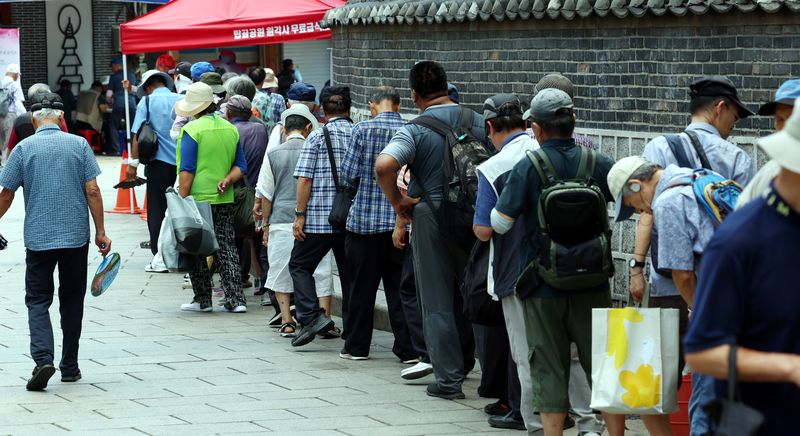
The Democratic Party of Korea's Pension Reform Special Committee held a forum on Basic Pension reform at the National Assembly of the Republic of Korea on the 22nd to discuss the government's plan, its achievements and follow-up tasks.
Nam In-soon, chair of the Democratic Party of Korea's Pension Reform Special Committee, said, "The government announced its plan for next year's Basic Pension reform some time ago." She pointed out, "However, experts and civil society groups that have worked hard on pension reform have raised concerns that there was no public deliberation process."
Nam said, "We also believe that various opinions should have been gathered during the process of announcing the government's Basic Pension reform plan." She added, "The government also appeared to be somewhat confused about Basic Pension reform. I believe that, through discussions in the National Assembly, lawmakers should also address aspects of the Basic Pension reform plan that the government has been unable to discuss."
The Ministry of Health and Welfare (MOHW) announced on the first of this month a reform plan featuring a "differential payment" system that would provide an additional 30,000 won per month to older people in the bottom 30% by income, as well as easing the reduction applied to married couples. The Democratic Party of Korea, along with civil society groups that had expected Basic Pension reform, has described the plan as "insufficient."
Kim Yoon, a Democratic Party of Korea lawmaker, said, "We initially expected Basic Pension reform to be structurally linked to the National Pension and the Basic Livelihood Security System, but it seems that circumstances prevented that from happening." Kim added, "I believe the task now is to develop a phased structural reform plan and ensure a soft landing for the Basic Pension system."
Kim noted, "Basic Pension should not simply be presented as a figure representing a certain percentage of the median income threshold; it should be established at the level of income security we aim to provide in people's actual lives." He added, "Otherwise, each reform will end with figures whose meaning is unclear or with compromise figures determined solely by fiscal conditions."
Experts predicted that the effects of the lower-income tiered payment system introduced under the government's reform plan would be limited. Kim Tae-wan, a senior research fellow at the Korea Institute for Health and Social Affairs (KIHASA), released simulation results showing how the elderly poverty rate would change under the plan. The simulation found that applying the government's reform plan would lower the elderly poverty rate from 35.87% in 2024 to 35.57%. The decrease would amount to just 0.3 percentage points.
Some argued that the current target coverage rate of 70% should itself be reconsidered from the ground up to strengthen the Basic Pension's effect on reducing poverty. Choi Ok-geum, a senior research fellow at the National Pension Research Institute, said, "The criteria for Basic Pension need to shift from asking 'What percentage of older people should receive it?' to asking 'What level of older people's income or below should be guaranteed?'"
In response to the continuing criticism, the MOHW said the latest reform plan is only the beginning and that it would pursue additional reforms through future discussions.
[email protected] Kim Hyeong-gu Reporter