U.S. Urges China to Implement Agreement; Trade War Truce to Last '3 to 6 Months' at Most
- Input
- 2026-09-22 15:45:26
- Updated
- 2026-09-22 15:45:26
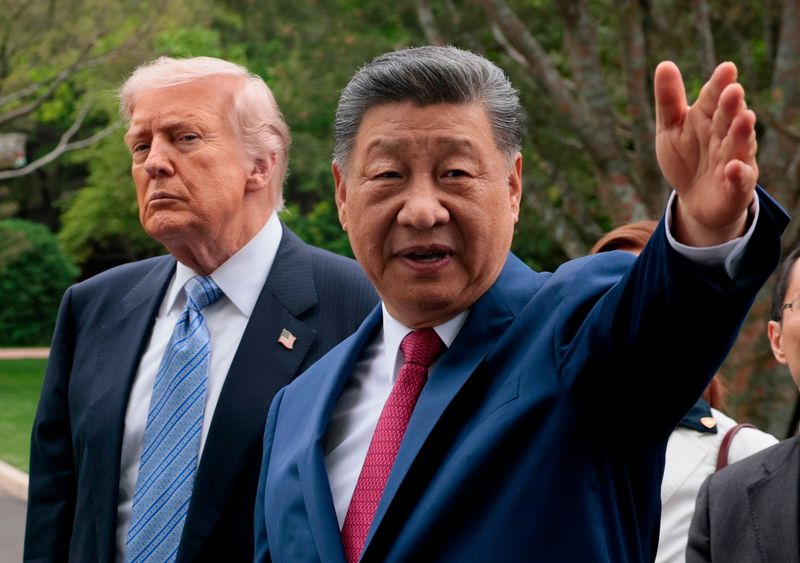
[Financial News] It has been reported that the leaders of the United States and China, who are set to end the trade war 'truce' this coming November, will discuss extending the truce during their meeting on the 24th (local time). The United States plans to set the truce period short, ranging from three to six months, to urge China to implement the agreement.
U.S. Wants 6-Month Renegotiation... China to Frequently Monitor Implementation
On the 21st, The New York Times (NYT), citing officials, reported that while China sought to extend the one-year trade truce set to expire on November 10, the U.S. side proposed a six-month extension. U.S. President Donald Trump initiated a "trade war" against China last year by imposing tariffs on fentanyl in February and reciprocal tariffs in April, respectively, to which China retaliated with its own tariffs. During the first trade negotiations held in Switzerland in May of the same year, both sides agreed to significantly lower tariffs while suspending the collection of some remaining tariffs for 90 days. After suspending the application of tariffs one more time, Trump and Chinese President Xi Jinping met in Korea last October and agreed to extend the grace period for another year. Furthermore, during their meeting in Beijing last May, the two leaders agreed to establish a trade commission to oversee the agreement. At that time, Xi Jinping also pledged to purchase 200 The Boeing Company aircraft and expand imports of U.S. agricultural products.An official explained that the U.S. plans to hold frequent renegotiations with short grace periods to urge China to fulfill its promises. The New York Times pointed out that while China promised in the May agreement to purchase at least $17 billion (approximately 23 trillion won) worth of U.S. agricultural products annually until 2028, the amount purchased from January to July of this year was only $3.9 billion.
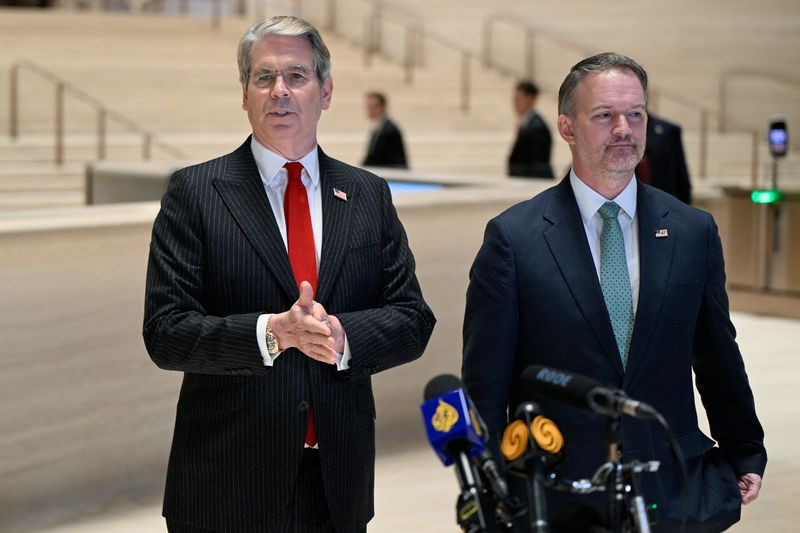
In this regard, U.S. Trade Representative Jamieson Greer stated in an interview on the 21st regarding the expiration of the grace period, "We will continue to discuss this." He said, "I do not see an immediate extension at this moment, but there is still time," adding, "I expect discussions to continue because both sides want an extension." When asked if a three to six-month extension was being discussed, Greer replied, "That would probably be an appropriate range." He predicted that it is unlikely an extension agreement will be announced within this week.
Discussion on various pending issues including AI likely to exclude North Korea
Greer pointed to China's restrictions on rare earth exports as the reason for not extending the tariff grace period for an extended time, emphasizing the need to monitor whether China is fulfilling its commitments. He stated that it is "somewhat naive to say that both sides fully trust each other at this point." Regarding the prospects for the bilateral summit, Greer noted that "there will be no massive package deal between the U.S. and China," explaining that "this is because the two countries' economic and political systems are too different." He explained that this summit would serve as an opportunity for AI dialogue between the two nations to begin in earnest, and that the operating procedures and target items for the trade commission agreed upon last May would also be announced.On the 21st, U.S. Treasury Secretary Scott Bessent stated that he had met with Chinese Vice Premier He Lifeng the previous day to coordinate the agenda for the U.S.-China summit, adding that "both sides have formalized the U.S.-China AI dialogue." He explained that the two countries plan to establish a line of communication to handle AI-related incidents, stating, "We plan to discuss relevant protocols to reach an agreement on what constitutes major AI risks, such as uncontrollable AI agents and non-state actors in the cyber and biological weapons sectors." Bessent also claimed that China is actively involved in sanctions against Iran.
In an article on the 22nd, People's Daily, the official newspaper of the Chinese Communist Party, mentioned Xi Jinping's visit to the United States and identified the Taiwan issue, democracy and human rights, political systems and development paths, and the right to development as China's four major "red lines." In particular, regarding the Taiwan issue, it emphasized that it is "the most important matter in Sino-U.S. relations" and stated that it would not make concessions.
Meanwhile, Zhou Bo, a researcher at the Center for Strategic and Security Studies at Tsinghua University in China, predicted at a press briefing with domestic and foreign media on the 22nd that the U.S. and Chinese leaders would not address the North Korean nuclear issue as a major agenda item during their meeting. He stated that the reason Trump is showing interest in the North Korean nuclear issue is "partially to divert our attention from the war with Iran," adding, "I think the possibility that U.S.-China cooperation will drive the resolution of the North Korean problem is very small."
[email protected] Park Jong-won Reporter