First U.S. investment project, '$23.2 billion Texas gas project,' to be announced on 23rd; opposition voices profitability concerns
- Input
- 2026-09-22 13:18:06
- Updated
- 2026-09-22 13:18:06
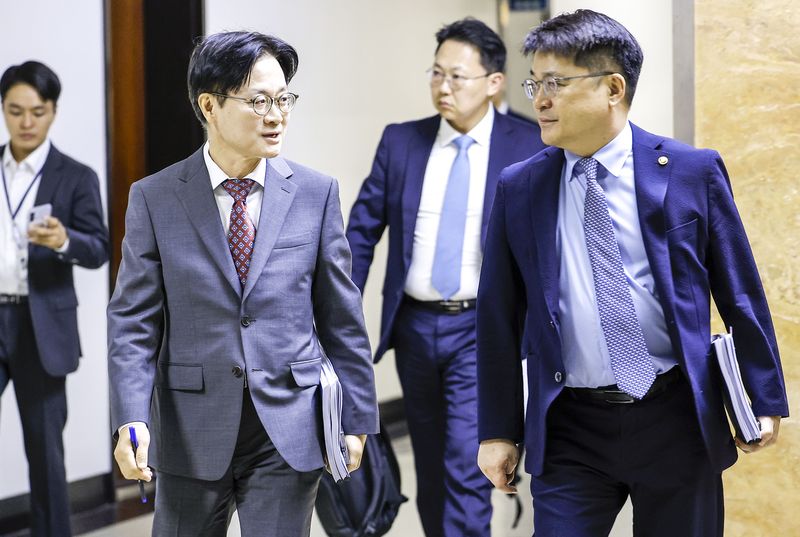
On the 22nd, the Ministry of Trade and Industry and the Ministry of Economy and Finance reported the results of negotiations and the implementation status of investment projects in the United States to the National Assembly's Trade, Industry, Energy, SMEs and Startups Committee and Strategy and Finance Committee. The report also covered the construction of eight nuclear reactors in the United States and an Alaska liquefied natural gas (LNG) development project as the second and third projects, respectively, alongside the Texas gas-fired combined-cycle power generation project, known as the Encinal project. In particular, the government is reportedly pursuing an amendment to the existing U.S.-South Korea nuclear Settlement Agreement to include a South Korean nuclear reactor model in two of the eight reactors. Discussions are also underway over the stake in Westinghouse Electric Company that the South Korean government seeks to acquire, with the figure being considered in the range of 5% to 10%. However, only the first project underwent a commercial viability review and was reported on that day. The nuclear and Alaska LNG projects will each undergo separate verification procedures in the future.
The opposition People Power Party focused its questioning on the basis for the first project's commercial viability. Long-term power offtakers have not been finalized, and uncertainty also remains over whether data centers cited as major potential customers will be built and whether the project can be carried out.
Bae Jun-young, the People Power Party's opposition secretary on the Strategy and Finance Committee, told reporters after the briefing, "We asked who would buy the electricity, whether data centers were actually going to be built, who would build them, whether they had sufficient capabilities, and whether they had built data centers before." He added, "Because our job is to minimize the burden on the public, we raised the issue that the matter was not clear in that regard."
Kim Sung-won, chair of the Trade, Industry, Energy, SMEs and Startups Committee, also told reporters, "The government says that commercial viability has been secured, but we expressed considerable concern about that claim." Koo Ja-geun, the People Power Party's opposition secretary on the committee, said he had conveyed the following view to the government regarding the first project: "Commercial viability must be carefully assessed, as variables may arise during the course of the project."
As the government determined that the first project had secured commercial viability, no separate National Assembly approval procedure was reportedly discussed at this stage. Committee Chair Kim explained, "Because the report said commercial viability had been secured, National Assembly approval is not currently being considered under the special law." The People Power Party also took issue with the timing of the report. Bae predicted that the government would announce the first project as early as the 23rd and criticized it, saying, "It filed the report the day before to avoid responsibility." He added, "National Assembly approval might have been required, but since the government says it has proven commercial viability on its own, what can we say?"
The ruling party called for close management of the projects and measures to protect the national interest. Oh Gi-hyoung, the Democratic Party of Korea's ruling-party secretary on the Strategy and Finance Committee, said he had asked the government to closely monitor the projects' operations and reflect the opinions and concerns raised in the National Assembly in future negotiations with the United States.
The timing of the memorandum of understanding (MOU) related to investment in the United States has reportedly not yet been finalized.
[email protected] Song Ji-won Reporter