'26 Trillion Won Oil Price-Fixing Cartel' Trial Gets Underway... Employee Who Self-Reported to Take the Stand
- Input
- 2026-09-22 14:21:11
- Updated
- 2026-09-22 14:21:11
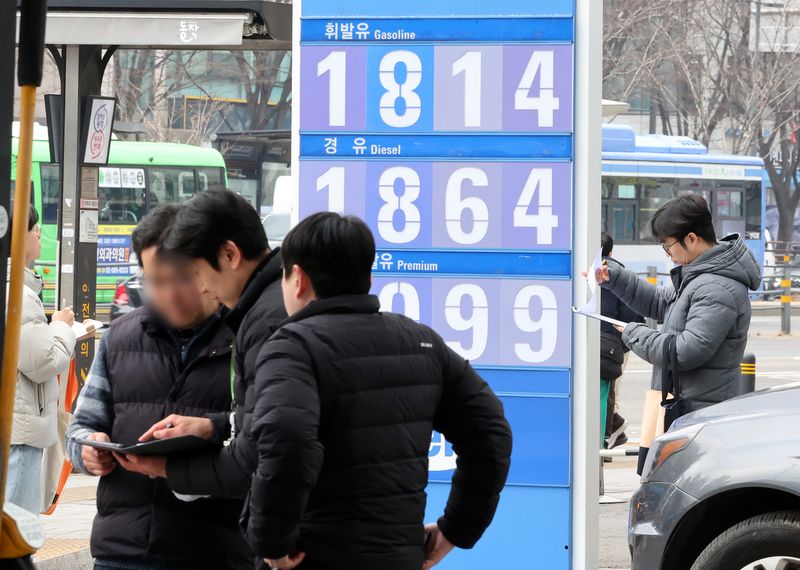
[Financial News] The key issues in the trial of the country's four major refiners—HD Hyundai Oilbank, SK Energy, GS Caltex and S-Oil—which were indicted on charges of leading an oil price-fixing cartel worth roughly 26 trillion won by capitalizing on high oil prices during a crisis stemming from the Middle East, have begun to emerge. An internal employee who self-reported the cartel will take the stand as a key witness, and questioning is expected to focus on the settlement structure and contracts.
Judge Ryu Jimi of the Seoul Central District Court held the first pretrial hearing on the 22nd for four refining companies and four executives and employees indicted on charges including violations of the Monopoly Regulation and Fair Trade Act. The court coordinated the prosecution and defendants' positions on the evidence and the schedule for witness examinations.
At the hearing, prosecutors and defense attorneys clashed over the method and scope of questioning for the SK employee who self-reported the cartel and whom prosecutors have presented as a key witness. Prosecutors maintained that the witness should be questioned promptly, citing concerns that the witness could be persuaded to change their testimony, given circumstances including the issuance of arrest warrants for HD Hyundai Oilbank employees during the investigation.
The defendants' attorneys countered, "The witness has self-reported to the Korea Fair Trade Commission and is in a position where they cannot retract all or part of their statements during the investigation or trial," adding, "The questioning should be limited to facts related to the concerted action."
A dispute over the admissibility of evidence is also expected. The defense attorneys either objected to the admission of key prosecution evidence, including mobile phone memos and KakaoTalk messages, and investigation reports lacking signatures and seals, or reserved their positions on the evidence. The court therefore asked prosecutors to submit detailed opinions on the evidence to which the defense objected. It also ordered prosecutors to organize the facts and consider withdrawing evidence whose relevance to the charges was unclear.
The court will hold the second pretrial hearing on the morning of October 20 to finalize decisions on whether to admit the evidence and whether to sever the proceedings. A formal hearing will then take place on November 19, followed by witness examinations on November 24 and 26. Before the witness examinations, at the first formal hearing, the defense is expected to explain the disputed 'ipgeum prices' through a presentation.
Gas stations receive products based on the 'ipgeum price' set by refiners and settle their accounts at the end of each month based on a final price set by the refiners. The refiners on trial have relationships with most gas stations through 'full-volume purchase contracts,' under which they supply all of the products. Prosecutors believe this settlement structure and the contracts could have been used to make deliberate price adjustments rather than enable fair price competition.
Prosecutors estimate the direct cartel amount at 14.2 trillion won, while the competition-restricting impact, including market ripple effects, is estimated at 26 trillion won. The four refiners, however, have denied all charges, stating at the first hearing, "There was no structural cartel, and our actions were based on market principles and lawful contracts."
[email protected] Lee Chang-hoon Reporter