"KOSPI Composite Index Volatility Is Extreme... Even Korea's National Brand Is Being Damaged": Wall Street Investment Heavyweight Warns
- Input
- 2026-09-22 13:51:28
- Updated
- 2026-09-22 13:51:28
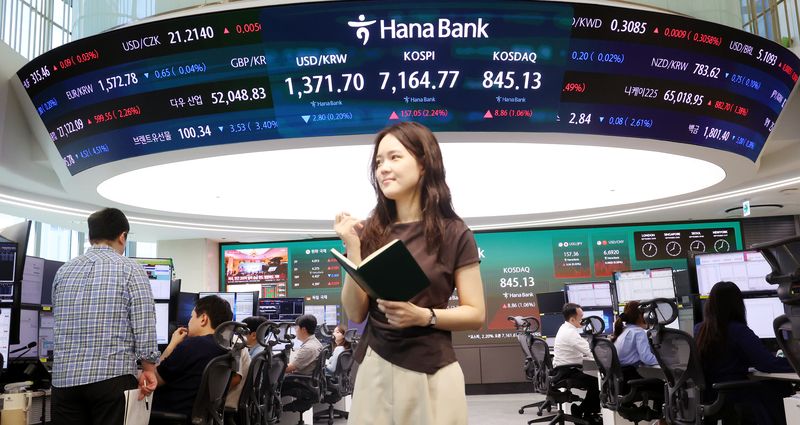
[Financial News] A warning from a U.S. executive at a major asset management firm that extreme stock-price volatility is damaging even Korea's brand value has drawn attention.
Sharma: "Korea's volatility resembles cases in emerging markets during financial crises"
On the 21st (local time), Ruchir Sharma, chairman of Rockefeller International, the global division of Rockefeller Capital Management, assessed the Korean stock market in an op-ed published in FT under the headline, "Why Did the World's Hottest Stock Market Become a National Liability?"
Sharma said, "The Korean market has been unusually volatile for decades because retail investors account for a large share of daily trading." He also pointed out, "The ups and downs of a market now led by artificial intelligence (AI) companies are further amplifying volatility."
Sharma noted that Korea's volatility over the past 12 months has been exceeded only four times since records began in the 1980s. He pointed out that similar cases occurred in emerging markets—Nigeria, Türkiye, Brazil and Greece—when financial crises struck.
He also cited the cyclical nature of key industries such as semiconductors and the weak corporate governance of chaebol groups as factors that drive away long-term investors.
South Korean Government Criticized for Reforms That May Have Fueled Speculation
Sharma analyzed that, without such volatility, the Korean market could become an investment destination where investors could earn substantial returns by investing in blue-chip companies. He also argued that, to prevent the "Korea discount," the government should pursue policy efforts by offering solutions rather than creating potential problems.
Sharma's analysis also included criticism of the government's response. He said the government had, in the course of pursuing reforms to stimulate the market, in some respects encouraged speculation. Regarding the government's subsequent measures to curb speculation, he noted, "Stock speculation has been identified as being linked to a deeply rooted culture of social gambling that does not easily disappear."
He also warned, "What happens in the world's sixth-largest market affects areas far beyond its borders. The KOSPI Composite Index, whose companies generate about 75% of their earnings overseas, has long been an early indicator of global bull and bear markets. However, Korea's brand is being damaged by the behavior of the Korean market, which increasingly appears to be losing control."
[email protected] Kim Hee-sun Reporter