Korea Exchange (KRX) Introduces Its Own Industry Classification System, 'KRICS'; Adds Mobility and Battery Categories
- Input
- 2026-09-22 11:21:43
- Updated
- 2026-09-22 11:21:43
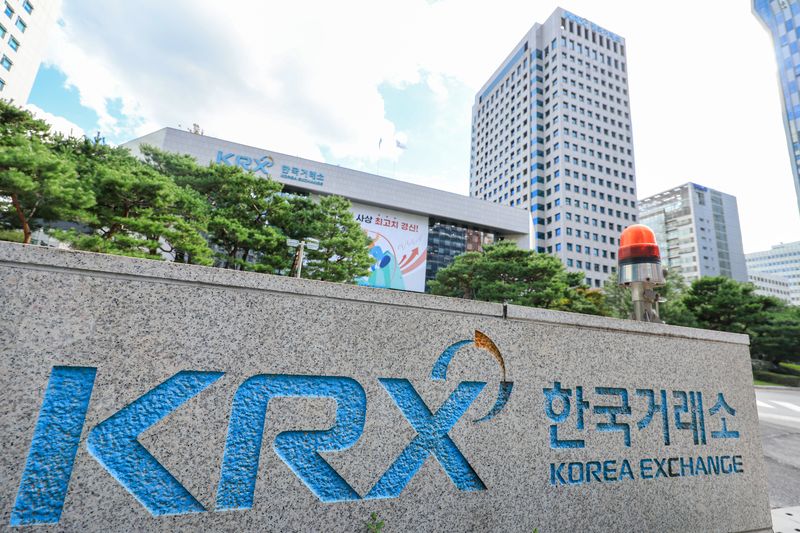
[Financial News] KRX will introduce its own industry classification system, KRICS (KRX Industry Classification Standard), reflecting Korea's industrial structure and the characteristics of listed companies. It plans to establish mobility as a separate sector and subdivide industries with a large presence in Korea's stock market, including shipbuilding, batteries, semiconductors and games, for use in developing industry- and theme-based indexes in the future.
On the 22nd, KRX said it had completed KRICS to manage the industry classification and positioning of listed companies and respond to demand for the development of various indexes. The related 'KRX Industry Classification Standard Methodology' will take effect on the 23rd, and the industry classification results for listed securities will be disclosed through the KRX Information Data System from the 26th of next month. The disclosure will cover KRICS Level 1 and Level 2 industry classification results, along with related market data such as stock prices and trading volume.
KRICS is organized into nine top-level sectors based on the value chain spanning production to consumption in the Korean economy. More specifically, it comprises nine Level 1 sectors, 24 Level 2 industry groups, 60 Level 3 industries and 129 Level 4 sub-industries. The nine sectors are Energy and Chemicals, Materials, Industrials, Mobility, Information Technology, Financials and Real Estate, Consumer Goods, Health Care, and Media and Content.
A key feature is that the system is designed specifically for the stock market and reflects the characteristics of Korean industries. Given the importance of the automotive industry, KRX grouped automobiles and parts with passenger transportation, which had previously been classified separately, based on their shared business area of 'mobility' and established Mobility as a Level 1 sector. In Industrials, shipbuilding and marine vessels and batteries were classified as separate industries. In Information Technology, semiconductors and displays were separated, while Culture and Entertainment and Game Services were classified as separate industries under Media and Content.
KRX prepared a draft classification system through an external research project in 2024, then refined KRICS through supplementary work and by gathering market opinions. On the first of this month, it also held a briefing for major index users.
Industry classifications will be revised regularly every April based on consolidated financial information from the most recently disclosed business reports and audit reports. The system also takes actual business characteristics and market perceptions into account, and ad hoc reviews will be conducted when changes are clearly expected due to new listings or major corporate events. Listed corporations and index users may also request a reexamination by KRX if they determine that a classification change is necessary.
KRX expects the introduction of KRICS to improve market understanding of listed companies and expand comparability across industries. It also plans to use the system to develop industry- and theme-based indexes that reflect changes in the industrial structure. During the second half of this year, KRX will first apply KRICS to major benchmark indexes, including the KOSPI 200 Index and KOSDAQ 150 Index, before expanding its application to additional indexes in stages.
[email protected] Joo Won-gyu Reporter