Electronics and Telecommunications Research Institute (ETRI) Wins First and Second Places at International AI Traffic-Video Analysis Competition
- Input
- 2026-09-22 10:45:50
- Updated
- 2026-09-22 10:45:50
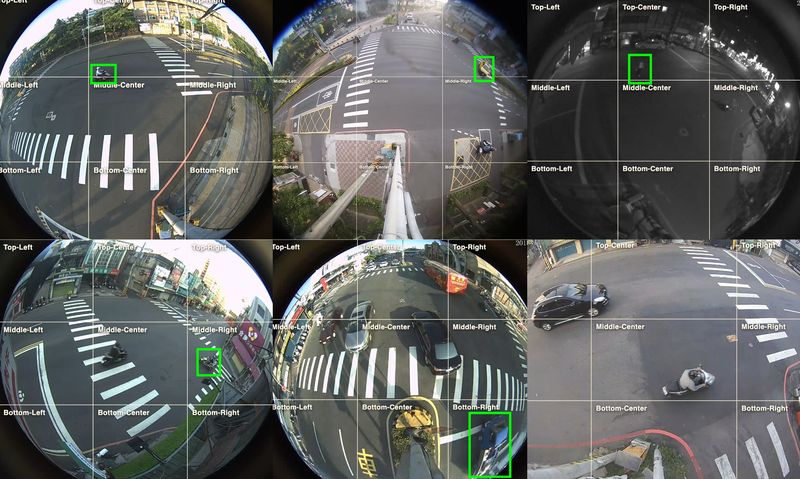
[Financial News] Domestic researchers demonstrated world-class technological capabilities by taking first and second place, respectively, in two categories at a global AI traffic-video analysis competition. The technology enables a single AI system to understand videos filmed from different viewpoints—from CCTV cameras and fisheye lenses at intersections to vehicle-mounted cameras—and explain both dangerous situations and why they occur.
According to ETRI on the 22nd, the institute took overall first place in the PSI-VQA category and overall second place in the FETV category at the 10th AI City Challenge, held on the 8th in Malmö, Sweden, as part of the European Conference on Computer Vision (ECCV) 2026, a prestigious international computer vision conference.
ECCV is a leading international conference in computer vision and artificial intelligence, where researchers from universities, research institutes, and global companies around the world present and share their latest findings. The AI City Challenge, held at ECCV, is an international competition that tests AI's ability to solve real-world problems in intelligent transportation and smart cities. Researchers from universities, research institutes, and companies worldwide—including those from NVIDIA—take part in the event, which began in 2017 and reached its 10th edition this year.
This year's competition placed particular emphasis on how reliably AI performs in new environments it had not encountered during training, as well as how accurately it understands and reasons about videos captured by different cameras, sensors, and viewpoints.
The joint research team from ETRI and the University of Washington (UW), UWIPL_ETRI, took overall first place in the PSI-VQA category, which analyzes pedestrians' intentions to cross, and overall second place in the FETV category, which focuses on understanding traffic-law violations at intersections.
The PSI-VQA category involves analyzing pedestrian movements in forward-facing vehicle-camera footage and using a question-and-answer format to infer such things as "Is the pedestrian trying to cross the road?", "When does a dangerous situation occur?", and "What is the basis for that judgment?" The FETV category involves analyzing footage from fisheye cameras installed at intersections to identify traffic-law violations such as running a red light, driving against traffic, and jaywalking, then having AI understand and explain each situation.
By placing among the top performers in both categories, which involve different video environments, the joint research team demonstrated its AI technology's ability to reliably understand and reason about traffic situations across a range of cameras and viewpoints.
The key to the achievement is UniTraffic, an integrated traffic-video understanding technology developed by the researchers. UniTraffic is designed to process footage from substantially different formats and viewpoints—including ceiling-mounted CCTV cameras, fisheye cameras at intersections, and vehicle-mounted cameras—through a single system based on a vision-language model (VLM). It can analyze lengthy traffic videos more efficiently while accurately assessing critical dangerous situations.
[email protected] Yeon Ji-an Reporter