Auto Insurance Loss Ratios Rise Again, Increasing Pressure in the Second Half
- Input
- 2026-09-22 10:50:52
- Updated
- 2026-09-22 10:50:52
[Financial News] Auto insurance loss ratios have edged up from last year, increasing pressure on the non-life insurance industry to manage profitability. After years of auto insurance premium cuts and a limited premium increase this year, rising costs for parts and repairs are also expected to make loss-ratio management more challenging in the second half.
According to the non-life insurance industry on the 22nd, the cumulative auto insurance loss ratio through August at the four major insurers—Samsung Fire & Marine Insurance, Hyundai Marine & Fire Insurance, KB Insurance and DB Insurance—was 84.7%, up 0.3 percentage points from 84.4% during the same period last year.
By company, Samsung Fire & Marine Insurance posted the lowest ratio at 84.2%, followed by Hyundai Marine & Fire Insurance at 84.6%, KB Insurance at 84.9% and DB Insurance at 85.0%. Meritz Fire & Marine Insurance recorded a cumulative loss ratio of 82.8% from January through August.
Compared with the same period a year earlier, the loss ratios at Meritz Fire & Marine Insurance and Samsung Fire & Marine Insurance fell by 0.8 and 0.7 percentage points, respectively. In contrast, the ratio rose by 0.4 percentage points at Hyundai Marine & Fire Insurance, 0.7 percentage points at KB Insurance and 1.6 percentage points at DB Insurance.
In July and August, most major non-life insurers posted loss ratios around the mid-80% range. Meritz Fire & Marine Insurance recorded 84.5% in July and 85.0% in August, while Samsung Fire & Marine Insurance posted 84.7% and 82.9%, respectively. Hyundai Marine & Fire Insurance recorded 88.4% and 83.6%, KB Insurance 85.8% and 85.9%, and DB Insurance 86.1% and 83.6%.
Cuts in auto insurance premiums and rising costs, including repair expenses, are cited as the main reasons for the increase in loss ratios. Although premiums have been reduced for several years and this year's increase was limited, rising parts and repair costs have increased insurers' claims payout burden.
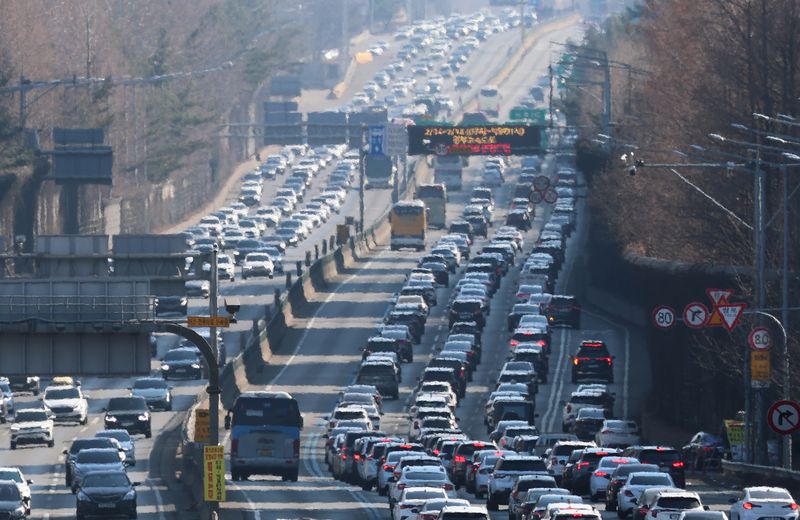
Traffic volume and accident trends during the Chuseok holiday will also be factors in the second half. Since the holiday period is shorter than last year, travel and traffic congestion could become concentrated. Depending on whether accidents increase, this could also affect auto insurance loss ratios.
An official from the non-life insurance industry said, "Auto insurance loss ratios are affected by accident trends, seasonal factors, vehicle repair service rates and parts costs. It is necessary to continue monitoring the factors that could affect loss ratios in the second half of the year as well."
[email protected] Hong Ye-ji Reporter