Missing-person discoveries rise 64.7% after investigation reforms... Police: "Response system to remain operational during Chuseok holiday"
- Input
- 2026-09-22 12:00:00
- Updated
- 2026-09-22 12:00:00
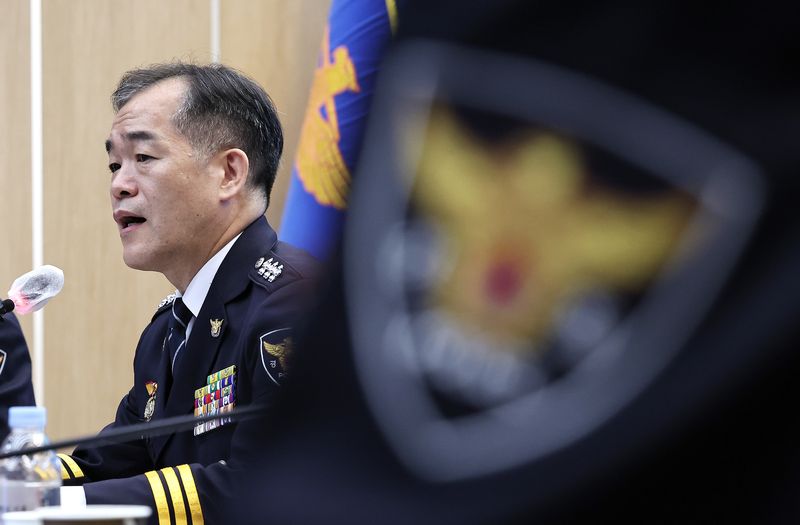
[Financial News] Following the Jeju Province missing-person concealment case, police have strengthened procedures for closing missing-person cases, resulting in a more than 60% increase in the number of missing people found. Police plan to respond to missing-person cases during the Chuseok holiday while maintaining a system with at least two officers on duty at night and on holidays.
The Korean National Police Agency said on the 22nd that it is fully implementing measures to improve missing-person investigations, introduced last month after the Jeju Province missing-person concealment case. Under the new measures, the system was changed to require approval from the criminal affairs chief before a missing-person case can be closed. All cases reported the previous day must also be reviewed for investigative appropriateness at a daily meeting chaired by the police station chief.
At night and on holidays, at least two investigators must respond to missing-person cases. The agency is also working to establish dedicated missing-person investigation units at its headquarters and at metropolitan and provincial police agencies, while expanding staffing for missing-person teams at front-line police stations. It is also pursuing the enactment of a Missing Adults Act to establish a legal basis for searching for adults who have left home.
From the 24th of last month through the 13th, after the measures took effect, 12,793 missing people were found. This was a 64.7% increase from the 7,768 cases recorded from the 3rd through the 23rd of last month, before the measures were implemented. The proportion of missing people found within three hours of a report also rose from 66.1% to 72.0% over the same periods, an increase of 5.9 percentage points (p).
Cases involving the rescue of socially vulnerable people or missing people believed to be at risk of suicide have also been recorded since the measures took effect. On the 4th, the Gyeongbuk Provincial Police Agency received a report that a woman with an intellectual disability had left home and could not be reached. After confirming through mobile phone location data that she was in Incheon Metropolitan City, police launched a search in cooperation with Incheon police. Following inquiries with residents of nearby multi-unit buildings, officers found her 10 hours after the report and handed her over to her family.
On the 5th, the Gyeongnam Provincial Police Agency received a report that a woman had lost contact with her husband. Based on an interview with the person who filed the report, police determined that he might be at risk of suicide and checked his location data. After determining that he was in Busan, they searched the surrounding area in cooperation with Busan police. He was found inside a vehicle two hours after the report and handed over to his guardian.
There was also a case involving the rescue of a dementia patient. On the 12th, the Jeonbuk Police Agency received a report that the informant's mother, who had dementia, had disappeared from home. Through CCTV analysis and inquiries, police confirmed that she had headed toward a nearby wooded hill. When she had not been found by the following day, police issued a missing-person alert via text message and mobilized police and fire personnel, drones, and helicopters. She was found exhausted halfway up the hill 15 hours after the report and taken to a hospital.
Police plan to maintain the missing-person investigation response system during the Chuseok holiday as well. Kim Jongcheol, acting chief of the Korean National Police Agency, said, "I express my gratitude to the field police officers who are working around the clock today to protect the lives and safety of missing people." He added, "To dispel the public's concerns about missing-person investigations, we will respond meticulously throughout the Chuseok holiday without any gap in public-safety coverage."
[email protected] Kim Yeji Reporter