September Sees the Most Accidents, Yet Another Death... "Difficult to Escape Unaided" from Jeju's Tetrapods
- Input
- 2026-09-22 10:48:04
- Updated
- 2026-09-22 10:48:04
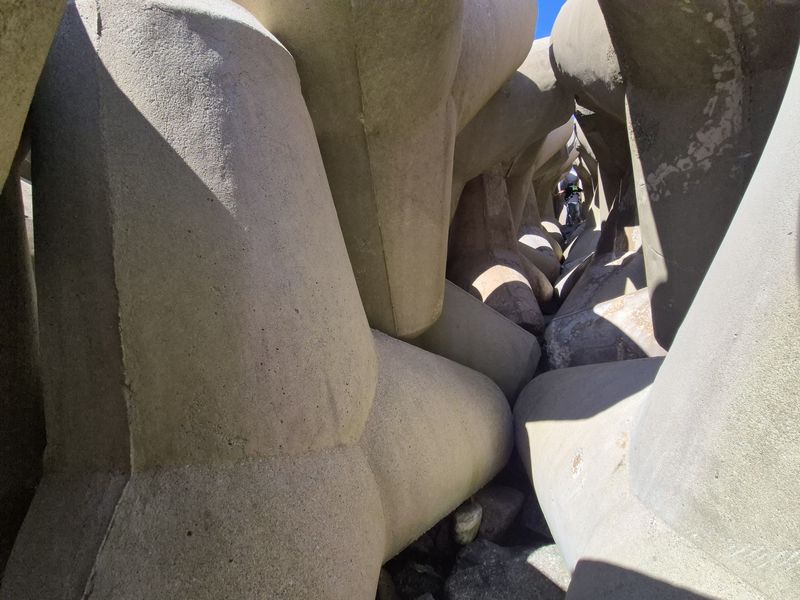
【Financial News | Jeju — Jeong Yong-bok】 Although they appear to be a breakwater made of massive concrete blocks packed tightly together, the tetrapods conceal spaces from which it can be difficult to escape unaided after a misstep. Another person has died in Jeju during September, the month with the highest number of tetrapod accidents each year, prompting calls for special caution among anglers and tourists visiting the island in autumn.
According to the Seogwipo Coast Guard Station on the 22nd, a family reported at around 8:49 p.m. that a woman in her 70s, identified as A, had not returned after leaving to collect seafood the previous day.
The Coast Guard searched the area around Jongdal Port in Gujwa-eup, Jeju City, and found A between the tetrapods at 9:09 p.m. She was already dead. Authorities are investigating the exact circumstances of the accident and the cause of death.
Tetrapod accidents have repeatedly occurred on Jeju Island. The Jeju Island Eastern Fire Station recorded a total of 163 tetrapod-related safety accidents across the island from 2021 to 2025. September had the highest monthly total, with 26 cases. Falls from height and slips or tumbles accounted for 67 cases, or about 41% of all incidents.
On July 2 this year, an angler in his 70s fell from a tetrapod at a harbor in Dodu-dong, Jeju City, while walking across the structure. He was rescued with severe head injuries and taken to a hospital, but died.
In July 2024, a man in his 50s also fell between tetrapods at a breakwater in Samyang-dong, Jeju City, and died.
■ Not a place for walking... A single misstep can lead to a deep gap
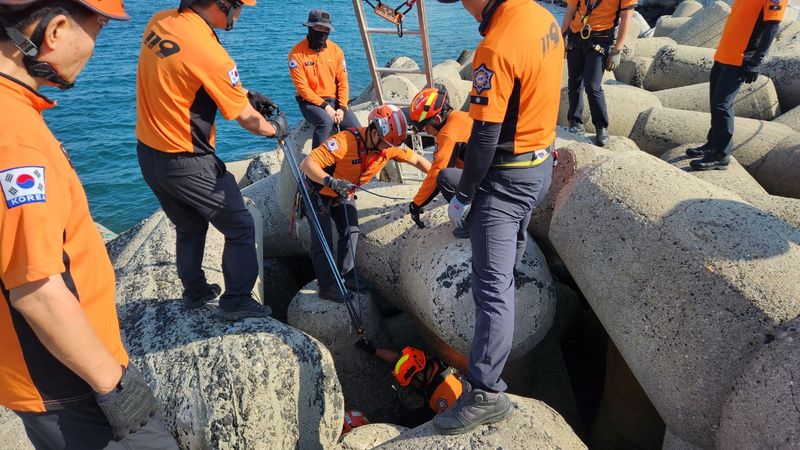
The danger of tetrapods begins with the difficulty of rescue itself.
Tetrapods are not structures installed for people to walk on or fish from. They are large concrete wave-dissipating blocks with multiple protrusions, stacked in an irregular pattern to disperse the force of waves striking a breakwater.
The gaps and uneven surfaces designed to scatter waves become traps for people.
The surfaces are rounded or sloped, and become even more slippery when covered with seawater, moss or seaweed. The spaces between the blocks vary in width and depth. After a misstep, a person may fall deeper into the structure rather than stopping at the level immediately below.
During a fall, a person's head or limbs may strike the concrete, or the body may become wedged between the structures, making even the slightest movement difficult.
At sea, the sounds of waves and wind add to the difficulty. Even if someone who has fallen inside the tetrapods cries out, people nearby may not notice. If the person's cellphone falls from their hand or is damaged, making a report can also be difficult.
Rescue becomes difficult once an accident occurs. Rescuers cannot simply approach across flat ground; they must climb down directly between irregularly stacked concrete structures. Even after locating the person in need of rescue, they must use specialized equipment such as ropes and stretchers to pull the person back up.
This was also the reason the Jeju Island Eastern Fire Station conducted special tetrapod rescue training from the 16th to the 18th, deploying 40 rescuers and pump-truck crews.
■ A prime fishing spot where fish gather... A hazardous area for people
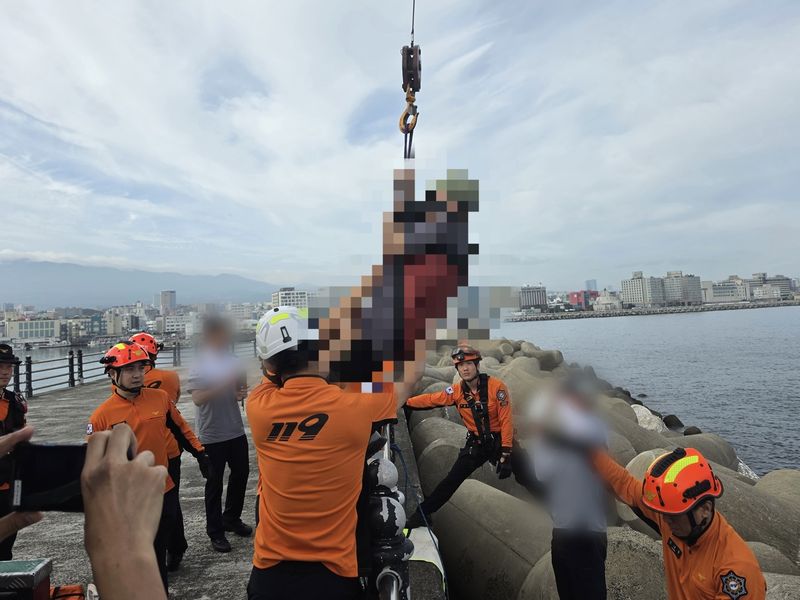
The structure of tetrapods is also one reason anglers approach them.
The spaces between the blocks serve as hiding places for fish. The Ministry of Oceans and Fisheries (MOF) has also pointed out that accidents caused by people entering the area without recognizing the danger continue to occur because tetrapod areas have become known as prime fishing spots.
The problem is that their solid concrete appearance makes the danger difficult to see.
The view from a safe passage on a breakwater is different from the situation after stepping directly onto the tetrapods. The available footholds vary in size, the height difference between blocks can be significant, and a person can suddenly lose balance on wet sections.
The danger is even greater when people move across tetrapods carrying fishing equipment or enter them after dark.
The same applies to tourists. The ports, harbors and breakwaters along Jeju Island's coast offer close-up views of the sea, but the tetrapods themselves are neither observation decks nor walking paths.
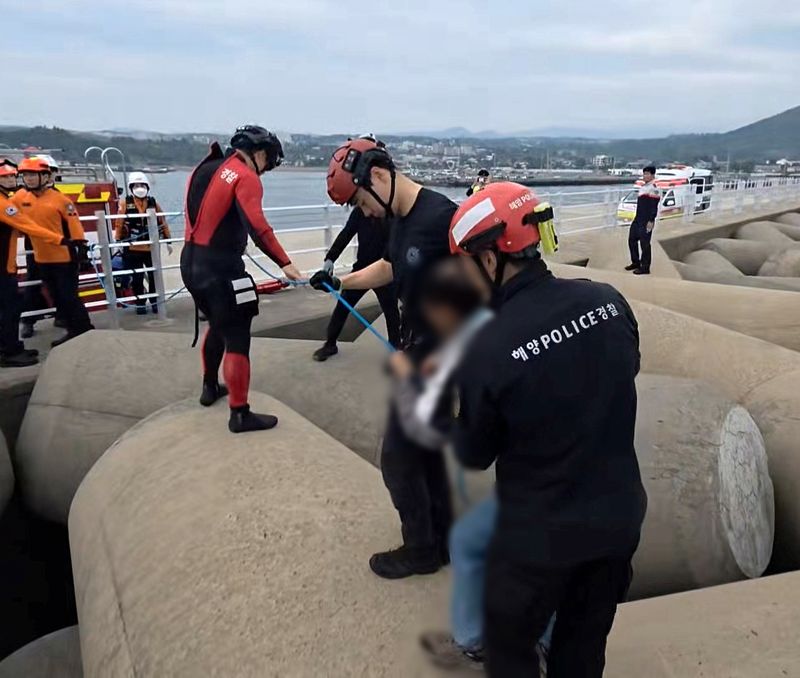
Jeju Island also sees a significant number of coastal accidents during the summer. According to Jeju Coast Guard data, 260 coastal accidents occurred from June through September between 2021 and 2025, resulting in 47 deaths. By location, 11 accidents occurred on tetrapods, killing four people.
When an accident occurs on tetrapods, people should also avoid climbing directly into the structure to attempt a rescue. The would-be rescuer could fall as well, so the priority is to call the 119 emergency number or maritime emergency number 122, determine the person's location and relay it to the rescue team.
People must not enter breakwaters or tetrapod areas designated as restricted-access zones. Unauthorized entry into such areas can currently result in a fine of up to 1 million won. Under a revised law, the maximum fine will rise to 3 million won starting in May 2027.
September has seen the most tetrapod accidents on Jeju Island over the past five years. Following the fatal accident in July, another woman in her 70s was found dead between the tetrapods at Jongdal Port just over two months later.
The safety rules for anglers and tourists are simple. On breakwaters, use designated safe walkways and, above all, do not climb onto tetrapods in the first place.
[email protected] Jeong Yong-bok Reporter