Ministry of Justice Moves to Cut Prosecutor Quota...Public Prosecution Office to Launch with 80–85% of Current Staffing
- Input
- 2026-09-22 10:44:41
- Updated
- 2026-09-22 10:44:41
[Financial News] The Ministry of Justice has decided to gradually reduce the current quota of 2,292 prosecutors after the Public Prosecution Office launches in October. The Public Prosecution Office will launch with more than 1,800 prosecutors, or 80–85% of its statutory quota. To bolster the number of trial prosecutors, it will reassign prosecutors from the Criminal Division and other departments to the Trial Division. The number of investigators who handled investigative work at the former prosecutors' offices will be reduced by about 70%, and the remaining personnel will be reassigned to support prosecution functions rather than conduct direct investigations.
The Ministry of Justice announced on the 22nd that the revised drafts of the "Organization of the Public Prosecution Office and Its Affiliated Agencies" and the "Enforcement Decree of the Prosecutors’ Quota Act" had been approved by the State Council of South Korea. The revisions followed a comprehensive review of the original drafts after the ministry incorporated opinions raised by various sectors of society following their announcement for public comment on the 4th.
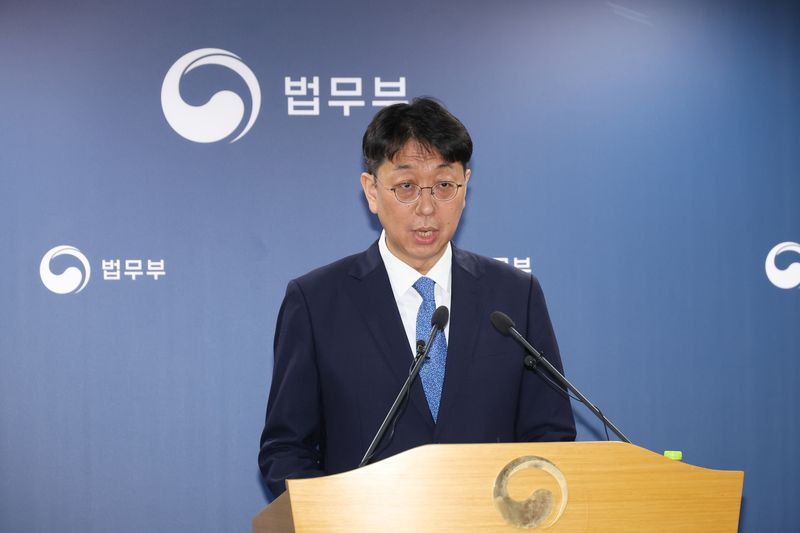
At a briefing held that day at Government Complex Gwacheon, Lee Eung-cheol, director of the Criminal Affairs Bureau at the Ministry of Justice, said, "Through consultations with relevant agencies, we drew up the organizational plan so that the Public Prosecution Office, which launches on October 2, can establish itself as a prosecution agency serving the public." He added, "We comprehensively reconsidered the original draft announced for public comment after gathering feedback and criticism from all sectors of society."
Public Prosecution Office to Launch with More Than 1,800 Prosecutors...Prosecutor Quota Reduction to Begin Next Year
Under the revised plan, the Public Prosecution Office will launch with an actual staffing level equivalent to about 80–85% of the statutory quota of 2,292 prosecutors under the current Prosecutors’ Quota Act. This reflects the usual vacancy rate of around 10%, as well as additional vacancies resulting from special appointments to the Serious Crimes Investigation Agency, applications for judicial positions, and personnel expected to resign in September.
The Ministry of Justice also plans not to separately fill vacancies resulting from special appointments to the Serious Crimes Investigation Agency or ordinary vacancies after the Public Prosecution Office launches.
Separately, the ministry will pursue an amendment to the Prosecutors’ Quota Act to reduce the statutory quota itself. However, it will not set a specific reduction target in advance. The target will be determined after the new criminal justice system is put into practice, based on an analysis of workloads by external organizations and an organizational assessment.
Lee explained, "I believe we can ensure a smooth transition only by conducting an organizational assessment alongside the operation of the new system." He added, "If we determine the reduction target in advance, it will be difficult to properly reflect areas that require additional personnel or those where further reductions are possible."
The Ministry of Justice plans to begin externally commissioned research and an organizational assessment early next year. Based on the results, it will consult with the National Assembly and relevant ministries and pursue an amendment to the Prosecutors’ Quota Act during next year's regular session of the National Assembly.
Move to Establish a "One Trial Panel, One Trial Prosecutor" System...331 Positions to Be Assigned
The ministry will also strengthen trial functions. It plans to establish a "one trial panel, one trial prosecutor" system by improving the current structure, in which one trial prosecutor handles approximately two trial panels.
To that end, prosecutor positions assigned to the Criminal Division and other departments will be reassigned to the Trial Division. The ministry will assign 331 trial prosecutor positions to match the 331 criminal trial panels at the 18 regional Public Prosecution Offices where Trial Divisions will be established. At offices without separate Trial Divisions, it plans to secure a corresponding number of trial personnel by adjusting the allocation of duties.
Lee said, "The important point in this organizational plan is that it declares the need to strengthen trial functions while reallocating the limited number of prosecutor positions." He added, "However, if too many personnel are sent to the Trial Division, staffing in the Criminal Division could fall and the number of pending cases could rise, so we will adjust actual staffing levels with this in mind."
Prosecution Investigative Personnel to Be Cut by About 70%...Remaining Staff to Be Reassigned
The general-service organization will also be significantly reduced. According to the Ministry of Justice, 2,986 current prosecution investigators handle investigative work in prosecutors' offices, investigation and examination departments, and other units. The revised plan calls for about 70% of them to be cut.
The 938 investigative personnel who remain at the Public Prosecution Office will also be converted to criminal legal affairs positions. Instead of conducting direct investigations, they will support prosecutors' work by verifying facts when decisions are made on whether to indict referred cases, reviewing cases not referred for prosecution, and requesting records from public offices.
The Ministry of Justice plans to prioritize individual preferences during the transfer of prosecution investigators to the Public Prosecution Office and the Serious Crimes Investigation Agency. Since the Serious Crimes Investigation Agency may continue making additional special appointments through April next year, the ministry will monitor future personnel movements.
Deputy Chief Prosecutor-Level Posts and Eight Divisions to Be Abolished...Renamed Serious Crimes Prosecution Division
The organizational structure was also further reduced from the draft previously announced for public comment. The ministry additionally abolished the Criminal Affairs Planning Officer position at headquarters, as well as deputy chief prosecutor-level posts and eight divisions at regional offices and branch offices.
The names of divisions were also revised to reflect their actual functions. The existing "Judicial Control Division" was renamed the "Non-Referral Review Division" to clarify its role of reviewing cases that police decide not to refer and preventing them from being buried.
The "Serious Crimes Division" will also be renamed the "Serious Crimes Prosecution Division." The change is intended to make clear that the division handles serious-crime cases referred for prosecution, with prosecutors specializing in specific fields deciding whether to indict and maintaining the prosecutions.
The Ministry of Justice will also pursue the transfer of forensic analysis and examination functions to enhance their neutrality.
The Ministry of Justice plans to continue improving the system by monitoring its operation on the ground after the Public Prosecution Office launches. Lee said, "October 2 marks the first step in a new criminal justice system." He added, "Even after the office opens, we will listen to practitioners and the views of all sectors and continue improving the system from the public's perspective."
[email protected] Choi Eun-sol Reporter