Trump Has 'Results,' Xi Has 'Time'... The Balance of Power Between the United States and China Has Shifted in One Year
- Input
- 2026-09-22 10:17:53
- Updated
- 2026-09-22 10:17:53
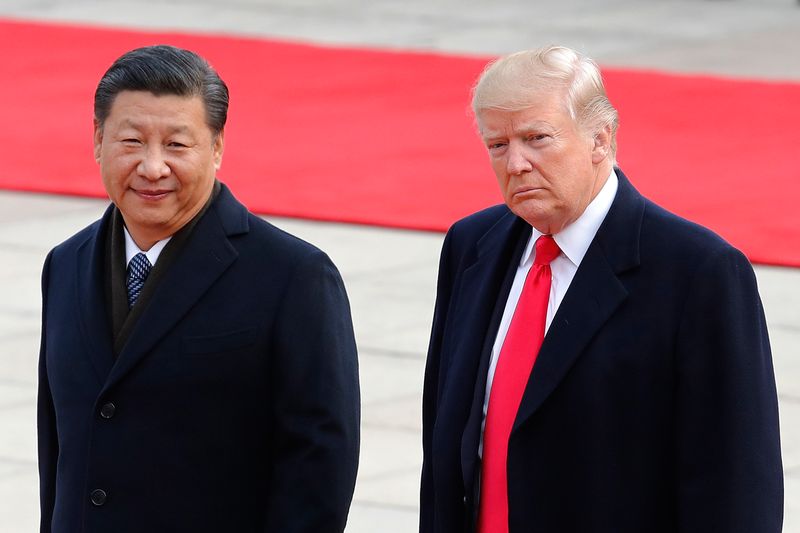
[Financial News, New York—Lee Byung-chul, correspondent] 'What matters is not what they negotiate, but who needs the other more right now.'
That is the question at the heart of the summit between U.S. President Donald Trump and Chinese President Xi Jinping, who will sit down in Washington, D.C., on the 24th local time. Tariffs, rare earths, artificial intelligence (AI), Iran and Taiwan will all be placed on the negotiating table. This time, however, the cards in the hands of the two leaders—and their circumstances—are different from those of a year ago.
Just a year ago, President Trump was pressuring China with tariffs exceeding 100%. The situation has changed. China's exports have not easily succumbed to the United States' tariff barriers, and China has brought out rare earths and critical minerals as powerful countermeasures. Meanwhile, President Trump is dealing simultaneously with the war in Iran, rising energy prices and the midterm elections. In effect, there are now more issues on which he needs China's cooperation.
Trump's Tariffs vs. Xi's Rare Earths
The tariff war, in which additional U.S. tariffs on Chinese goods once reached 145% and China's tariffs on U.S. goods climbed to 125%, entered a truce after the Busan summit. The United States currently maintains a 10% reciprocal tariff on Chinese products. Combined with tariffs of up to 25% imposed under Section 301 of the Trade Act during Trump's first term and existing tariffs, the overall average tariff rate on Chinese imports stood at about 47% immediately after last year's Busan agreement. China has also suspended a substantial portion of its retaliatory tariffs on U.S. products. However, this truce ends on Nov. 10.
The United States' most powerful cards remain tariffs and controls on advanced technology. The U.S.-China trade truce narrowly patched together at last year's Busan summit ends on Nov. 10. Along with extending the truce, the United States wants China to expand its purchases of U.S. products. At the Beijing summit in May, China agreed to purchase 200 aircraft from The Boeing Company and at least $17 billion worth of U.S. agricultural products annually. The implementation of those commitments and whether China will expand its purchases further are key points of interest at this summit. China, in turn, is demanding lower U.S. tariffs and eased export controls on advanced semiconductors and technology.
But China has rare earths. According to the Financial Times (FT), China's exports of rare-earth magnets to the United States fell to 512 tons in August, down 20% from the previous month and 13% from the same month a year earlier. Although the two countries agreed last year to maintain stable supplies, shipments instead declined just before the summit. Capital Economics analyzed that China was testing the limits of the trade truce. Rare earths are a critical vulnerability for U.S. manufacturing, from automobiles and aerospace to advanced weapons. While the United States is using tariffs to restrict China's access to the U.S. market, China is countering by controlling bottlenecks in a supply chain that the United States cannot immediately replace.
China's export engine is holding up despite the tariffs. According to Reuters, China is expected to record an annual trade surplus of more than $1 trillion this year. Scott Kennedy, a researcher at the Center for Strategic and International Studies (CSIS), said the United States had sought to force concessions from China through massive unilateral pressure, but had failed to do so.
Trump Has 'Results,' Xi Has 'Time'
For President Trump, the situation calls for results rather than another all-out confrontation with China. As a prolonged war in Iran and rising energy prices weigh on the U.S. economy, the November midterm elections are approaching. China's purchases of U.S. agricultural products and Boeing aircraft, along with its crackdown on fentanyl precursors, are tangible achievements that President Trump can present to voters.
China is also needed on the Iran issue. As the largest buyer of Iranian crude, China is one of the few countries able to exert economic influence over Tehran. That is why the Trump administration is asking China to pressure Iran.
By contrast, analysts say that Xi Jinping wants 'time.' China also faces weaknesses, including a property downturn and sluggish domestic demand, while it needs access to the U.S. market and advanced technologies. John Chin, a researcher at the Brookings Institution, analyzed that Xi's goal is not to secure large immediate concessions, but to extend the truce with President Trump and gain time for China to strengthen itself.
In fact, Scott Bessent, the U.S. Treasury secretary, and He Lifeng, China's vice premier, met in New York on the 20th, four days before the summit. They found limited areas of common ground rather than reaching a sweeping trade deal. They discussed a notification system under which each country would inform the other when an AI-related national security incident occurs, but failed to make a clear breakthrough on key issues such as agricultural purchases and controls on advanced AI semiconductors.
The Biggest Variable Is Taiwan
The most sensitive issue is Taiwan.
China wants the United States to go beyond its existing position that it 'does not support Taiwan independence' and publicly state that it 'opposes Taiwan independence.' U.S. arms sales to Taiwan could also be placed on the negotiating table. The biggest point to watch at this summit is whether the boundary between economic and security issues could break down. The question is whether the United States will move in the direction China wants on Taiwan in exchange for China increasing its purchases of U.S. agricultural products and aircraft, normalizing rare-earth supplies or cooperating on Iran.
Wu Xinbo, a policy adviser to China's Ministry of Foreign Affairs and a professor at Fudan University, told Reuters, "U.S.-China relations have become more transactional," adding, "If the United States accommodates China's concerns over Taiwan, China is also willing to accommodate U.S. concerns on other issues, such as law enforcement and purchases of U.S. agricultural products."
[email protected] Lee Byung-chul, correspondent Reporter