"It Was the Size of a Fingernail... It'll Get Better If I Rest?" It Absolutely Won't: Alopecia Areata Is a 'Disease' [Smart Wellness]
- Input
- 2026-09-24 06:00:00
- Updated
- 2026-09-24 06:00:00
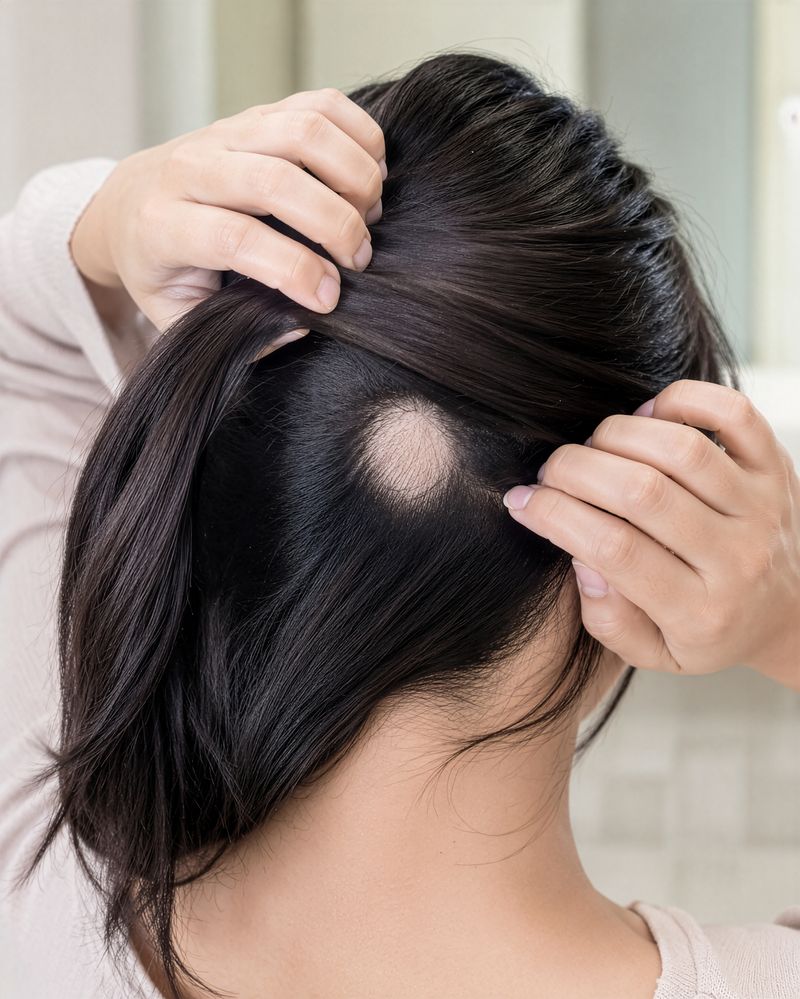
[Financial News] Alopecia areata is a relatively common condition that 1.7% of the world's population experiences at least once in their lifetime. However, it should never be taken lightly. Many people ignore the early symptoms, thinking, "It'll get better if I rest," but alopecia areata can progress to alopecia totalis, in which all the hair on the scalp falls out. It may also accompany other autoimmune diseases, including atopic dermatitis, vitiligo and thyroid disease, making particular caution necessary.
What Exactly Is Alopecia Areata? An 'Autoimmune Disease' in Which Immune Cells Attack Hair Follicles
Alopecia areata is a representative autoimmune disease caused by a malfunction of the body's immune system. Immune cells mistakenly identify the body's own hair follicles as foreign invaders and attack them, triggering inflammation and causing hair to fall out rapidly.
According to Lee Young, a professor in the Department of Dermatology at Chungnam National University Hospital, alopecia areata develops through the combined effects of various environmental factors, including extreme stress, viral infections and immune imbalances, in people with a genetic predisposition. In fact, a family history of the condition is found in 10% to 42% of patients with alopecia areata. In terms of stress, one report found that 23% of patients said psychological factors had contributed to their first episode. The report also found that cases involving severe stress before onset were twice as common as those without such stress.
Alopecia areata is characterized by round or oval bald patches measuring 1–5 cm on the scalp, but the patches do not always appear perfectly round. Multiple patches may merge into irregular shapes, or the condition may spread in elongated bands along the hairline or in a snake-like pattern. In severe cases, all the hair on the scalp—or even hair across the entire body—may fall out. Pain or a feeling of heat may also occur in the affected areas. The condition usually affects the scalp, but it can appear anywhere hair grows, including the eyebrows, eyelashes, beard and body hair.
Don't Ignore It Thinking, "It'll Get Better If I Rest"—Medical Treatment to Prevent Follicle Damage Comes First
Because early action is important in alopecia areata, people should pay close attention to its symptoms. The condition may be suspected when ▲a specific area of the scalp itches; ▲hair falls out easily even with a light tug; ▲hair breakage continues; ▲multiple strands of hair fall out in a round pattern; ▲the areas where hair has fallen out are smooth and shiny, with no visible follicle openings; or ▲the beard, eyebrows or pubic hair also begin to fall out.
Because alopecia areata is an autoimmune disease, consuming protein-rich foods or taking conventional hair-loss medications that affect male hormones is unlikely to be effective. Immunosuppressants are primarily used instead. More recently, targeted treatments have emerged that focus specifically on the autoimmune response attacking the hair follicles.
Patients with mild cases involving one or two bald patches may recover naturally within a year. However, ignoring the condition because of the belief that "it will get better with time" carries the risk of worsening it into a severe form such as alopecia totalis.
Professor Lee explained, "The longer alopecia areata is left untreated, the more broadly and aggressively it tends to progress." The professor added, "Natural recovery is possible when the affected area is small, but once the area expands to 50% or more, the recovery rate drops sharply. If the condition progresses to alopecia universalis or alopecia totalis, the natural recovery rate falls to 5–10%." Lee emphasized, "Given reports that the symptoms worsen into alopecia universalis in 5% of patients with alopecia areata, it is important to see a dermatologist promptly if suspicious symptoms appear."
Ways to make life healthier and more vibrant are not far away. [Smart Wellness] shares wisdom for caring for the body and mind based on scientific evidence and the latest trends. Subscribe to the reporter's page to conveniently receive [Smart Wellness].
[email protected] Kim Hyun-sun, Reporter[email protected] Kim Hyun-sun Reporter