Jeon Do-yeon's Vitality Shines in 'Possible Love'... Ultimately, a Love Story as Subtle as Moonlight [This Film]
- Input
- 2026-09-22 16:03:39
- Updated
- 2026-09-22 16:03:39
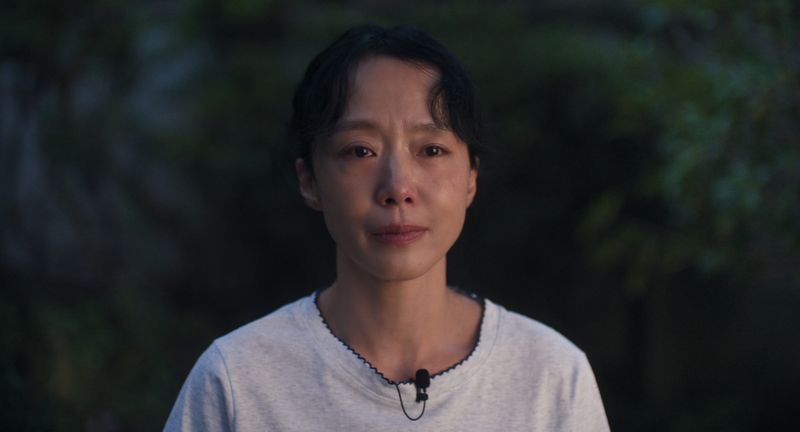
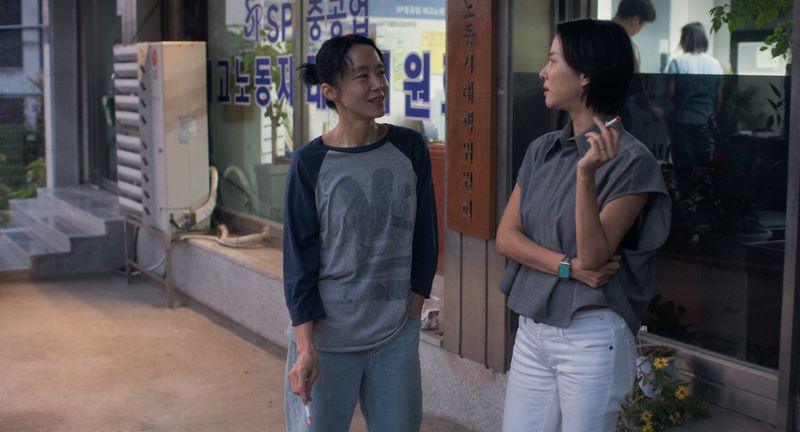
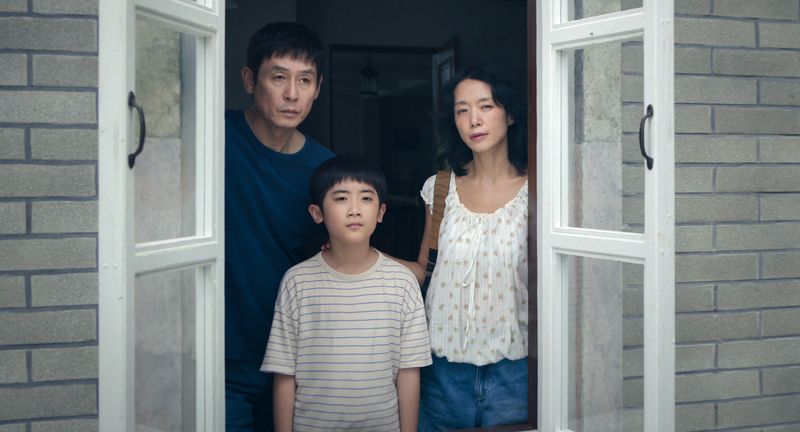
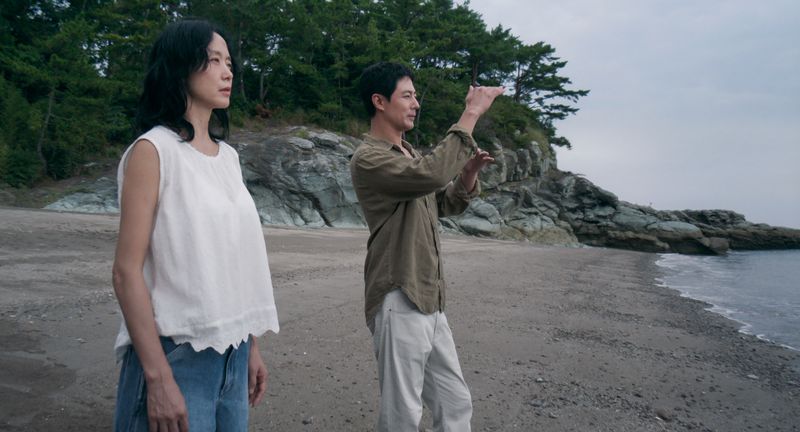
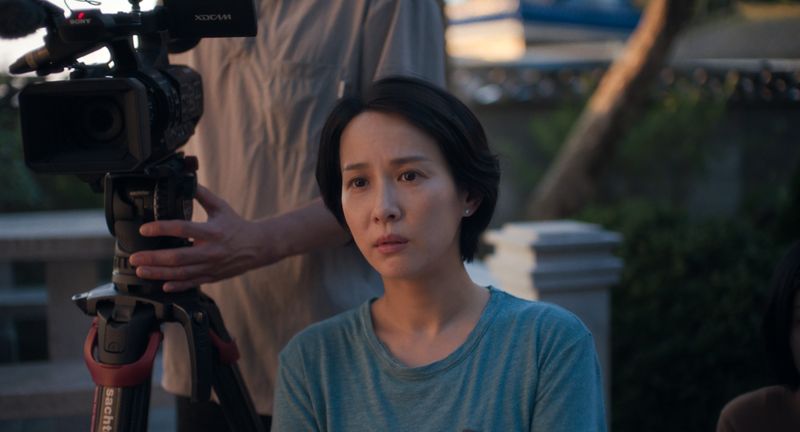
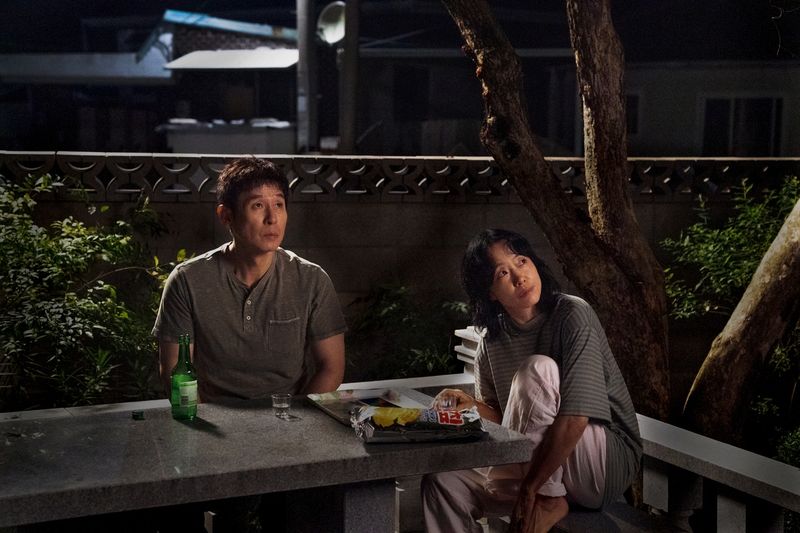
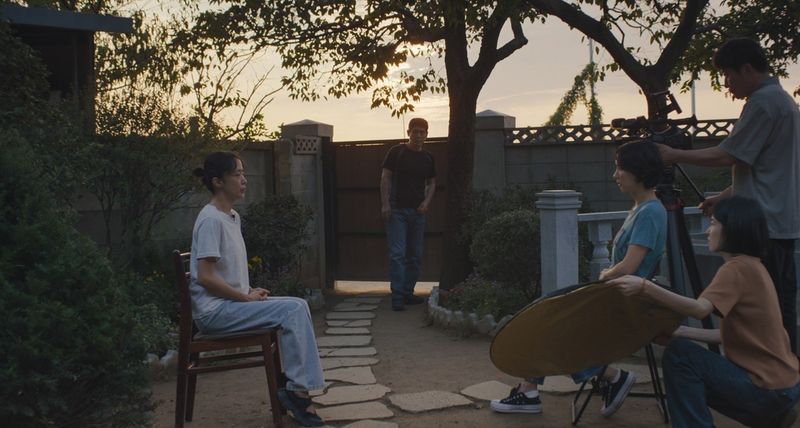
[Financial News] Lee Chang-dong's Netflix film 'Possible Love' is, at its core, a quietly glowing love story about a married couple, as subtle as moonlight. At the same time, it tells of people deeply wounded after being swept up in the massive wave of layoffs as they confront their trauma. It is also the story of a creator who tried to love her subjects in order to capture others' pain on camera, only to have her authenticity tested when her creative ambition took precedence. The film is also an uncomfortable portrait of our society, capturing the class divide that becomes sharper as people grow closer. Above all, in an era when even other people's pain is easily consumed, it reminds us that fully looking at and embracing another person's wounds is the starting point of love.
Two Couples Meet Through Documentary Production
The film opens with Jeon Do-yeon's nuanced portrayal of Mi-ok, a laid-off worker's wife; Ho-seok (Jeon Do-yeon) gently stroking his wife's nape as he says, "If you want to cry, just cry"; and their young son watching the two as if he were an observer.
The couple head to the funeral home of a former colleague who passed away after failing to overcome depression following his dismissal. There, Mi-ok meets Ye-ji (Cho Yeo-jeong), a documentary director filming the scene. Ye-ji proposes interviews with Ho-seok and his wife Mi-ok, who are living with the aftermath of a strike against mass layoffs and its violent suppression. Unlike Ho-seok, Mi-ok stands before the camera without prejudice and grows close to Ye-ji, whose life has been entirely different from her own. She finds the process exciting, yet also experiences an inexplicable sense of discomfort.
To open Ho-seok's heart, Ye-ji suggests that they take a summer vacation together. They arrive at a villa on the west coast that Sang-woo's (Zo In-sung) wealthy family has owned for generations. As the four live together in one space, the desires and class divisions hidden beneath the surface of their relationships gradually emerge."The film can be seen as a story about laid-off workers, a conflict between classes, or the ethics and attitude of people making a film. Through the story of the two couples, I wanted viewers to feel and think about these various layers of relationships between people, and to share questions about them," director Lee Chang-dong said.As the director explained, the film embraces multiple layers of meaning without putting any one of them first or forcing a particular emotion on the audience. Rather than easily dividing or judging the characters as good or evil, it observes them calmly and dispassionately while continuing to pose questions.
What wounds do mass layoffs leave on individuals? Is it possible to understand another person's pain? Is capturing that pain on camera an act of solidarity or exploitation? Can people from different classes form a genuine relationship, even if only for a short time?
Moving between the past and present, the film portrays not only a strike site marked by solidarity and celebration, violence and betrayal, but also the awkward yet pure days of Mi-ok and Ho-seok's youth. Scenes featuring testimonies from laid-off workers and their families have a striking realism, as if they came from an actual documentary. By contrast, Mi-ok and Ho-seok's youth is depicted lyrically, like a work of literature unfolding before the viewer.
In particular, the sunrise Mi-ok sees after waking before dawn the morning after Ho-seok confesses his feelings to her as a teenager, and the night sky they see on the beach at Wolmido Island after Ho-seok, on vacation, grabs Mi-ok's hand as she is being worked to exhaustion at a factory, feel like defining scenes of their lives—moments that helped them endure their harsh reality.
The Four Actors' Ensemble Stands Out... Mi-ok Is a Compelling Character
The four actors also deliver an outstanding ensemble performance, exchanging tension-filled moments throughout. Sul Kyung-gu portrays Ho-seok as a man deeply wounded in body and mind yet outwardly unshaken. His solid physique, silence and cynicism resemble armor he has wrapped around himself to keep from falling apart again. In the latter part of the film, Ho-seok, who has long ignored his own wounds, pours out his pain in front of Ye-ji's camera, echoing the full weight of the reality from which the film emerged. It is a moment that recalls his words: "There is nothing inside me. I am empty."
Ye-ji, whom the director has described as the character closest to himself, moves between a creator's ambition and conscience. She sincerely tries to understand and grow close to Ho-seok and Mi-ok in order to complete her work. In the process, she helps Ho-seok confront the wounds he has ignored, but ultimately leaves another wound behind. It is also intriguing that Ye-ji grew up as the daughter of a laundromat owner in Apgujeong-dong before marrying Sang-woo, who comes from a wealthy family. She serves as a link between Sang-woo and the couple Ho-seok and Mi-ok, who belong to different worlds, while also remaining a liminal figure who is not entirely free in either.
Sang-woo, played by Zo In-sung, is a man raised in privileged circumstances who possesses a characteristic ease and warmth. As Ye-ji says in the film, her high school classmate Sang-woo was said to be immensely popular, possessing everything from his tall stature and handsome looks to his wealth. Combined with Zo In-sung's presence, he becomes a symbolic figure standing at the pinnacle of the qualities our society desires. He actively helps with his wife's documentary and approaches Ho-seok and Mi-ok warmly. Yet the moment he begins coveting even what he should not have, his hidden predatory gaze finally reveals itself.
The most compelling character is Mi-ok, played by Jeon Do-yeon. She most clearly embodies what director Lee described as "the desire to move toward freedom without allowing one's life to be defined by a great force." Even as her life is weighed down by dismissal, poverty and her husband's wounds, Mi-ok does not lose her curiosity about the world or her hope for life. In the latter part of the film, she walks boldly into the sea in front of Sang-woo's family's villa, vividly revealing her determination and vitality as she reaches for freedom beyond the boundaries drawn by the world.
[email protected] Shin Jin-ah Reporter