LG Electronics' AI Data Center Coolant Distribution Unit Approved to NVIDIA Specifications
- Input
- 2026-09-22 09:48:11
- Updated
- 2026-09-22 09:48:11
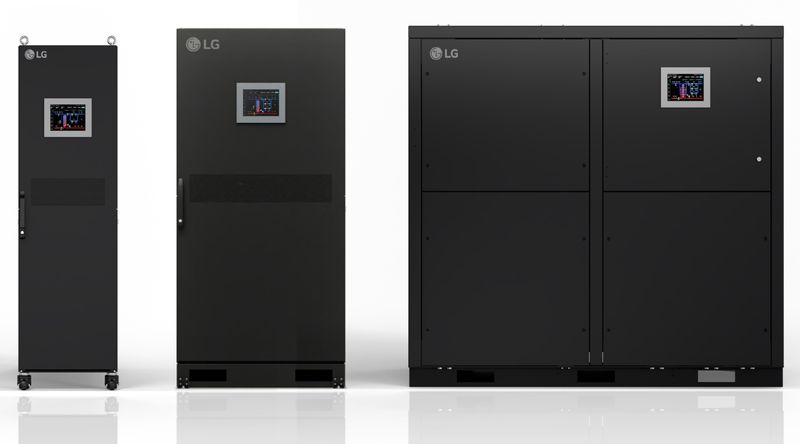
[Financial News] LG Electronics is accelerating its push into global markets after securing NVIDIA approval for its high-capacity coolant distribution unit (CDU), a key product in the AI data center cooling solutions market.
LG Electronics said on the 22nd (Korea Standard Time) that its 2.5 MW-class CDU had met all additional requirements in NVIDIA's AI Factory specification approval process and had been approved as an "NVIDIA DSX Ready CDU" product.
An AI Factory is an advanced data center designed to manage the entire AI lifecycle and create value from data. NVIDIA operates the NVIDIA DSX AI Factory Platform, which integrates the design and operation of AI Factories across computing, networking, power, cooling, facilities, and software.
Only products that meet the relevant requirements are approved as "DSX Ready" products. For CDUs, the approval applies to high-capacity products rated at 2.3 MW or more, which are required to build AI Factories. The approval gives LG Electronics a foundation to expand its opportunities to supply high-capacity cooling solutions within the NVIDIA AI Factory ecosystem.
LG Electronics received NVIDIA specification approval for its 600 kW-class and 1 MW-class CDU products in July and September, respectively. This time, its 2.5 MW-class CDU met the additional requirements and received DSX Ready approval, demonstrating the company's liquid-cooling capabilities across capacities ranging from small to large. LG Energy Solution's battery energy storage system (BESS) was also approved as a DSX Ready product on the same day.
The 2.5 MW-class CDU is considered a key piece of equipment for thermal management in high-density AI data centers. The adoption of next-generation AI accelerators based on the NVIDIA Blackwell architecture has pushed power density per server rack from hundreds of kilowatts to the megawatt level.
As a result, the high-capacity "in-row" method, which cools multiple racks grouped by row with a single high-capacity CDU, is becoming the standard over the small-capacity "in-rack" method, which installs a CDU for each individual rack.
The capacity of the latest AI server racks is approximately 120 kW. Grouping them into cooling units of 20 racks each results in a capacity of about 2.4–2.5 MW. The 2.5 MW-class high-capacity CDU is a key product for the in-row cooling method, which reliably manages heat in high-density, high-heat AI data centers.
Global market research firm TrendForce forecast that the adoption rate of liquid-cooling solutions in AI data centers will rise from 14% in 2024 to approximately 60% in 2027. Dell'Oro Group also analyzed that liquid cooling is becoming an essential foundational technology for AI Factories rather than an option, as power consumption by next-generation chipsets surges.
With this approval, LG Electronics has completed a full lineup of cooling solutions for managing heat in AI data centers. The company now offers a chip-to-chiller total solution that includes high-efficiency chillers, computer room air handlers (CRAHs), 600 kW-class, 1 MW-class, and 2.5 MW-class CDUs, as well as cold plates that directly cool AI chips.
Building on this portfolio, LG Electronics plans to expand its market presence by providing customized total solutions optimized for the requirements of AI data center operators.
Lee Jaesung, president of LG Electronics' ES Business Division, emphasized, "Using the NVIDIA DSX specification approval as a springboard, we will begin supplying more reliable and efficient cooling solutions to global technology companies in earnest and secure leadership in the next-generation liquid-cooling market."
[email protected] Park Ji-yeon Reporter