Jeju's 8.8 Billion-Won R&D Blueprint Unveiled: Surplus Electricity Stored as Heat, AI to Design Cosmetic Formulations
- Input
- 2026-09-22 10:16:53
- Updated
- 2026-09-22 10:16:53
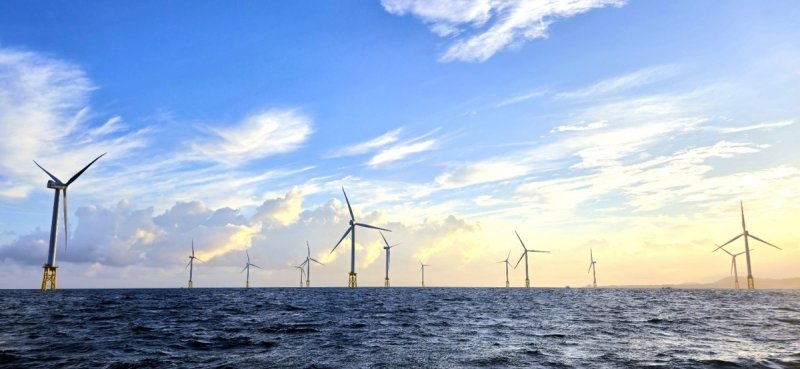
[Financial News | Jeju = Jung Yong-bok, Reporter] The detailed blueprint for Jeju's 8.8 billion-won regional autonomous research and development (R&D) program has been unveiled. Sixteen research projects have been opened for applications, covering technologies that convert electricity discarded due to renewable-energy curtailment into heat for storage, use electric vehicle batteries to stabilize the power grid, and have artificial intelligence (AI) recommend formulation ratios for cosmetics made with Jeju natural products.
According to the notice for the '2026 4-Geuk 3-Teuk Jeju Special Self-Governing Province Science and Technology Innovation Support Program' and its request for proposals (RFP), released on the 22nd by the Ministry of Science and ICT and the Integrated R&D Information System (IRIS), Jeju's R&D program was designed around two pillars: distributed energy and bioindustries based on agriculture, livestock and fisheries.
The 4-Geuk 3-Teuk Science and Technology Innovation Support Program is a regional autonomous R&D initiative being launched for the first time this year to shift the nation's research and development structure away from its concentration in the Seoul metropolitan area and put regions in the lead. The government will invest 78.9 billion won across seven regions, allocating 5.183 billion won to Jeju for distributed energy and 3.617 billion won for bioindustries based on agriculture, livestock and fisheries, for a total of 8.8 billion won.
The individual funding caps for the 16 Jeju projects unveiled this time total 8.624 billion won. The funds include 6.175 billion won to build an industry-academia-research hub, 1.43 billion won for tailored workforce development for future industries, 614 million won to spread deep technologies across the region, and 405 million won for the K-UBRC program using retired science and technology professionals.
This year's program is a six-month pilot preceding the main program. Selected research groups will receive funding entirely from the national government. Applications are due by October 11, with preliminary reviews and selection evaluations to take place that month. Agreements will be signed by the end of October, and the projects will run through the end of March next year.
The most notable area is distributed-energy R&D, which turns Jeju's renewable-energy curtailment problem into an actual technology demand.
The 780 million-won power-to-heat (P2H) hybrid thermal-storage project will validate technology that converts renewable electricity into heat when the grid cannot absorb the power and generation must therefore be reduced. P2H is a technology that converts power into heat. Instead of storing electricity only in batteries, it stores energy as heat for cooling, heating and hot-water supply, making use of surplus electricity during periods of low power demand.
The RFP states that renewable-energy curtailment occurred 181 times in Jeju in 2023. Over six months, the researchers will assess the technology's performance and economic viability by combining high-density thermal storage using latent-heat and thermochemical methods with heat pumps and AI-based predictive control.
The targets are also specified numerically. Thermal-storage density must be at least 60 kWh per cubic meter, the heat pump's coefficient of performance must be at least 4.0, and the accuracy of heat and power demand forecasts must be at least 90%.
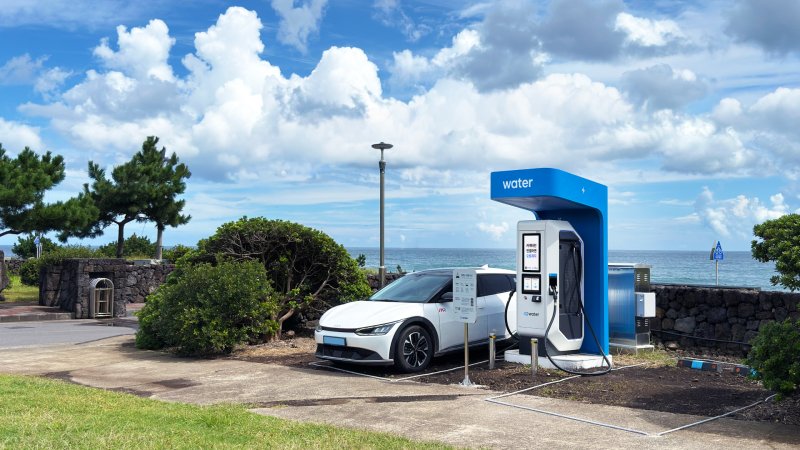
The program will invest 800 million won in research to operate the power grid more intelligently.
The next-generation power-grid project will design technology that connects different distributed resources—including solar and wind power, energy storage systems (ESS) and electric vehicles—through standardized modules, while AI manages power flows in an integrated manner. It also includes “virtual line” technology, which would allow existing distribution networks to be used more flexibly without continuously expanding power lines or substations.
The program-wide targets are a 30% reduction in curtailment from current levels, an 18-megawatt increase in grid hosting capacity and a 40% regional energy self-sufficiency rate. This year will focus on designing and conducting preliminary validation toward those goals.
Electric vehicles will also expand their role from transportation to grid resources. The 770 million-won DC V2X project will validate direct-current-based charging and discharging technology that sends electricity stored in electric vehicle batteries back to an external power grid through chargers. Its targets are a discharge output of at least 10 kW and a control response time of less than 200 milliseconds.
In regions such as Jeju, where both the electric vehicle adoption rate and the share of renewable energy are high, an important demonstration challenge is determining whether vehicles can be used as a flexibility resource for the power grid while they are parked.
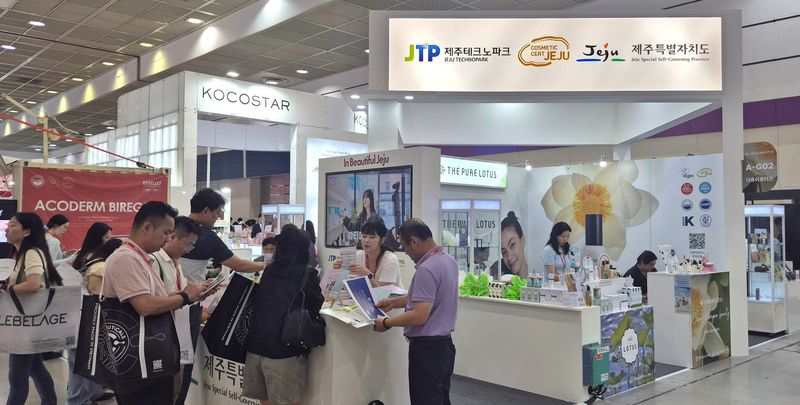
In the bioindustry sector, AI will be applied to the process of turning Jeju's natural products into commercial goods. The 137 million-won “AI for Designing Cosmetics Recipes Specialized in Jeju Natural Products” project will begin by converting test reports, research notes and formulation histories held by local cosmetics companies into data that AI can learn from.
The training data will include not only successful formulations but also records of formulations that failed or were rejected during product development. For one or two Jeju natural products, such as centella asiatica and camellia, the project will develop demonstration software that combines data on ingredients, physical properties and efficacy to recommend formulation ratios suited to target characteristics.
The RFP states that cosmetic formulation currently involves repeating prototyping, evaluation and reformulation three to five times on average, with finalizing a formulation taking 15 to 50 business days. The researchers will assess whether AI can reduce the number of iterations to one or two.
Up to 838 million won will be invested in research to use Jeju seaweed as both a biomaterial and an energy resource. The project will develop a circular process that extracts functional materials from seaweed and recovers byproducts and ionic components generated during production as energy and resources.
Another project, allocated 767 million won, will use major Jeju agricultural products to produce import-substituting biomaterials and convert the remaining byproducts into biohydrogen and biomethane.
Lava seawater will be linked to senior-friendly industries. The 117 million-won project will identify functional candidate materials applicable to skin, cognitive, muscle, bone and joint health by using minerals from lava seawater and native Jeju resources, and will produce prototypes.
The government will provide 100 million won for research to domestically produce functional bio-raw materials currently dependent on imports through fermentation technology, linking the work to product registration and market launch.
Workforce development has also been designed as part of the R&D program. The collaborative joint graduate school operated by the Korea Advanced Institute of Science and Technology (KAIST) and Jeju National University (JNU) has been allocated 715 million won each for distributed energy and marine bio, or 1.43 billion won in total.
The distributed-energy joint graduate school will train master's- and doctoral-level professionals in areas ranging from renewable-energy generation to ESS and hydrogen storage, power conversion, power-grid operations and energy policy. The marine-bio program will develop specialists in new materials and bioprocessing based on more than 3,000 marine biological resources found in Jeju.
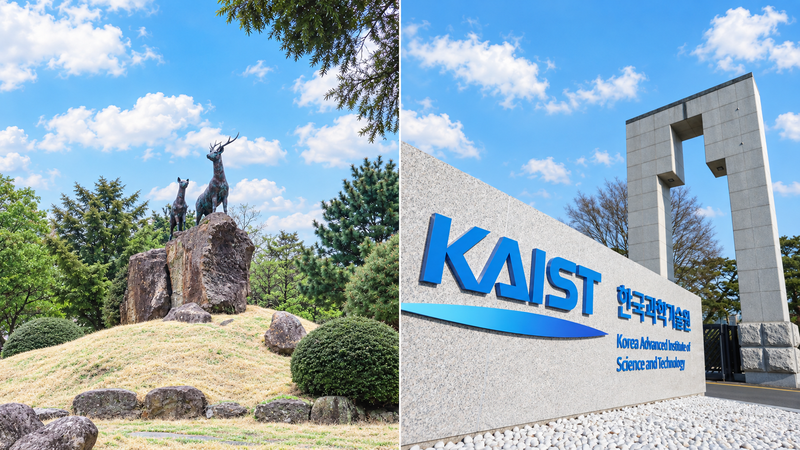
Both programs will operate separate curricula at KAIST and JNU while making joint courses account for at least 30% of the coursework. During this year's pilot, the programs will identify at least five joint dissertation research topics in each field and develop at least three modular online lectures.
The program also includes an effort to attract retired senior science and technology professionals to Jeju. The 405 million-won K-UBRC program will connect JNU with retired science and technology professionals and deploy them in technology guidance for local companies, joint research, and startup and business-commercialization mentoring. It also envisions turning Jeju into a “Silver Silicon Valley” by leveraging the island's workation opportunities and residential conditions.
However, this year's 8.8 billion-won investment does not immediately guarantee a long-term program through 2030. 2026 is a pilot program funded entirely by the national government, while the main program structure from 2027 onward will include local government funding and institutional contributions. Depending on the results of the pilot review and the government's ability to secure a budget, the transition to the main program, research period, funding and targets may be adjusted. Support may also be discontinued or the program ended early.
The next six months will be the first test of the success of Jeju's regional autonomous R&D program. How concretely Jeju can turn its problems and resources—including renewable-energy curtailment, electric vehicles, seaweed, lava seawater and natural products—into actual technologies and products is expected to be crucial to the program's transition to a full-scale initiative from 2027 onward.
[email protected] Jung Yong-bok Reporter