Kakao Boosts Data Center Energy Efficiency, Cutting Cooling Power Costs by 23%
- Input
- 2026-09-22 09:36:48
- Updated
- 2026-09-22 09:36:48
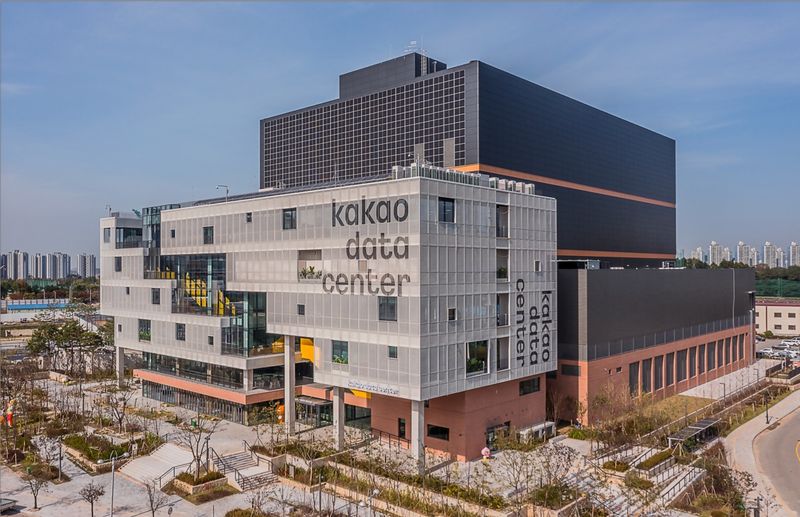
[Financial News] As the spread of artificial intelligence (AI) makes data center (DC) power consumption and heat management key challenges, Kakao cut cooling power costs by approximately 23% through operational optimization alone, without replacing cooling equipment. The company is expanding its thermal-management expertise, accumulated at its own DC, to leased facilities. It has also applied AI-agent-based autonomous cooling-control technology in some server rooms.
Kakao said on the 22nd that it had improved the operation of existing cooling equipment at a DC in Hanam City, Gyeonggi Province, which it operates on a commissioned basis. The changes reduced cooling energy consumption while maintaining service stability.
The project's key feature was its focus on improving the operating efficiency of existing infrastructure without replacing or expanding cooling equipment. Kakao analyzed operational data and on-site conditions to optimize server-room temperatures and chiller chilled-water temperatures. As a result, cooling power costs fell by approximately 23% from the same period a year earlier, despite heat waves and changes in server utilization. The comparison also reflected the effects of server usage and outdoor conditions.
The improvement project drew on Kakao's data-based thermal-management expertise accumulated at its own facility, Kakao DC Ansan. At the Ansan-si DC, Kakao has applied energy-saving technologies, including cooling-equipment optimization, improved air-conditioning operations, power-equipment efficiency measures and solar-power self-consumption. These efforts reduced greenhouse-gas emissions by a total of 4,753 tCO2eq last year. According to Kakao, that amount is comparable to the annual greenhouse-gas emissions from approximately 3,400 passenger cars, based on the average mileage of business-use vehicles.
LG CNS also participated in improving the energy efficiency of the Hanam City DC. Kakao proposed energy-saving measures, while LG CNS adjusted the operating methods of major cooling facilities, including constant-temperature and humidity-control units (FWUs) and chillers, drawing on its data center operating experience and expertise in managing on-site equipment. Operational stability was also verified at each stage of the process.
An AI agent developed by LG CNS was also deployed in some server rooms. The AI agent analyzes server-room conditions and equipment-operation data in real time to control cooling equipment autonomously. The goal is to reduce unnecessary energy use while maintaining the environment required for server operations.
A Kakao representative said, "We have confirmed that energy efficiency can be improved through data-based operational management even in environments where equipment replacement is limited, and we will continue expanding our environmentally friendly data center operations."
[email protected] Choi Hye-rim Reporter