Why Did Kim Min-seok Skip Dinner at the U.S. Ambassador's Residence? Democratic Party: "He Did Not Accept the Invitation"
- Input
- 2026-09-22 08:51:28
- Updated
- 2026-09-22 08:51:28
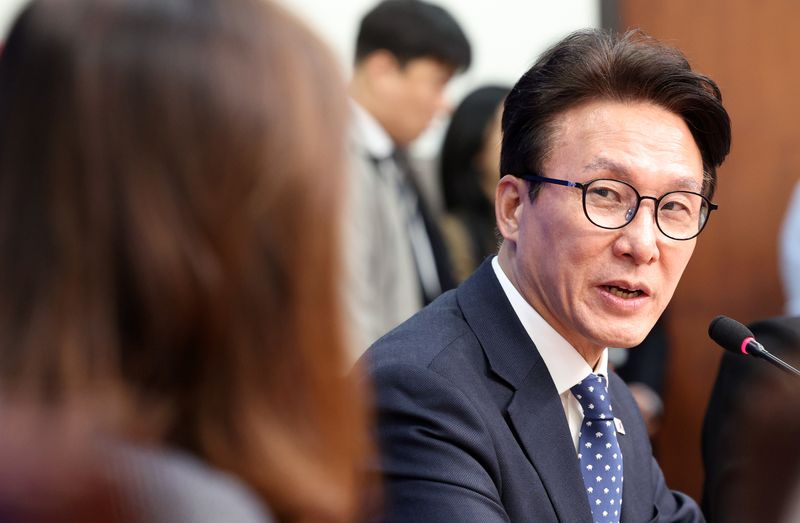
According to sources in political circles on the 22nd, Kim and Cho had been invited to Steel's dinner at the U.S. ambassador's residence the previous day but ultimately did not attend. The two were reportedly unable to attend because of scheduling conflicts. Kim attended a supreme council meeting held in Gyeonggi Province that morning. He was later reported to have reviewed his schedule, including an appearance on a YouTube broadcast.
A Democratic Party official explained, "We told the U.S. ambassador from the outset that it would be difficult for him to attend because of his schedule." In other words, Kim did not accept the ambassador's invitation in the first place.
However, questions have arisen over why Kim did not visit the U.S. ambassador's residence. In the hours leading up to the start of the dinner the previous day, numerous reports said that Kim would attend the event hosted by Steel and that a meeting between the leaders of the ruling and opposition parties would take place.
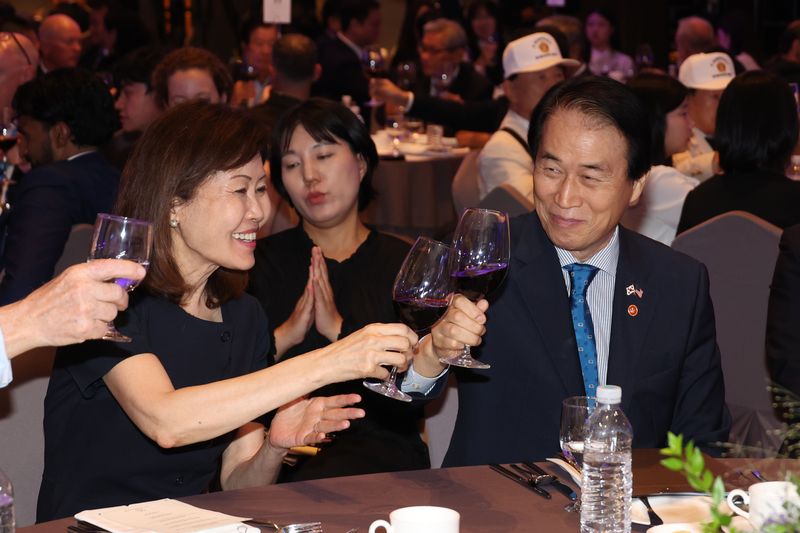
Steel met with Han Byung-do, the Democratic Party of Korea's floor leader who attended in Kim's place, as well as People Power Party leader Jang Dong-hyuk and Song Seok-jun, chair of the National Assembly Foreign Affairs and Unification Committee. Kim Young-bae of the Democratic Party of Korea and Cho Jung-hun of the People Power Party, the ruling and opposition floor secretaries of the Korea-U.S. Parliamentary Association, also attended the dinner.
There was considerable interest in whether the participants discussed major issues between South Korea and the United States, including the deployment of troops to the Strait of Hormuz and negotiations on investment in the United States. However, the dinner was held as an introductory meeting between the recently appointed ambassador and South Korean officials. Steel reportedly expressed regret over an incident suspected to have involved a landmine explosion in the Demilitarized Zone within the ROK Army's 25th Division that day. She also emphasized the need to strengthen the South Korea-U.S. alliance. Steel is a prominent Korean American politician from the Republican Party and is regarded as a close associate of U.S. President Donald Trump. [email protected] Kim Kyung-soo, Reporter
[email protected] Kim Kyung-soo Reporter