Saudi Arabia, Cut Off from the Red Sea, Resumes Expanding Exports Through the Strait of Hormuz; Oil Prices Fall
- Input
- 2026-09-22 12:43:36
- Updated
- 2026-09-22 12:43:36
[Financial News] Following the war with Iran, Saudi Arabia, which had chosen the Red Sea over the Strait of Hormuz to export oil to Asia, is once again redirecting its shipments through the Strait. International oil prices fell to their lowest level in about two weeks amid increased Saudi supply and the possibility of renewed U.S.-Iran talks.
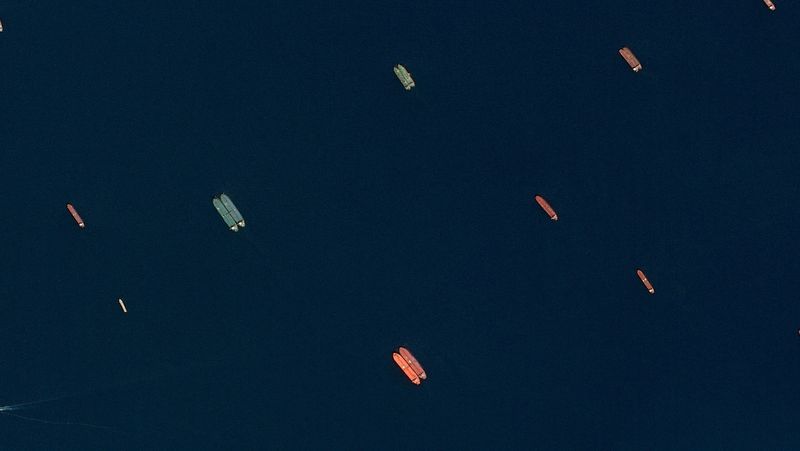
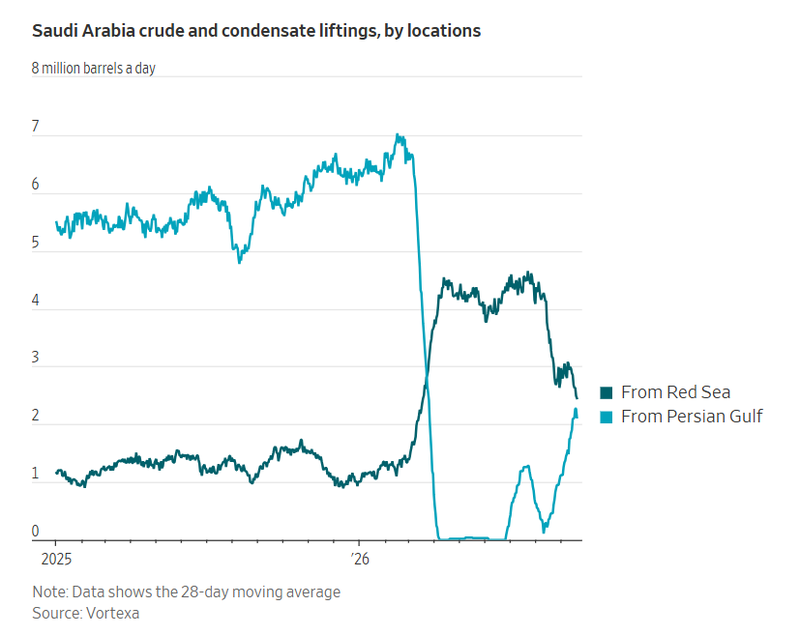
The Wall Street Journal (WSJ) reported on the 21st, citing sources familiar with the matter, that Saudi Aramco had recently notified its Asian customers of plans to increase shipments through the Strait of Hormuz. Citing U.S. commodities research firm Kpler, the WSJ said Saudi crude oil and condensate passing through the Strait averaged 2.4 million barrels per day over the past two weeks, recovering to early-July levels. According to British maritime intelligence firm Vortexa, Saudi oil loadings within the Persian Gulf had halted in June but increased to 1 million barrels per day on a four-week average in early July. That figure rose by more than 2 million barrels per day in the third week of this month. According to U.S. maritime data analysis firm TankerTrackers.com, Saudi Aramco loaded about 14 million barrels of crude oil onto seven very large crude carriers (VLCCs) in the Persian Gulf on the 20th. Seven tankers were also spotted around the port of Ras Tanura in the Persian Gulf that day.
Saudi Arabia's major oilfields are concentrated in the eastern Persian Gulf. Before the war with Iran, it loaded oil at Ras Tanura and exported it to Asia through the Strait of Hormuz. In the first quarter of last year, oil transported by tanker through the Strait averaged 14.22 million barrels per day, accounting for about 25% of global seaborne oil shipments. Saudi Arabia accounted for the largest share of that volume, at 37.2%.
When transit through the Strait of Hormuz became difficult because of the war with Iran in February, Saudi Arabia moved oil by pipeline to the western port of Yanbu on the Red Sea coast and continued exporting it through the Strait of Bab al-Mandab. However, maintaining that route became difficult after pro-Iranian Houthi rebels took control of the Strait of Bab al-Mandab on the 11th and the pipeline was attacked on the 10th. The WSJ reported that oil loading at Yanbu stopped after the pipeline attack.
The Strait of Hormuz is still not safe. The United Kingdom Maritime Trade Operations (UKMTO) reported on the 21st that a tanker entering the Strait was hit by an unidentified projectile, injuring two people. Asian buyers, including South Korea, that need to transport Saudi oil through the Strait face substantial risk premiums. According to Societe Generale, tanker freight from Ras Tanura to Ningbo, China, has risen about 14-fold from prewar levels. The WSJ noted that Saudi Arabia has recently been using even tankers more than 20 years old to transport export oil beyond the Strait of Hormuz and then transfer it onto buyers' tankers, reducing the buyers' cost burden.
International oil prices fell sharply on the 21st following news of increased Saudi supply. November Brent crude futures on the London-based ICE Futures Exchange settled at $100.34 per barrel, down 3.4% from the previous session. The October delivery contract for West Texas Intermediate crude oil (WTI) also settled at $95.78 per barrel, down 4.5% from the previous trading day. The closing prices of both grades were their lowest since the 8th. In an interview on the 20th, United States President Donald Trump said the possibility of meeting Iranian President Masoud Pezeshkian during the United Nations General Assembly in the United States this month was "probably open."
[email protected] Park Jong-won Reporter