[International Oil Prices] Trump Says "Open to Talks with Iran" as Prices Fall Below $100 Intraday
- Input
- 2026-09-22 04:46:16
- Updated
- 2026-09-22 04:46:16
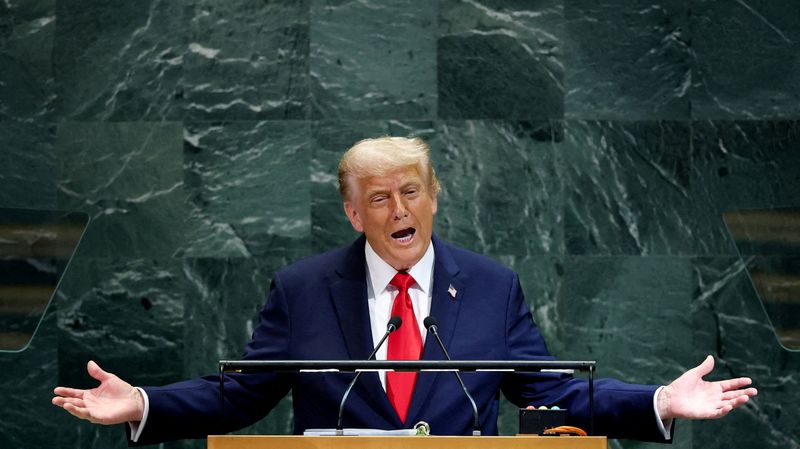
International oil prices fell about 5% on the 21st (local time), dropping below $100 a barrel during the session. Expectations that U.S. President Donald Trump and Iranian President Masoud Pezeshkian would meet and hold talks at the UN General Assembly pushed prices lower.
Analysts say Trump appears to be signaling a willingness to resolve the issue through dialogue rather than escalate the conflict with Iran, particularly because he was reportedly said to have rejected the Saudi Arabian government's request to bomb the Houthi rebels.
According to CNBC, Brent crude for November delivery fell 3.4% from the previous session to settle at $100.34 a barrel. It fell as low as $98.98 during the session.
West Texas Intermediate crude oil (WTI) for October delivery also plunged 4.5%, settling at $95.78 a barrel.
International oil prices declined for a fourth consecutive trading session. Prices had surged following reports that a Saudi Arabian oil pipeline had been attacked, but then turned lower after it was confirmed that Saudi Arabia was exporting crude through the Strait of Hormuz.
The sharp drop in oil prices that day was triggered above all by Trump's conciliatory gesture.
Speaking through Fox News, he said he was willing to meet and talk with Iranian President Masoud Pezeshkian at the UN General Assembly. Although he threatened a major attack if Iran failed to behave properly, the remarks were interpreted as pressure aimed at bringing Iran to the negotiating table.
A report by The New York Times (NYT) that Trump had rejected an attack on the Houthi rebels also shows that the focus is shifting toward dialogue rather than escalation. According to NYT, Saudi Arabia asked Trump to directly bomb the Iran-backed Houthi rebels, but he refused. The Houthi rebels have continued to threaten Saudi Arabia, including by attacking the East–West Crude Oil Pipeline, an alternative route around the Strait of Hormuz. On the 19th, they attacked Riyadh, Saudi Arabia's capital, and Yanbu, a major oil export port on the Red Sea.
Although tensions in the Middle East have not subsided, oil prices are stabilizing amid analysis that crude supplies remain relatively smooth, contrary to concerns.
In an analysis note issued on the 18th, JPMorgan Chase previously assessed that Middle Eastern crude exports were proving resilient despite the closure of Saudi Arabia's East–West Crude Oil Pipeline. According to JPMorgan Chase, average daily crude exports over the past 10 days stood at 17 million barrels, 6 million barrels per day below last year's average.
Ryan McKay, director of commodity strategy at TD Securities, also said that crude exports through the Strait of Hormuz had steadily increased and had now risen to about 80% of their prewar level. In an analysis note on the 21st, McKay said, "Assuming there are no major clashes, Iran appears to be losing the considerable leverage it held at the Strait of Hormuz."
McKay nevertheless took a cautious stance, noting that the region's security situation remained fluid and that tensions could escalate suddenly. He pointed out that the oil market "is facing a tense tug-of-war among various short-term factors affecting oil prices."
[email protected] Song Kyung-jae Reporter