Altman to Urge UN Security Council to Establish International AI Standards
- Input
- 2026-09-22 04:01:21
- Updated
- 2026-09-22 04:01:21
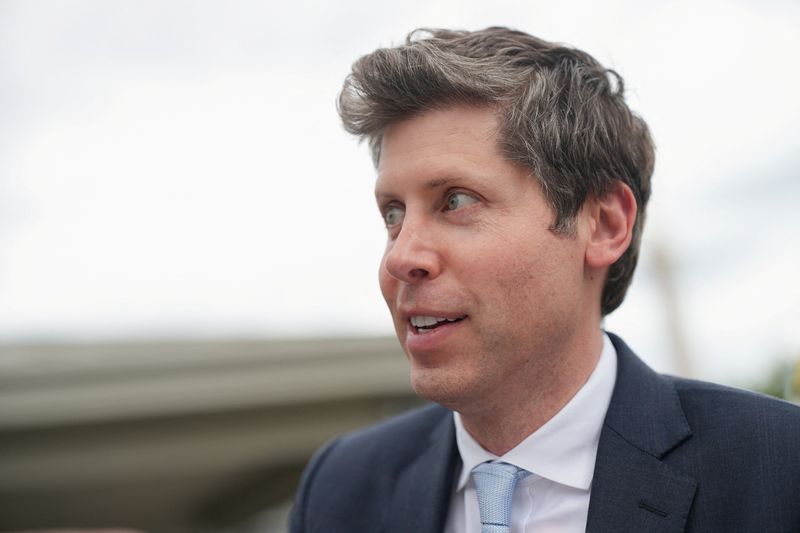
Sam Altman, CEO of OpenAI, joined the U.S.-led push to establish international standards for AI systems on the 21st local time.
According to the Financial Times (FT), OpenAI proposed that the international community jointly assess the capabilities and risks of AI models. In particular, it called for a joint assessment of the singularity, in which AI trains AI on its own. Anthropic and Google have also called for more active international cooperation, proposing stronger international standards and greater cooperation among countries.
Demis Hassabis, co-founder and chair of Google DeepMind, proposed in July that the United States lead the creation of international standards for frontier AI. Hassabis has advocated regulating AI through a new public-private organization modeled on the Financial Industry Regulatory Authority (FINRA), a self-regulatory body for financial markets. He also argued that independent leading technology experts and representatives of the open-source community should be allowed to participate in the organization.
The goal is to prepare for an AI revolution that could bring "a shock 10 times greater at 10 times the speed of the Industrial Revolution."
OpenAI CEO Sam Altman is scheduled to appear before the UNSC on the 23rd to explain the proposal. On the 24th, he will also attend a state dinner for Chinese President Xi Jinping hosted by President Donald Trump at the White House.
Momentum is also building toward the establishment of international AI standards between the United States and China.
Treasury Secretary Scott Bessent said the United States and China had agreed to hold AI talks after meeting Chinese Vice Premier He Lifeng in New York on the 20th, according to the FT.
OpenAI urged the two countries leading the AI race to establish a security channel for addressing emerging risks. It stressed, "A U.S.-China dialogue on AI safety and security would be a positive step."
As concerns grow that once AI reaches the stage of training AI on its own, the pace of subsequent AI development could escape human control and eventually lead to human extinction, discussions on a U.S.-China dialogue have begun to gain momentum.
However, it remains unclear how much substantive progress the two countries can make in limiting the pace of AI development. Neither side trusts the other. As game theory suggests, if one side breaks its promise first and pushes ahead with unlimited AI development, the other could lose the competition and remain unable to close the gap forever. This means that even international standards could become useless.
For this reason, President Trump has rejected calls to slow the pace of development and has emphasized that "whoever wins AI wins the competition" in the U.S.-China rivalry.
David Sacks, Trump's AI adviser, is also critical of industry demands for government intervention to limit the pace of development. Sacks said on social media, "The easiest way not to build superintelligence is to agree not to build it," adding, "Demanding that we design a regulatory framework in the way you prefer is no different from blackmailing the public and the political system."
Meanwhile, OpenAI proposed linking existing national AI safety organizations into a network to create international standards for evaluating AI models. It called in particular for international cooperation to control recursive self-improvement (RSI), the process in which AI continuously improves itself.
OpenAI warned, "Without appropriate oversight and regulation, RSI could cause humans to effectively lose control over AI development and leave them unable to oversee research processes they no longer understand."
[email protected] Song Kyung-jae Reporter