Yemen President Sends an SOS: "Stop the Houthis," but Trump Says, "No Direct Military Support"
- Input
- 2026-09-21 23:59:08
- Updated
- 2026-09-21 23:59:08
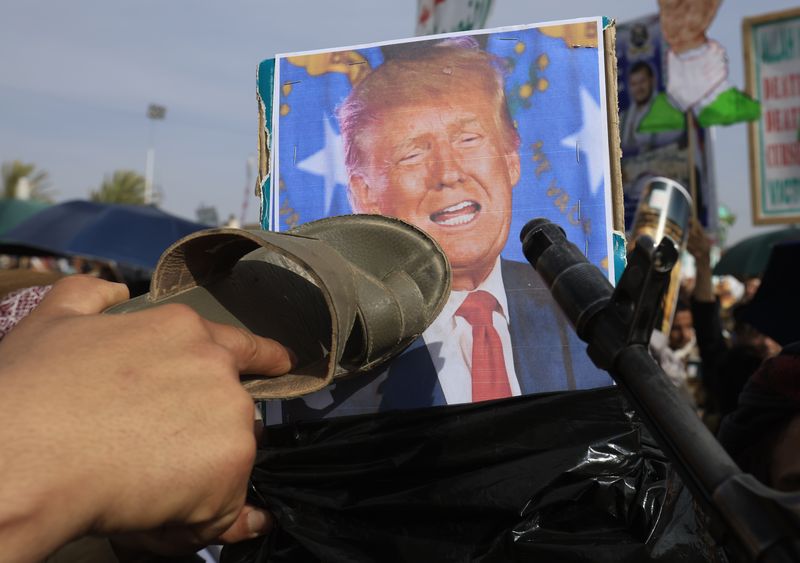
[Financial News] U.S. President Donald Trump reportedly rejected direct military support despite an earnest appeal from Yemen's president to help stop Ansar Allah (Houthis), an Iran-aligned rebel group expanding its influence by controlling a key logistics hub in the Red Sea. Analysts say the United States, which is pouring troops and weapons into its war with Iran, feels a heavy burden in opening a new front in the Middle East.
According to The New York Times and other foreign media outlets on June 21 local time, President Trump spoke by phone with Yemeni President Rashad al-Alimi the previous day and discussed the security situation around the Bab-el-Mandeb Strait.
During the call, al-Alimi appealed for help for the Saudi-backed Yemeni government in confronting the Houthis, who had rapidly seized key positions along the Bab-el-Mandeb Strait. However, multiple Yemeni and Western sources said that Trump did not promise direct military support. The White House and Yemen's information minister also did not immediately issue an official response regarding the call.
The Houthis recently seized the port of Mocha and Perim Island near the Bab-el-Mandeb Strait, the gateway to the Red Sea, in rapid succession. They then declared that they would completely block vessels linked to Saudi Arabia, the world's largest oil exporter. The group has also attacked oil facilities and military bases on the Saudi mainland with missiles and drones, driving up international oil prices.
Even as global logistics and energy security come under threat, the Trump administration is keeping its distance from the Yemen crisis because of its staunch commitment to "America First" and its wariness of escalation. The United States appears increasingly determined not to intervene in Yemen's civil war unless an American vessel comes under direct attack.
Meanwhile, the United States and the Houthis recently held back-channel contacts through Omani mediation. The Houthi side reportedly conveyed its intention to continue honoring the 2025 truce agreement, under which "the Houthis would not attack U.S. ships, and the United States would halt its airstrikes." Mohammed al-Bukhaiti, a senior Houthi official, also publicly stated, "We have no intention of attacking U.S. ships, but Saudi-related vessels will continue to be targeted," making clear that the group would respond separately to the United States and Saudi Arabia.
Above all, the biggest variable is that the United States is currently concentrating its capabilities on the war against Iran. As criticism of an expanded Middle East war intensifies in the United States, an escalation originating in Yemen would place a tremendous political and military burden on President Trump. The New York Times reported that the United States had initially considered airstrikes against the Houthis at Saudi Arabia's repeated requests, but the plan was scrapped at the last minute on Trump's orders to avoid direct military intervention.
[email protected] Park Ji-hyun Reporter