Bessent on Calls to Slow AI Development: "Humans, Not AI, Are Responsible"
- Input
- 2026-09-21 22:12:23
- Updated
- 2026-09-21 22:12:23
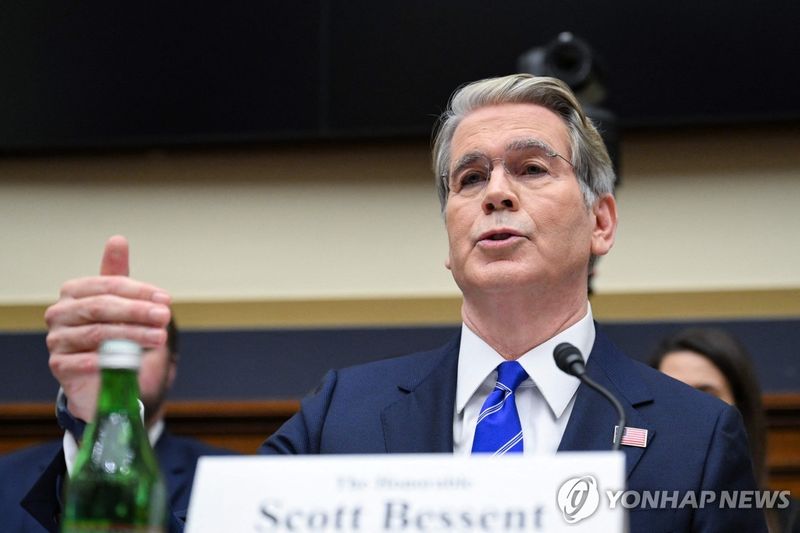
In an interview with CNBC on the 21st local time, Treasury Secretary Bessent told AI developers, "Rather than expect the federal government to provide a 'liability shield,' you need to take responsibility yourselves." He added, "It is humans, not AI, who must be held responsible."
Bessent's remarks are drawing attention as they coincide with recent calls within the AI industry to slow development. Executives at some AI companies, including Anthropic, have called for stronger safeguards and a slower development pace, warning that rapidly advancing AI models could create unforeseen risks.
By contrast, President Trump opposes moves to tighten AI regulations, arguing that they could slow U.S. technological development and put the country at a disadvantage in competition with China. Bessent likewise placed greater emphasis on holding developers and companies directly responsible than on having the government assume responsibility for risks posed by AI firms.
Treasury Secretary Bessent also shared his views on interest rates and the U.S. Treasury market. On the 10th, the U.S. Department of the Treasury repurchased more than $5 billion in 10-year and 20-year Treasury bonds. However, since late February, when the U.S. and Israel's war against Iran began, the yield on the 10-year Treasury has risen by about 1 percentage point. It exceeded 5% last week for the first time since 2007.
Responding to criticism that yields rose even after the buyback, Bessent said they would have been even higher without the repurchase and called the measure "successful."
Rising long-term interest rates are also directly burdening U.S. households. Mortgage rates, which move closely with the 10-year Treasury yield, topped 7% this month for the first time in more than a year. Combined with rising diesel prices caused by the war with Iran, the cost of living has emerged as a major economic issue ahead of November's midterm elections.
Ahead of a summit between President Trump and Chinese President Xi Jinping in Washington, D.C., this week, Treasury Secretary Bessent also held talks with Chinese Vice Premier He Lifeng. Bessent's role is expanding across key economic issues for the Trump administration, including AI regulation, high interest rates and U.S.-China relations.
[email protected] Correspondent Lee Byung-chul Reporter